Taj Mahal Tours & Packages
- Home
- Taj Mahal Tours & Packages
Our Featured
Taj Mahal Tours & Packages
The Taj Mahal deserves more than a quick photo stop. Our tours take you through the history, the love story behind it, and the architecture up close — with skip-the-line entry and a guide who actually knows the details. Book your Taj Mahal and Agra day tour by car today.

From Delhi: Taj Mahal and Agra Day Tour By Car
- Pickup Available
- 01 Day
- Skip the ticket line


Taj Mahal and Agra Tour by Superfast Train
- Pickup Available
- 01 Day
- Skip the ticket line

From Delhi: Taj Mahal And Agra Fort Tour By Luxury Car
- Pickup Available
- 01 Day
- Skip the ticket line
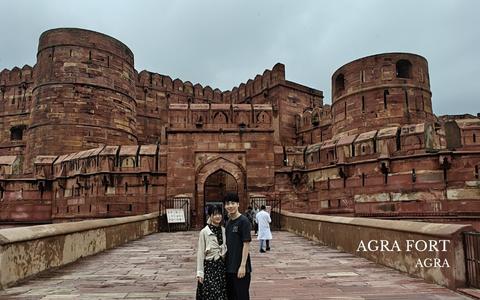
From Jaipur: One Day Taj Mahal & Agra Tour By Car
- Pickup Available
- 01 Day
- Skip the ticket line

From Delhi: Taj Mahal, Elephant & Bear Rescue Center Tour By Car
- Pickup Available
- 01 Day
- Skip the ticket line

From Agra: Taj Mahal, Fatehpur Sikri & Bird Safari Tour
- Pickup Available
- 01 Day
- Skip the ticket line
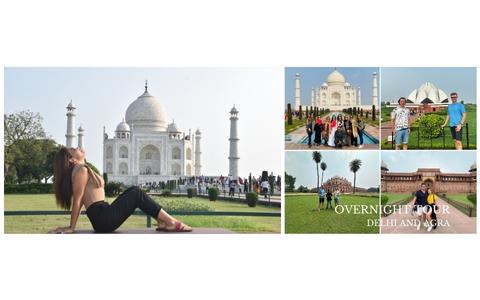
From Delhi: 2 Days Tour of Delhi and Agra by Car
- Pickup Available
- 02 Days
- Skip the ticket line

From Delhi: Taj Mahal and Agra Overnight Tour by Train
- Pickup Available
- 02 Days
- Skip the ticket line
Our Taj Mahal tour packages get you there with a guide who actually knows the history behind it, not just someone reading off a script. Start exploring the Taj Mahal and see it for yourself.
It’s easy to see why the Taj Mahal has held people’s attention for nearly 400 years. Emperor Shah Jahan built this marble mausoleum in Agra as a tribute to his wife, Mumtaz Mahal, and finished it in 1653 — and what he built wasn’t just a tomb, it was one of the most extravagant expressions of love and grief in architectural history. The domes, the marble inlay work, the gardens laid out in perfect symmetry — every part of it was designed to be seen slowly, not rushed past.
Read More
Want to see it at its best? Our sunrise Taj Mahal and Agra tour by car gets you there early, before the crowds arrive and while the light does something to the marble that photos never quite capture. If you’re short on time, our Taj Mahal and Agra tour by superfast train covers the same ground without the long drive.
The Taj Mahal earned its UNESCO World Heritage status for good reason — millions of people make the trip to Agra every year, and most say the same thing afterward: nothing quite prepares you for standing in front of it. If you want to make a full day of it, our Taj Mahal and Agra Fort tour by luxury car takes in both landmarks at a relaxed pace, so you’re not racing the clock between stops.
Month-by-Month Guide to Visiting the Taj Mahal
January — Cold, Foggy, Photogenic (when clear)
Temperature: 8°C – 22°C
Crowd level: Medium
What to expect: Crisp mornings and thick fog that can last until 9–10 AM on some days.
Pro tip: If you visit in January, plan for the possibility that dense fog may obscure the Taj at sunrise. Give yourself two mornings in Agra to guarantee at least one clear view.
February — The Sweet Spot
Temperature: 10°C – 25°C
Crowd level: Medium-High
What to expect: Ideal weather, minimal fog, blue skies, comfortable walking temperatures.
Special event: The Taj Mahotsav (10-day cultural festival, usually February 18–27) brings craftsmen, folk dancers, and food from across India to Shilpgram, just 1 km from the East Gate.
Verdict: The single best month for reliable weather and vivid photography.
March — Warming Up, Still Great
Temperature: 15°C – 32°C
Crowd level: High (spring break travellers)
What to expect: Pleasant mornings, warm afternoons.
Pro tip: Book a sunrise slot to avoid the midday sun.
April — Getting Hot
Temperature: 22°C – 38°C
Crowd level: Medium
What to expect: Direct sunlight is intense by 10 AM. The white marble becomes uncomfortable to walk on barefoot.
Verdict: Manageable if you finish your visit before 10 AM.
May & June — Peak Summer
Temperature: 28°C – 45°C
Crowd level: Low (except during Indian school holidays)
What to expect: Extreme heat, dry hot winds (“loo”), real risk of heatstroke.
Verdict: Not recommended unless you have no other option. If you must visit, go strictly at sunrise, carry at least 1.5 litres of water per person, and leave the complex before 9 AM.
July & August — Monsoon
Temperature: 26°C – 35°C
Crowd level: Low
What to expect: Rain showers, humidity, dramatic monsoon skies. The Yamuna river behind the Taj flows fully — a rare sight.
Pro tip: Rainy Taj photos are stunning. Bring a waterproof cover for your camera and stay flexible with your visit timing.
September — Late Monsoon
Temperature: 25°C – 33°C
Crowd level: Low
What to expect: Occasional rain, lush greenery in the surrounding gardens.
Verdict: Underrated month. Weather is improving and tourism is still light.
October — Post-Monsoon Freshness
Temperature: 18°C – 32°C
Crowd level: Medium (Indian festival season begins)
What to expect: Clear skies after the monsoon washes away dust; gardens at their greenest.
Verdict: Excellent alternative to peak winter — often clearer skies than December or January.
November & December — Peak Season
Temperature: 8°C – 26°C
Crowd level: High (Christmas & New Year = extreme)
What to expect: Beautiful clear weather, occasional smog in late November.
Pro tip: Avoid December 24 – January 2 unless you’re comfortable with dense crowds and premium hotel rates.
Best Time of Day to Visit the Taj Mahal
Sunrise — The Winner
The Taj Mahal is at its most magical at sunrise. The marble shifts from pink to gold to bright white in about 45 minutes — a colour change no photograph fully captures.
Advantages of a sunrise visit:
Fewer tour buses = space to breathe and better photos
Cooler temperature = more comfortable walk through the 42-acre complex
East Gate opens 30 minutes before sunrise (fastest queue in the morning)
Sunset — Beautiful but Crowded
Golden hour lights up the marble in warm hues, but this is the busiest time of day in peak season. Best for photographers who don’t mind waiting out crowds.
Night Viewing — Rare and Special
The Taj is open for night viewing on 5 nights each month — the full moon night, plus 2 nights before and 2 nights after — except on Fridays and during Ramadan. Only 400 people are allowed per night in batches of 50, and tickets must be purchased at the Archaeological Survey of India office in Agra 24 hours in advance. The marble glows silver under moonlight — genuinely unforgettable.
Days to Avoid
Fridays: The Taj Mahal is closed to tourists every Friday (open only for prayers at the mosque inside). Plan around this.
Weekends: Domestic tourist crowds peak on Saturdays and Sundays. If your schedule allows, visit on Tuesday, Wednesday, or Thursday.
Major Indian holidays: Diwali week, Holi, Republic Day (26 January), and Independence Day (15 August) bring heavy domestic footfall.
Air Quality: An Honest Note
Agra sits in a region that experiences winter smog, particularly from late October to late January. On smoggy days, visibility can be reduced and photographs may look hazy.
If air quality matters to you:
February and October give you the best chance of clear skies.
Check the AQI forecast the night before your visit.
Sunrise generally has better air quality than afternoon or evening.
What to Wear at the Taj Mahal
Winter (November – February): Layers. Mornings are cold enough for a light jacket; by noon a t-shirt is fine.
Summer (April – June): Loose cotton clothes, a wide-brimmed hat, sunglasses, sunscreen, and plenty of water.
Monsoon: A lightweight rain jacket and quick-dry shoes.
Year-round rule: You must remove your shoes before stepping onto the marble platform (or use the provided shoe covers). Wear socks in winter and something you can slip off easily.
Taj Mahal Timings & Entry Rules
Open: Sunrise to sunset (approximately 6:00 AM – 6:30 PM, varies seasonally)
Closed: Fridays
Night viewing: 8:30 PM – 12:30 AM on eligible full moon dates
Time needed inside: Allow 2–3 hours to explore the mausoleum, mosque, and gardens without rushing
Ticket prices are set by the Archaeological Survey of India and are revised periodically. Check the official ASI website for current rates, or book through a licensed tour operator who includes the entry ticket in the package.
Best Month for Different Types of Travellers
Photographers: February and October (clearest light, minimal fog)
Honeymooners: November – February (perfect for evening walks and Mehtab Bagh visits)
Solo travellers: October or February (comfortable weather + moderate crowds)
Families with kids: December (school holidays + tolerable weather)
Budget travellers: July – September (lowest hotel rates, thinnest crowds)
Cultural experience seekers: February (Taj Mahotsav festival)
Plan Your Taj Mahal Visit
The best time to see the Taj Mahal is when you’re most likely to see it clearly, comfortably, and without crowds — for most travellers, that’s a weekday sunrise between November and February.
FAQ's
Q1. Which month has the fewest crowds at the Taj Mahal?
July and August. Monsoon rains keep tour buses away and hotel rates drop. The trade-off is unpredictable weather.
Q2. Is the Taj Mahal worth visiting in summer?
Only if you have no other option. If you must visit in April, May or June, go strictly at sunrise and finish by 9 AM before the marble heats up.
Q3. Can I see the Taj Mahal at night?
Yes, but only on 5 pre-scheduled nights around the full moon each month. Fridays and Ramadan nights are excluded. Tickets are limited and must be booked 24 hours in advance from the Archaeological Survey of India office in Agra.
Q4. What is the best day of the week to visit the Taj Mahal?
Tuesday, Wednesday or Thursday. Weekday mornings have the lowest crowd density. The Taj Mahal is closed on Fridays.
Q5. How early should I arrive at the Taj Mahal for sunrise?
Reach the East Gate 30 to 45 minutes before sunrise. Security checks take 15 to 20 minutes, and you want to be inside the complex before the first light hits the dome.
Q6. Does it rain heavily at the Taj Mahal during monsoon?
Agra gets moderate monsoon rainfall, usually in short spells rather than all-day downpours. Cloud cover softens the light, which is good for muted photography but not for postcard-style shots.
Q7. Is one day enough to visit the Taj Mahal?
Yes, if the Taj Mahal is all you want to see. A complete Agra day tour also includes Agra Fort, Mehtab Bagh and Itmad-ud-Daulah, known as the Baby Taj. For that, plan a full day or an overnight stay.
Q8. What is included in a Taj Mahal tour package?
A private air-conditioned car with driver, a licensed English-speaking guide in Agra, skip-the-line Taj Mahal entry, all tolls, parking and driver allowances, bottled water, and pickup and drop at your hotel, airport or station in Delhi, Agra or Jaipur. Meals, camera permits and tips are not included unless confirmed in writing.
Q9. Is the Taj Mahal tour private or shared with other travelers?
Every tour is private. You get your own car, driver and guide, with no strangers and no fixed departure slots. You set the pace and the stops.
Q10. Can I combine the Taj Mahal with Delhi and Jaipur?
Yes, that combination is the Golden Triangle circuit. Delhi to Agra is about 143 miles (230 km) and Agra to Jaipur is about 149 miles (240 km). Most travelers do it in 4 to 5 days, and we run the full range from 3 to 8 days.
Q11. Do US citizens need a visa to visit the Taj Mahal?
Yes. US passport holders need an Indian visa, and most travelers use the Indian e-Visa, which is applied for online before departure. Apply at least a week ahead of your travel date, and carry a printed copy of the approval along with your passport.
Q12. How do I book a Taj Mahal tour package?
Send your travel dates, pickup city and group size through the enquiry form, message us on WhatsApp at +91 7302048701, or email info@helloindiatour.com. We reply within four to six hours with an itinerary and full inclusions. A small advance confirms your date and the balance is payable on arrival.