
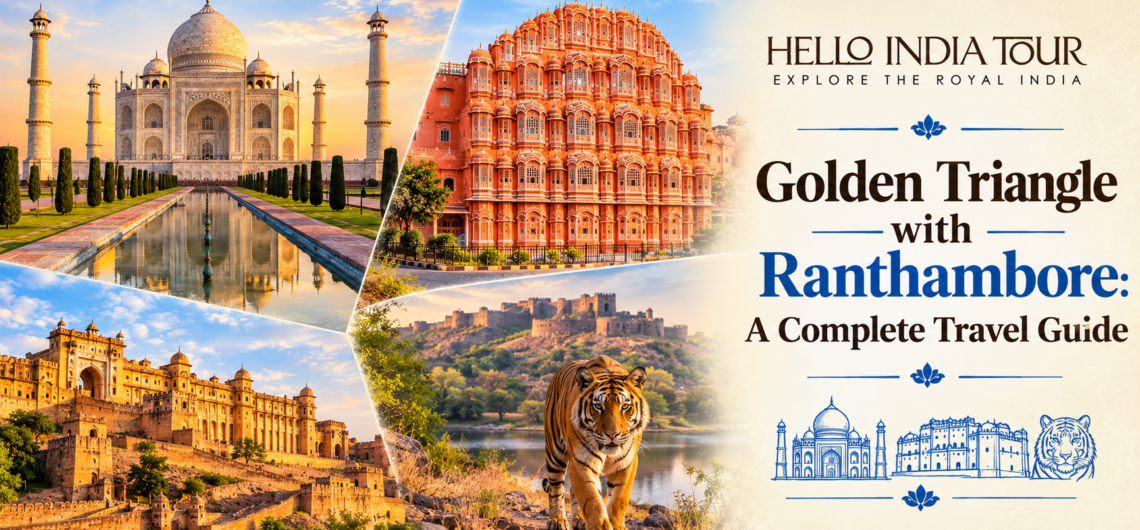
The classic Golden Triangle — Delhi, Agra, and Jaipur — covers India’s most iconic monuments in one compact loop. Add Ranthambore National Park to the route, and you get history, architecture, and a real shot at spotting a wild tiger, all within a single, well-paced trip. Here’s everything you need to plan it.
What Is the Golden Triangle?
The Golden Triangle refers to the triangular travel route connecting Delhi, Agra, and Jaipur — three cities that, together, hold some of India’s most famous sights: the Taj Mahal, Red Fort, Amber Fort, and more. The cities are close enough to cover by road, making it the most popular first-time India itinerary for international visitors.
Why Add Ranthambore to the Golden Triangle?
Ranthambore National Park sits conveniently between Jaipur and the rest of the Golden Triangle route, making it an easy add-on rather than a detour. It’s one of India’s best places to see wild Bengal tigers in their natural habitat, alongside leopards, sloth bears, and over 300 bird species — a strong contrast to the monument-heavy pace of Delhi, Agra, and Jaipur.
Suggested Golden Triangle with Ranthambore Itinerary (6–7 Days)
| Day | City | Highlights |
|---|---|---|
| Day 1 | Delhi | Red Fort, Jama Masjid, Chandni Chowk, Raj Ghat |
| Day 2 | Delhi → Agra | Qutub Minar (morning), drive to Agra |
| Day 3 | Agra | Taj Mahal (sunrise), Agra Fort, drive to Ranthambore |
| Day 4 | Ranthambore | Morning and evening jungle safaris |
| Day 5 | Ranthambore → Jaipur | Optional third safari, drive to Jaipur |
| Day 6 | Jaipur | Amber Fort, City Palace, Jantar Mantar, Hawa Mahal |
| Day 7 | Jaipur → Delhi | Local shopping, drive/train back to Delhi for departure |
This can be shortened to 6 days by combining Day 2 and Day 3, or extended with an extra night in Jaipur or an additional safari in Ranthambore.
City-by-City Highlights
Delhi
Split between Old Delhi’s Mughal-era monuments and New Delhi’s colonial-era landmarks. Don’t miss the Red Fort, Jama Masjid, and a walk through Chandni Chowk for street food and market life, alongside India Gate and Humayun’s Tomb if time allows.
Agra
Home to the Taj Mahal — best visited at sunrise to avoid crowds and catch the marble changing colour in the early light. Agra Fort, a red sandstone fortress overlooking the Yamuna River, is a worthwhile second stop.
Ranthambore National Park
One of India’s premier tiger reserves, spread across former royal hunting grounds. Morning and evening safaris (by open-top jeep or canter) are the best way to spot wildlife, with tiger sightings most likely in the park’s core zones.
Jaipur
The Pink City combines royal architecture with a lively bazaar culture. Amber Fort, City Palace, Jantar Mantar (a UNESCO-listed astronomical observatory), and Hawa Mahal are the must-see stops, alongside Jaipur’s markets for textiles, jewellery, and handicrafts.
Best Time to Visit
October to March is the ideal window for this route — cooler weather makes sightseeing more comfortable, and it also aligns with the best safari season at Ranthambore. Note that the park closes for the monsoon season (roughly July to September), so this trip isn’t possible year-round if Ranthambore is included.
Ranthambore Safari Tips
- Book safaris in advance — permits are limited and fill up quickly, especially in peak season (November to February)
- Choose Zones 1–5 for the highest chance of tiger sightings, based on recent activity
- Morning safaris tend to offer cooler temperatures and more active wildlife
- Carry binoculars and a camera with zoom — sightings can happen at a distance
- Dress in neutral, muted colours and avoid bright clothing
Estimated Cost Breakdown
| Expense | Approximate Range (per person) |
|---|---|
| Private car with driver (6–7 days) | Varies by vehicle type and season |
| Hotels (mid-range, per night) | Varies by city and season |
| Ranthambore safari (per safari) | Fixed park + jeep/canter fees, higher for private jeep |
| Monument entry fees (Taj Mahal, forts) | Fixed government rates, higher for foreign nationals |
| Guide services (optional, per day) | Varies by city and language |
Exact costs depend on season, hotel category, and whether you choose shared or private safaris — worth confirming current rates when booking.
How to Get Between Cities
- Delhi to Agra: 3–4 hours by road, or under 2 hours by high-speed train (Gatimaan Express)
- Agra to Ranthambore: Approximately 5–6 hours by road
- Ranthambore to Jaipur: Approximately 3–4 hours by road
- Jaipur to Delhi: 5–6 hours by road, or around 4.5 hours by train
Private car transfers are the most flexible option for this route, since they allow stops along the way and accommodate the detour to Ranthambore.
Who Should Take This Trip
This itinerary suits first-time visitors to India who want a complete introduction — Mughal architecture, royal heritage, bustling markets, and wildlife — without needing a longer, multi-region trip. It’s also a strong choice for travellers who want the Golden Triangle’s cultural highlights but don’t want to skip wildlife entirely.
FAQs
Q: Is 6–7 days enough for Golden Triangle with Ranthambore? A: Yes, 6–7 days allows a comfortable pace covering Delhi, Agra, Ranthambore, and Jaipur without excessive rushing, though an extra day in Jaipur or a second Ranthambore safari day is a good addition if time allows.
Q: How many tiger sightings can I expect at Ranthambore? A: Sightings aren’t guaranteed since it’s a wild forest, not a zoo, but Ranthambore has a strong tiger population and multiple safaris significantly increase your chances, especially in the core zones during peak season.
Q: Can this itinerary be done without a private car? A: It’s possible using trains and local taxis between cities, but a private car with driver is far more convenient given Ranthambore’s location off the main Delhi-Agra-Jaipur road route.
Q: What’s the best month to combine tiger safaris with Golden Triangle sightseeing? A: November to February offers the best combination of cool weather for sightseeing and strong wildlife activity at Ranthambore.
Q: Is the Golden Triangle with Ranthambore suitable for families with kids? A: Yes, it’s a popular family itinerary — the mix of historical sites and wildlife safaris tends to keep both adults and children engaged throughout the trip.
Ready to plan your Golden Triangle and Ranthambore trip? Hello India Tour can arrange private transport, safari bookings, and a full day-by-day itinerary tailored to your travel dates.






Comments