
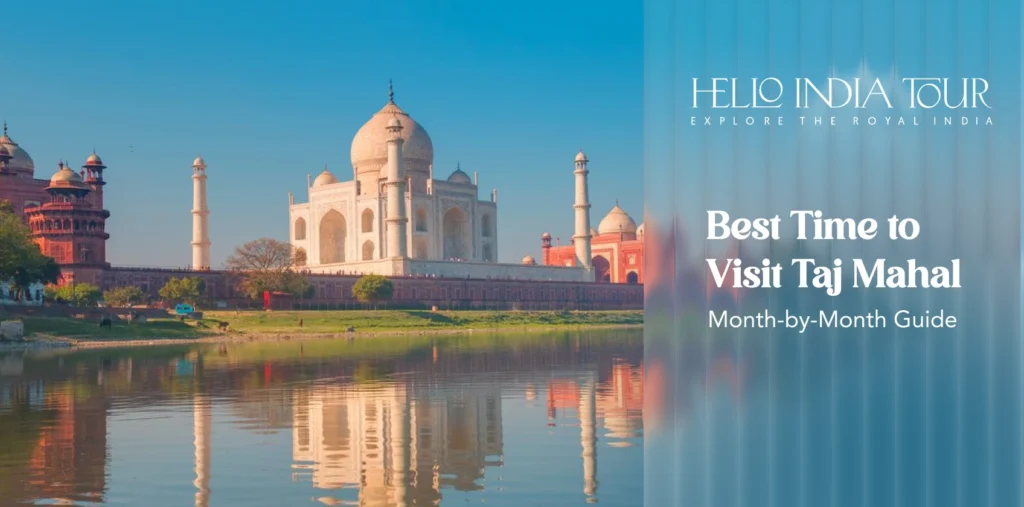
The best time to visit the Taj Mahal is between November and February, when Agra’s weather is cool, dry, and photography-friendly. For the most magical experience, arrive at sunrise on a weekday — you’ll skip the crowds and watch the white marble shift from soft pink to gold to bright white as the sun rises over the Yamuna river.
Taj Mahal Weather at a Glance
Agra has four distinct seasons, and each one gives you a completely different Taj Mahal experience. Here’s the quick overview before we get into the month-by-month detail.
- Winter (November – February): 5°C – 25°C. Cool and clear. Best time to visit.
- Spring (March): 15°C – 32°C. Pleasant, still comfortable.
- Summer (April – June): 25°C – 45°C+. Brutal heat. Avoid if possible.
- Monsoon (July – September): 25°C – 35°C. Humid and rainy, but crowd-free.
- Post-monsoon (October): 18°C – 32°C. Fresh, green, underrated month.
Month-by-Month Guide to Visiting the Taj Mahal
January — Cold, Foggy, Photogenic (when clear)
Temperature: 8°C – 22°C. Crowd level: Medium.
Crisp mornings and thick fog that can hang around until 9 or 10 AM on some days. If you visit in January, plan for the possibility that dense fog may obscure the Taj at sunrise. The safer play is to give yourself two mornings in Agra to guarantee at least one clear view — locals will tell you the fog usually breaks by mid-morning, but there’s no guarantee.
February — The Sweet Spot
Temperature: 10°C – 25°C. Crowd level: Medium-High.
If you can only visit in one month, make it February. Ideal weather, minimal fog, blue skies, comfortable walking temperatures. This is also when the Taj Mahotsav happens — a 10-day cultural festival (usually February 18 to 27) with craftsmen, folk dancers, and food from across India at Shilpgram, just 1 km from the East Gate. Book hotels early because everyone else has figured this out too.
March — Warming Up, Still Great
Temperature: 15°C – 32°C. Crowd level: High (spring break travellers).
Pleasant mornings, warm afternoons. Book a sunrise slot and you’ll avoid both the heat and the tour bus crowds that arrive around 10 AM.
April — Getting Hot
Temperature: 22°C – 38°C. Crowd level: Medium.
Direct sunlight is intense by 10 AM. The white marble becomes genuinely uncomfortable to walk on barefoot. Manageable if you finish your visit before 10 AM. After that, the reflected heat off the marble is a legitimate health concern.
May and June — Peak Summer
Temperature: 28°C – 45°C+. Crowd level: Low (except during Indian school holidays).
Not recommended unless you have no other option. If you must visit, go strictly at sunrise, carry at least 1.5 litres of water per person, and leave the complex before 9 AM. Heatstroke is a real risk, and hospital visits during peak summer are not what you want on your India trip.
July and August — Monsoon
Temperature: 26°C – 35°C. Crowd level: Low.
Rain showers, humidity, dramatic monsoon skies. The Yamuna river behind the Taj flows fully — a rare sight most tourists never see. Bring a waterproof cover for your camera and stay flexible with your visit timing. Rainy Taj photos are genuinely stunning if you don’t mind wet feet.
September — Late Monsoon
Temperature: 25°C – 33°C. Crowd level: Low.
Occasional rain, lush greenery in the surrounding gardens. Underrated month. Weather is improving and tourism is still light. If you have flexibility, September gives you monsoon aesthetics without August’s constant downpour.
October — Post-Monsoon Freshness
Temperature: 18°C – 32°C. Crowd level: Medium (Indian festival season begins).
Clear skies after the monsoon washes away dust; gardens at their greenest. Excellent alternative to peak winter — often clearer skies than December or January, and half the crowds. This is our sleeper pick if peak-season prices scare you.
November and December — Peak Season
Temperature: 8°C – 26°C. Crowd level: High (Christmas and New Year = extreme).
Beautiful clear weather, occasional smog in late November. Avoid December 24 to January 2 unless you’re comfortable with dense crowds, premium hotel rates, and long queues at every monument.
Best Time of Day to Visit the Taj Mahal
Sunrise — The Winner
The Taj Mahal is at its most magical at sunrise. The marble shifts from pink to gold to bright white in about 45 minutes — a colour change no photograph fully captures. Beyond the aesthetics, sunrise means fewer tour buses, cooler temperature, and a more comfortable walk through the 42-acre complex. The East Gate opens 30 minutes before sunrise, so if you’re planning a sunrise visit, be there at least 45 minutes before official sunrise time to get through security first.
Sunset — Beautiful but Crowded
Golden hour lights up the marble in warm hues, but this is the busiest time of day in peak season. Best for photographers who don’t mind waiting out crowds. Domestic tour groups peak between 3 and 5 PM.
Night Viewing — Rare and Special
The Taj is open for night viewing on 5 nights each month — the full moon night, plus 2 nights before and 2 nights after — except on Fridays and during the Islamic month of Ramadan. Only 400 people are allowed per night in batches of 50. Tickets must be purchased in person at the Archaeological Survey of India office in Agra 24 hours in advance. The marble glows silver under moonlight — genuinely unforgettable, but manage expectations: you view from about 300 metres away, not up close.
Days to Avoid
- Fridays: The Taj Mahal is closed to tourists every Friday (open only for prayers at the mosque inside). Plan around this.
- Weekends: Domestic tourist crowds peak on Saturdays and Sundays. If your schedule allows, visit on Tuesday, Wednesday, or Thursday.
- Major Indian holidays: Diwali week, Holi, Republic Day (26 January), and Independence Day (15 August) bring heavy domestic footfall.
Air Quality: An Honest Note
Agra sits in a region that experiences winter smog, particularly from late October to late January. On smoggy days, visibility can be reduced and photographs may look hazy. If air quality matters to you: February and October give you the best chance of clear skies. Check the AQI forecast the night before your visit. Sunrise generally has better air quality than afternoon or evening.
What to Wear at the Taj Mahal
- Winter (November – February): Layers. Mornings are cold enough for a light jacket; by noon a t-shirt is fine.
- Summer (April – June): Loose cotton clothes, a wide-brimmed hat, sunglasses, sunscreen, and plenty of water.
- Monsoon: A lightweight rain jacket and quick-dry shoes.
- Year-round rule: You must remove your shoes before stepping onto the marble platform (or use the provided shoe covers). Wear socks in winter and something you can slip off easily.
Best Month for Different Types of Travellers
- Photographers: February and October (clearest light, minimal fog)
- Honeymooners: November – February (perfect for evening walks and Mehtab Bagh visits)
- Solo travellers: October or February (comfortable weather + moderate crowds)
- Families with kids: December (school holidays + tolerable weather)
- Budget travellers: July – September (lowest hotel rates, thinnest crowds)
- Cultural experience seekers: February (Taj Mahotsav festival)
Frequently Asked Questions
Which month has the fewest crowds at the Taj Mahal?
July and August. Monsoon rains keep tour buses away and hotel prices drop significantly. The trade-off is unpredictable weather.
Is the Taj Mahal worth visiting in summer?
Only if you have no other option. If you must visit in April, May, or June, go strictly at sunrise and finish by 9 AM before the marble heats up.
Can I see the Taj Mahal at night?
Yes, but only on 5 pre-scheduled nights around the full moon each month. Fridays and Ramadan nights are excluded. Tickets are limited and must be booked 24 hours in advance from the ASI office in Agra.
What is the best day of the week to visit the Taj Mahal?
Tuesday, Wednesday, or Thursday. Weekday mornings have the lowest crowd density. The Taj Mahal is closed on Fridays.
How early should I arrive at the Taj Mahal for sunrise?
Reach the East Gate 30 to 45 minutes before sunrise. Security checks take 15 to 20 minutes, and you’ll want to be inside the complex before the first light hits the dome.
Does it rain heavily at the Taj Mahal during monsoon?
Agra receives moderate monsoon rainfall, usually in short spells rather than all-day downpours. Cloud cover softens the light — good for muted photography but not the postcard-style shots.
Is one day enough to visit the Taj Mahal?
Yes, if you’re only visiting the Taj Mahal. A complete Agra day tour also includes Agra Fort, Mehtab Bagh, and Itmad-ud-Daulah (the “Baby Taj”) — for that, plan a full day or an overnight stay.
Plan Your Taj Mahal Visit
The best time to see the Taj Mahal is when you’re most likely to see it clearly, comfortably, and without crowds — for most travellers, that’s a weekday sunrise between November and February. If you’d like help planning the details — sunrise ticket booking, private guide, hotel timing, or a Golden Triangle add-on — explore our Taj Mahal Tour Packages, Golden Triangle Tour Packages, and Delhi to Agra Same-Day Tours.






Comments