<!-- wp:paragraph -->
<p>Cochin and Alleppey are only about 55 km apart, which makes them one of the easiest pairings in Kerala. Cochin gives you colonial history, spice markets and Kerala's cultural arts. Alleppey gives you the backwaters, with a night on a houseboat.</p>
<!-- /wp:paragraph -->
<!-- wp:paragraph -->
<p>Four days is enough to enjoy both without rushing, as long as you plan it well. This guide shows how.</p>
<!-- /wp:paragraph -->
<!-- wp:heading {"anchor":"h-the-short-answer"} -->
<h2 id="h-the-short-answer" class="wp-block-heading"><strong>The Short Answer</strong></h2>
<!-- /wp:heading -->
<!-- wp:paragraph -->
<p>Yes, 4 days is enough to explore Cochin and Alleppey. You can see the main sights in Fort Kochi, enjoy a cultural evening and spend a full day and night on the backwaters. If you want to add Munnar or Kumarakom, plan 6 to 7 days instead.</p>
<!-- /wp:paragraph -->
<!-- wp:heading {"anchor":"h-how-far-are-cochin-and-alleppey"} -->
<h2 id="h-how-far-are-cochin-and-alleppey" class="wp-block-heading"><strong>How Far Are Cochin and Alleppey?</strong></h2>
<!-- /wp:heading -->
<!-- wp:paragraph -->
<p>The two are about 55 km apart, a 1.5 to 2 hour drive depending on traffic. Trains and buses also connect them, but a private car is the easiest option when you have luggage and a houseboat check-in time to meet.</p>
<!-- /wp:paragraph -->
<!-- wp:heading {"anchor":"h-4-day-itinerary"} -->
<h2 id="h-4-day-itinerary" class="wp-block-heading"><strong>4-Day Itinerary</strong></h2>
<!-- /wp:heading -->
<!-- wp:heading {"level":3,"anchor":"h-day-1-arrive-in-cochin-and-explore-fort-kochi"} -->
<h3 id="h-day-1-arrive-in-cochin-and-explore-fort-kochi" class="wp-block-heading"><strong>Day 1: Arrive in Cochin and Explore Fort Kochi</strong></h3>
<!-- /wp:heading -->
<!-- wp:paragraph -->
<p>Check in and head to Fort Kochi in the afternoon. Walk along the waterfront to see the Chinese fishing nets, visit St. Francis Church, and enjoy the sunset on the beach. Have dinner at one of the seafood restaurants in the old quarter.</p>
<!-- /wp:paragraph -->
<!-- wp:heading {"level":3,"anchor":"h-day-2-heritage-cochin-and-a-kathakali-show"} -->
<h3 id="h-day-2-heritage-cochin-and-a-kathakali-show" class="wp-block-heading"><strong>Day 2: Heritage Cochin and a Kathakali Show</strong></h3>
<!-- /wp:heading -->
<!-- wp:paragraph -->
<p>Spend the morning in Mattancherry. Visit the Mattancherry (Dutch) Palace, the Paradesi Synagogue and the spice shops of Jew Town. In the afternoon, see Santa Cruz Basilica and browse the art galleries and cafes of Fort Kochi. In the evening, watch a Kathakali or Kalaripayattu performance, which is one of the best ways to experience Kerala's cultural traditions.</p>
<!-- /wp:paragraph -->
<!-- wp:heading {"level":3,"anchor":"h-day-3-cochin-to-alleppey-and-houseboat-stay"} -->
<h3 id="h-day-3-cochin-to-alleppey-and-houseboat-stay" class="wp-block-heading"><strong>Day 3: Cochin to Alleppey and Houseboat Stay</strong></h3>
<!-- /wp:heading -->
<!-- wp:paragraph -->
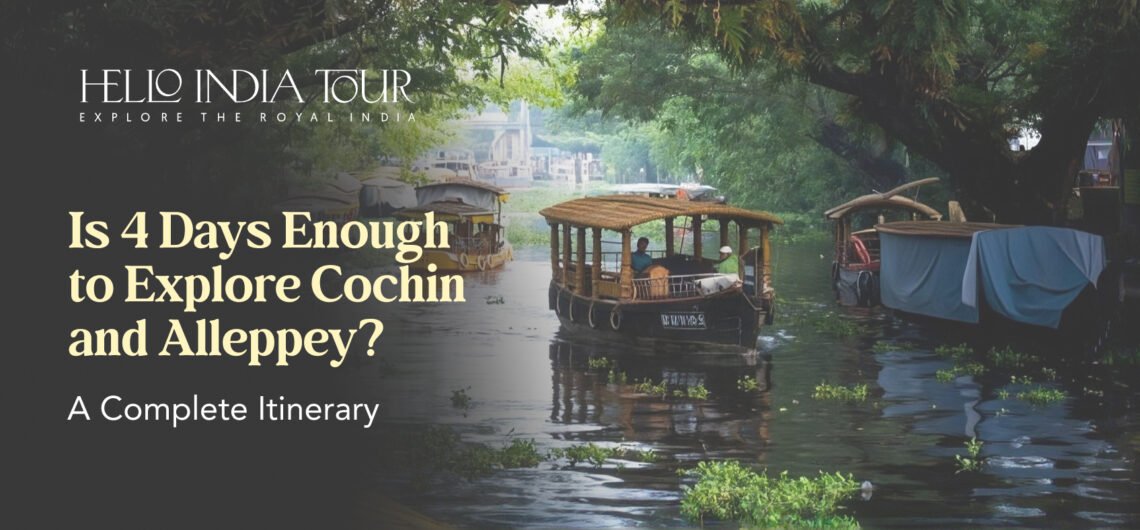
<p>Drive to Alleppey after breakfast. Houseboats usually offer check-in around noon, which means you board in time for lunch. Spend the afternoon cruising the canals of Kuttanad and Vembanad Lake, passing paddy fields, village life and coconut groves. Dinner is served on board and the boat anchors for the night.</p>
<!-- /wp:paragraph -->
<!-- wp:heading {"level":3,"anchor":"h-day-4-backwater-morning-and-departure"} -->
<h3 id="h-day-4-backwater-morning-and-departure" class="wp-block-heading"><strong>Day 4: Backwater Morning and Departure</strong></h3>
<!-- /wp:heading -->
<!-- wp:paragraph -->
<p>Wake up to a quiet morning on the water. Disembarkation is usually around 9 or 10 am. If your schedule allows, stop at Alleppey Beach or Marari Beach before the drive back to Cochin for your flight or onward train.</p>
<!-- /wp:paragraph -->
<!-- wp:heading {"anchor":"h-what-to-skip-if-you-are-short-on-time"} -->
<h2 id="h-what-to-skip-if-you-are-short-on-time" class="wp-block-heading"><strong>What to Skip If You Are Short on Time</strong></h2>
<!-- /wp:heading -->
<!-- wp:list -->
<ul class="wp-block-list"><!-- wp:list-item -->
<li>Skip a second heritage morning in Cochin and go straight to Alleppey on Day 2.</li>
<!-- /wp:list-item -->
<!-- wp:list-item -->
<li>Skip the beach stop and go directly to Cochin after disembarkation.</li>
<!-- /wp:list-item -->
<!-- wp:list-item -->
<li>Skip shopping in Jew Town, or limit it to 30 minutes.</li>
<!-- /wp:list-item --></ul>
<!-- /wp:list -->
<!-- wp:heading {"anchor":"h-houseboat-tips"} -->
<h2 id="h-houseboat-tips" class="wp-block-heading"><strong>Houseboat Tips</strong></h2>
<!-- /wp:heading -->
<!-- wp:list {"ordered":true} -->
<ol class="wp-block-list"><!-- wp:list-item -->
<li>Choose between a standard and a premium houseboat based on comfort needs. Check what is included, such as meals, air conditioning and the number of rooms.</li>
<!-- /wp:list-item -->
<!-- wp:list-item -->
<li>Book in advance during peak months, especially December and January.</li>
<!-- /wp:list-item -->
<!-- wp:list-item -->
<li>Carry mosquito repellent and a light jacket for the evening.</li>
<!-- /wp:list-item -->
<!-- wp:list-item -->
<li>Confirm the check-in and check-out times when you book.</li>
<!-- /wp:list-item --></ol>
<!-- /wp:list -->
<!-- wp:heading {"anchor":"h-best-time-to-visit"} -->
<h2 id="h-best-time-to-visit" class="wp-block-heading"><strong>Best Time to Visit</strong></h2>
<!-- /wp:heading -->
<!-- wp:paragraph -->
<p>November to February is the most pleasant, with cooler weather and calm waters. The monsoon, from June to September, brings heavy rain and a lush landscape, and some people prefer it for its quiet and its Ayurveda programmes. In August, Alleppey hosts the Nehru Trophy Boat Race, a major snake-boat event on Punnamada Lake.</p>
<!-- /wp:paragraph -->
<!-- wp:heading {"anchor":"h-want-to-add-more-days"} -->
<h2 id="h-want-to-add-more-days" class="wp-block-heading"><strong>Want to Add More Days?</strong></h2>
<!-- /wp:heading -->
<!-- wp:paragraph -->
<p>A 5 or 6 day version lets you add Kumarakom for its bird sanctuary or Munnar for tea plantations and hill scenery. Munnar is about 4 hours from Cochin, so it needs at least two extra days to be worthwhile.</p>
<!-- /wp:paragraph -->
<!-- wp:heading {"anchor":"h-plan-your-kerala-trip-with-hello-india-tour"} -->
<h2 id="h-plan-your-kerala-trip-with-hello-india-tour" class="wp-block-heading"><strong>Plan Your Kerala Trip with Hello India Tour</strong></h2>
<!-- /wp:heading -->
<!-- wp:paragraph -->
<p>Hello India Tour can arrange the transfers, hotels and houseboat for your dates, and customise the plan for couples, families or groups.</p>
<!-- /wp:paragraph -->
<!-- wp:heading {"anchor":"h-cochin-and-alleppey-4-day-trip-faq"} -->
<h2 id="h-cochin-and-alleppey-4-day-trip-faq" class="wp-block-heading"><strong>Cochin and Alleppey 4-Day Trip FAQ</strong></h2>
<!-- /wp:heading -->
<!-- wp:paragraph -->
<p><strong>Is 4 days enough for Cochin and Alleppey?</strong></p>
<!-- /wp:paragraph -->
<!-- wp:paragraph -->
<p>Yes. You can cover Fort Kochi, a cultural show and an overnight backwater cruise in 4 days.</p>
<!-- /wp:paragraph -->
<!-- wp:paragraph -->
<p><strong>How far is Alleppey from Cochin?</strong></p>
<!-- /wp:paragraph -->
<!-- wp:paragraph -->
<p>About 55 km, which takes 1.5 to 2 hours by road.</p>
<!-- /wp:paragraph -->
<!-- wp:paragraph -->
<p><strong>How many days do you need in Alleppey?</strong></p>
<!-- /wp:paragraph -->
<!-- wp:paragraph -->
<p>One night on a houseboat is enough for most travellers. Add a second night only if you want a slower pace.</p>
<!-- /wp:paragraph -->
<!-- wp:paragraph -->
<p><strong>What is the best time to visit Cochin and Alleppey?</strong></p>
<!-- /wp:paragraph -->
<!-- wp:paragraph -->
<p>November to February has the best weather. The monsoon is quiet and green but rainy.</p>
<!-- /wp:paragraph -->
<!-- wp:paragraph -->
<p><strong>Can I add Munnar to this itinerary?</strong></p>
<!-- /wp:paragraph -->
<!-- wp:paragraph -->
<p>Yes, but you will need at least two more days to do it comfortably.</p>
<!-- /wp:paragraph -->
<!-- wp:paragraph -->
<p><strong>What time do houseboats usually check in?</strong></p>
<!-- /wp:paragraph -->
<!-- wp:paragraph -->
<p>Around noon, with check-out the next morning at about 9 or 10 am. Confirm with your operator.</p>
<!-- /wp:paragraph -->
<!-- wp:paragraph -->
<p><em>Four days is enough to see Kerala at its slowest and most beautiful.</em></p>
<!-- /wp:paragraph -->
Cochin and Alleppey are only about 55 km apart, which makes them one of the easiest pairings in Kerala. Cochin gives you colonial history, spice markets and Kerala’s cultural arts. Alleppey gives you the backwaters, with a night on a houseboat.
Four days is enough to enjoy both without rushing, as long as you plan it well. This guide shows how.
The Short Answer
Yes, 4 days is enough to explore Cochin and Alleppey. You can see the main sights in Fort Kochi, enjoy a cultural evening and spend a full day and night on the backwaters. If you want to add Munnar or Kumarakom, plan 6 to 7 days instead.
How Far Are Cochin and Alleppey?
The two are about 55 km apart, a 1.5 to 2 hour drive depending on traffic. Trains and buses also connect them, but a private car is the easiest option when you have luggage and a houseboat check-in time to meet.
4-Day Itinerary
Day 1: Arrive in Cochin and Explore Fort Kochi
Check in and head to Fort Kochi in the afternoon. Walk along the waterfront to see the Chinese fishing nets, visit St. Francis Church, and enjoy the sunset on the beach. Have dinner at one of the seafood restaurants in the old quarter.
Day 2: Heritage Cochin and a Kathakali Show
Spend the morning in Mattancherry. Visit the Mattancherry (Dutch) Palace, the Paradesi Synagogue and the spice shops of Jew Town. In the afternoon, see Santa Cruz Basilica and browse the art galleries and cafes of Fort Kochi. In the evening, watch a Kathakali or Kalaripayattu performance, which is one of the best ways to experience Kerala’s cultural traditions.
Day 3: Cochin to Alleppey and Houseboat Stay
Drive to Alleppey after breakfast. Houseboats usually offer check-in around noon, which means you board in time for lunch. Spend the afternoon cruising the canals of Kuttanad and Vembanad Lake, passing paddy fields, village life and coconut groves. Dinner is served on board and the boat anchors for the night.
Day 4: Backwater Morning and Departure
Wake up to a quiet morning on the water. Disembarkation is usually around 9 or 10 am. If your schedule allows, stop at Alleppey Beach or Marari Beach before the drive back to Cochin for your flight or onward train.
What to Skip If You Are Short on Time
Skip a second heritage morning in Cochin and go straight to Alleppey on Day 2.
Skip the beach stop and go directly to Cochin after disembarkation.
Skip shopping in Jew Town, or limit it to 30 minutes.
Houseboat Tips
Choose between a standard and a premium houseboat based on comfort needs. Check what is included, such as meals, air conditioning and the number of rooms.
Book in advance during peak months, especially December and January.
Carry mosquito repellent and a light jacket for the evening.
Confirm the check-in and check-out times when you book.
Best Time to Visit
November to February is the most pleasant, with cooler weather and calm waters. The monsoon, from June to September, brings heavy rain and a lush landscape, and some people prefer it for its quiet and its Ayurveda programmes. In August, Alleppey hosts the Nehru Trophy Boat Race, a major snake-boat event on Punnamada Lake.
Want to Add More Days?
A 5 or 6 day version lets you add Kumarakom for its bird sanctuary or Munnar for tea plantations and hill scenery. Munnar is about 4 hours from Cochin, so it needs at least two extra days to be worthwhile.
Plan Your Kerala Trip with Hello India Tour
Hello India Tour can arrange the transfers, hotels and houseboat for your dates, and customise the plan for couples, families or groups.
Cochin and Alleppey 4-Day Trip FAQ
Is 4 days enough for Cochin and Alleppey?
Yes. You can cover Fort Kochi, a cultural show and an overnight backwater cruise in 4 days.
How far is Alleppey from Cochin?
About 55 km, which takes 1.5 to 2 hours by road.
How many days do you need in Alleppey?
One night on a houseboat is enough for most travellers. Add a second night only if you want a slower pace.
What is the best time to visit Cochin and Alleppey?
November to February has the best weather. The monsoon is quiet and green but rainy.
Can I add Munnar to this itinerary?
Yes, but you will need at least two more days to do it comfortably.
What time do houseboats usually check in?
Around noon, with check-out the next morning at about 9 or 10 am. Confirm with your operator.
Four days is enough to see Kerala at its slowest and most beautiful.
<!-- wp:paragraph -->
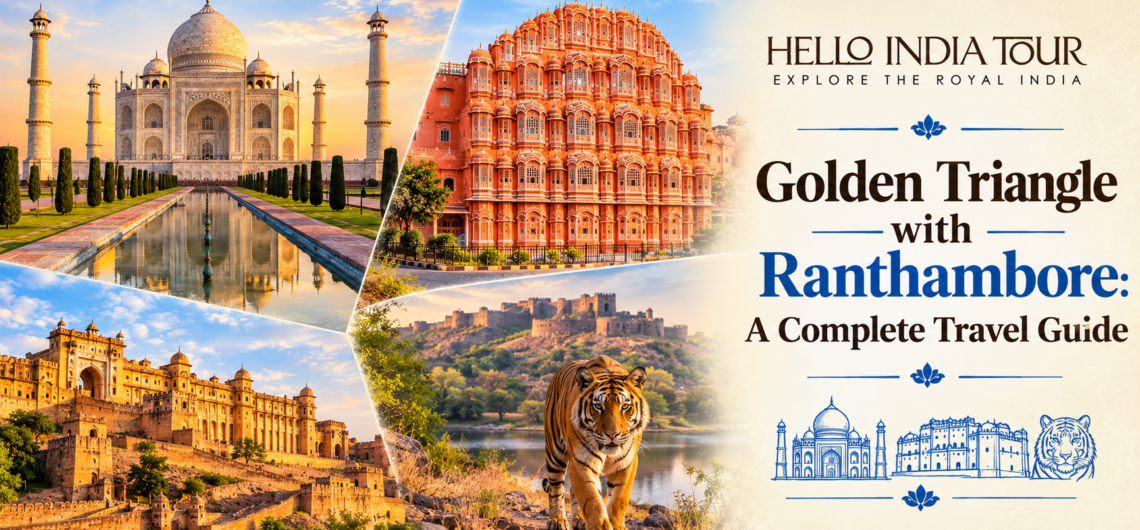
<p>The Golden Triangle of Delhi, Agra and Jaipur is India's classic first-time route. Adding Ranthambore National Park turns it into a trip that combines monuments, forts and a real chance to see a tiger in the wild. The question most travellers ask is how many days it takes to do all of it without rushing.</p>
<!-- /wp:paragraph -->
<!-- wp:paragraph -->
<p>This guide gives a clear answer, a suggested route and a day-by-day outline, so you can plan the trip with confidence.</p>
<!-- /wp:paragraph -->
<!-- wp:heading {"anchor":"h-the-short-answer"} -->
<h2 id="h-the-short-answer" class="wp-block-heading"><strong>The Short Answer</strong></h2>
<!-- /wp:heading -->
<!-- wp:paragraph -->
<p>A <a href="https://helloindiatour.com/golden-triangle-tours-packages/">Golden Triangle tour</a> with Ranthambore works best in 7 days. Six days is possible if you travel efficiently, and eight days gives you a more relaxed pace and a second safari. A standard Golden Triangle without Ranthambore takes 4 to 5 days, so the park adds about two days, including the travel.</p>
<!-- /wp:paragraph -->
<!-- wp:heading {"anchor":"h-why-add-ranthambore-to-the-golden-triangle"} -->
<h2 id="h-why-add-ranthambore-to-the-golden-triangle" class="wp-block-heading"><strong>Why Add Ranthambore to the Golden Triangle?</strong></h2>
<!-- /wp:heading -->
<!-- wp:paragraph -->
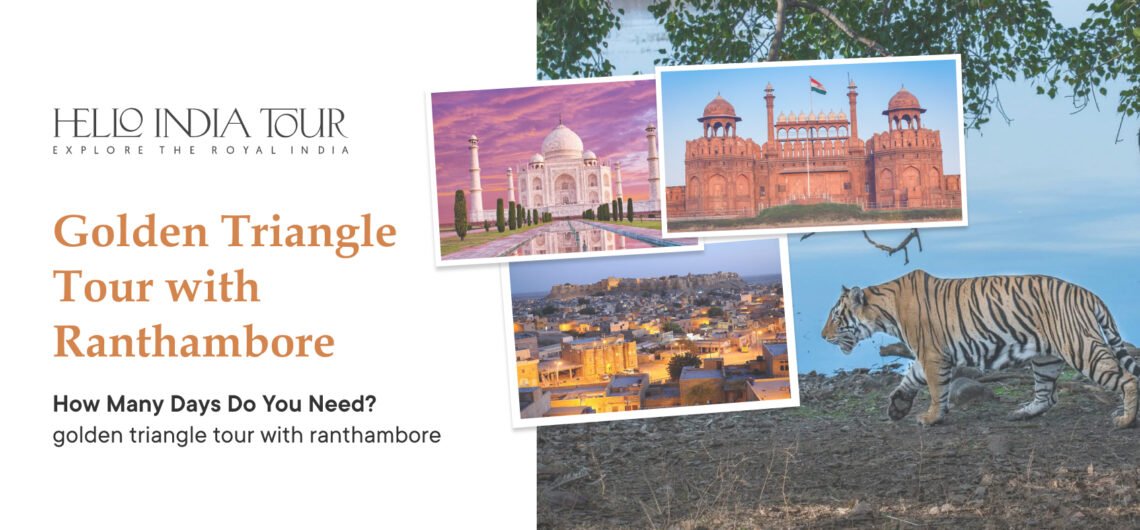
<p>Ranthambore sits roughly 180 km from Jaipur, which makes it the easiest tiger reserve to add to this route. The park is known for tiger sightings in an unusual setting: lakes, dry forest and the ruins of a 10th-century fort, all in the same landscape. It gives the trip a wildlife chapter that balances the monuments.</p>
<!-- /wp:paragraph -->
<!-- wp:heading {"anchor":"h-suggested-route"} -->
<h2 id="h-suggested-route" class="wp-block-heading"><strong>Suggested Route</strong></h2>
<!-- /wp:heading -->
<!-- wp:paragraph -->
<p>The most common route is Delhi, Agra, Jaipur, Ranthambore and back to Delhi. Another option is to move from Delhi to Ranthambore first, then Jaipur, then Agra, and finish in Delhi. Both work. Choose based on flight timings and where you want the safari to fall in the trip.</p>
<!-- /wp:paragraph -->
<!-- wp:heading {"anchor":"h-driving-times-between-stops"} -->
<h2 id="h-driving-times-between-stops" class="wp-block-heading"><strong>Driving Times Between Stops</strong></h2>
<!-- /wp:heading -->
<!-- wp:table -->
<figure class="wp-block-table"><table class="has-fixed-layout"><thead><tr><td><strong>Route</strong></td><td><strong>Approximate Travel Time</strong></td></tr></thead><tbody><tr><td><strong>Delhi to Agra</strong></td><td>3.5 to 4 hours by road via the expressway</td></tr><tr><td><strong>Agra to Jaipur</strong></td><td>4.5 to 5 hours, with Fatehpur Sikri on the way</td></tr><tr><td><strong>Jaipur to Ranthambore</strong></td><td>3.5 to 4 hours by road</td></tr><tr><td><strong>Ranthambore to Delhi</strong></td><td>5 to 6 hours by train or a longer drive</td></tr></tbody></table></figure>
<!-- /wp:table -->
<!-- wp:heading {"anchor":"h-day-by-day-plan-for-7-days"} -->
<h2 id="h-day-by-day-plan-for-7-days" class="wp-block-heading"><strong>Day-by-Day Plan for 7 Days</strong></h2>
<!-- /wp:heading -->
<!-- wp:heading {"level":3,"anchor":"h-day-1-arrive-in-delhi"} -->
<h3 id="h-day-1-arrive-in-delhi" class="wp-block-heading"><strong>Day 1: Arrive in Delhi</strong></h3>
<!-- /wp:heading -->
<!-- wp:paragraph -->
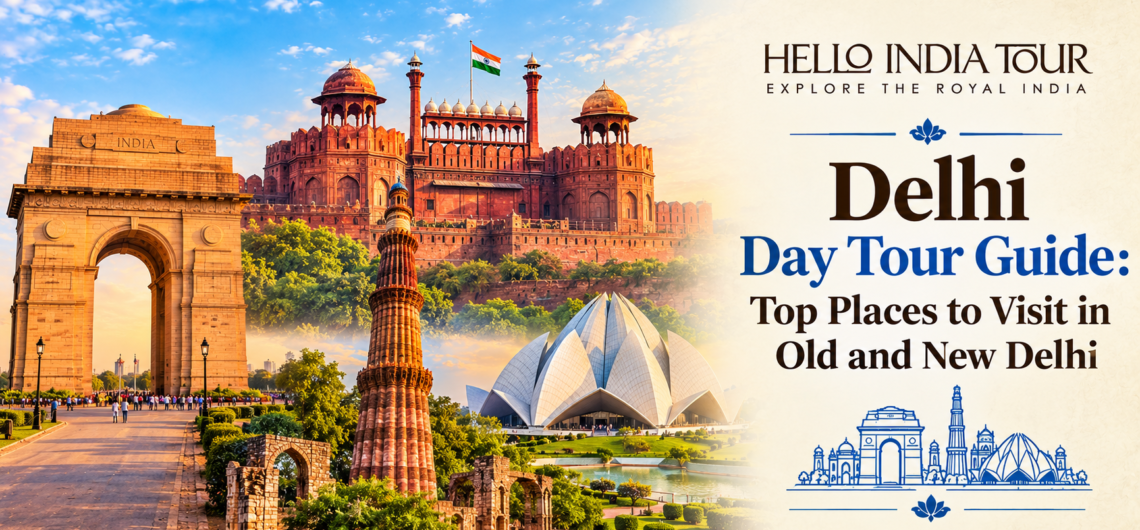
<p>Arrive, check in and spend the day on Old and New Delhi. See Humayun's Tomb, India Gate and, if time allows, Chandni Chowk.</p>
<!-- /wp:paragraph -->
<!-- wp:heading {"level":3,"anchor":"h-day-2-delhi-to-agra"} -->
<h3 id="h-day-2-delhi-to-agra" class="wp-block-heading"><strong>Day 2: Delhi to Agra</strong></h3>
<!-- /wp:heading -->
<!-- wp:paragraph -->
<p>Drive to Agra and visit Agra Fort in the afternoon. Keep the Taj Mahal for sunrise the next morning.</p>
<!-- /wp:paragraph -->
<!-- wp:heading {"level":3,"anchor":"h-day-3-taj-mahal-and-drive-to-jaipur"} -->
<h3 id="h-day-3-taj-mahal-and-drive-to-jaipur" class="wp-block-heading"><strong>Day 3: Taj Mahal and Drive to Jaipur</strong></h3>
<!-- /wp:heading -->
<!-- wp:paragraph -->
<p>See the Taj Mahal at sunrise, return for breakfast, then drive to Jaipur. Stop at Fatehpur Sikri on the way.</p>
<!-- /wp:paragraph -->
<!-- wp:heading {"level":3,"anchor":"h-day-4-jaipur"} -->
<h3 id="h-day-4-jaipur" class="wp-block-heading"><strong>Day 4: Jaipur</strong></h3>
<!-- /wp:heading -->
<!-- wp:paragraph -->
<p>Visit Amber Fort, City Palace, Hawa Mahal and Jantar Mantar. Spend the evening in the old city bazaars.</p>
<!-- /wp:paragraph -->
<!-- wp:heading {"level":3,"anchor":"h-day-5-jaipur-to-ranthambore"} -->
<h3 id="h-day-5-jaipur-to-ranthambore" class="wp-block-heading"><strong>Day 5: Jaipur to Ranthambore</strong></h3>
<!-- /wp:heading -->
<!-- wp:paragraph -->
<p>Drive to Ranthambore, check in, and take an afternoon safari if time allows.</p>
<!-- /wp:paragraph -->
<!-- wp:heading {"level":3,"anchor":"h-day-6-ranthambore-safari-and-fort"} -->
<h3 id="h-day-6-ranthambore-safari-and-fort" class="wp-block-heading"><strong>Day 6: Ranthambore Safari and Fort</strong></h3>
<!-- /wp:heading -->
<!-- wp:paragraph -->
<p>Take the morning safari, rest at midday, and visit Ranthambore Fort if you have time. A second safari in the afternoon increases your chance of a sighting.</p>
<!-- /wp:paragraph -->
<!-- wp:heading {"level":3,"anchor":"h-day-7-return-to-delhi"} -->
<h3 id="h-day-7-return-to-delhi" class="wp-block-heading"><strong>Day 7: Return to Delhi</strong></h3>
<!-- /wp:heading -->
<!-- wp:paragraph -->
<p>Take the morning train or drive back to Delhi for your onward flight.</p>
<!-- /wp:paragraph -->
<!-- wp:heading {"anchor":"h-can-you-do-it-in-6-days"} -->
<h2 id="h-can-you-do-it-in-6-days" class="wp-block-heading"><strong>Can You Do It in 6 Days?</strong></h2>
<!-- /wp:heading -->
<!-- wp:paragraph -->
<p>Yes, by trimming Delhi to a half day and combining the Taj Mahal and the Jaipur drive on one day. The trade-off is less time in each city and more hours on the road.</p>
<!-- /wp:paragraph -->
<!-- wp:heading {"anchor":"h-should-you-take-8-days"} -->
<h2 id="h-should-you-take-8-days" class="wp-block-heading"><strong>Should You Take 8 Days?</strong></h2>
<!-- /wp:heading -->
<!-- wp:paragraph -->
<p>An eighth day lets you add a full Delhi day at the start, a rest day in Jaipur or an extra safari. If this is your first trip to India, the extra day helps you recover from jet lag and travel.</p>
<!-- /wp:paragraph -->
<!-- wp:heading {"anchor":"h-best-time-for-the-golden-triangle-with-ranthambore"} -->
<h2 id="h-best-time-for-the-golden-triangle-with-ranthambore" class="wp-block-heading"><strong>Best Time for the Golden Triangle with Ranthambore</strong></h2>
<!-- /wp:heading -->
<!-- wp:list -->
<ul class="wp-block-list"><!-- wp:list-item -->
<li><strong>October to March:</strong> the best overall season for cooler weather and comfortable sightseeing.</li>
<!-- /wp:list-item -->
<!-- wp:list-item -->
<li><strong>April to June:</strong> hot, but often considered the best months for tiger sightings, as animals gather near water.</li>
<!-- /wp:list-item -->
<!-- wp:list-item -->
<li><strong>July to September:</strong> Ranthambore National Park is closed during the monsoon, so avoid this period for the safari.</li>
<!-- /wp:list-item --></ul>
<!-- /wp:list -->
<!-- wp:heading {"anchor":"h-tips-for-your-ranthambore-safari"} -->
<h2 id="h-tips-for-your-ranthambore-safari" class="wp-block-heading"><strong>Tips for Your Ranthambore Safari</strong></h2>
<!-- /wp:heading -->
<!-- wp:list {"ordered":true} -->
<ol class="wp-block-list"><!-- wp:list-item -->
<li>Book safaris in advance, especially in peak season, as seats are limited.</li>
<!-- /wp:list-item -->
<!-- wp:list-item -->
<li>Safari zones differ, and tiger sightings are never guaranteed in any zone. Book at least two safaris to improve your chances.</li>
<!-- /wp:list-item -->
<!-- wp:list-item -->
<li>Wear neutral colours and carry a light jacket for early morning drives.</li>
<!-- /wp:list-item -->
<!-- wp:list-item -->
<li>Follow your guide's instructions and keep noise to a minimum.</li>
<!-- /wp:list-item --></ol>
<!-- /wp:list -->
<!-- wp:heading {"anchor":"h-plan-your-trip-with-hello-india-tour"} -->
<h2 id="h-plan-your-trip-with-hello-india-tour" class="wp-block-heading"><strong>Plan Your Trip with Hello India Tour</strong></h2>
<!-- /wp:heading -->
<!-- wp:paragraph -->
<p>Hello India Tour can customise the Golden Triangle with Ranthambore around your dates, pace and interests, including the safari booking, transport and hotels.</p>
<!-- /wp:paragraph -->
<!-- wp:heading {"anchor":"h-golden-triangle-tour-with-ranthambore-faq"} -->
<h2 id="h-golden-triangle-tour-with-ranthambore-faq" class="wp-block-heading"><strong>Golden Triangle Tour with Ranthambore FAQ</strong></h2>
<!-- /wp:heading -->
<!-- wp:paragraph -->
<p><strong>How many days do you need for a Golden Triangle tour with Ranthambore?</strong></p>
<!-- /wp:paragraph -->
<!-- wp:paragraph -->
<p>Seven days is ideal. Six days is possible with a tighter schedule, and eight days gives a more relaxed pace.</p>
<!-- /wp:paragraph -->
<!-- wp:paragraph -->
<p><strong>Is Ranthambore worth adding to the Golden Triangle?</strong></p>
<!-- /wp:paragraph -->
<!-- wp:paragraph -->
<p>Yes, if you want a wildlife experience alongside the monuments. It is the easiest tiger reserve to add to the route.</p>
<!-- /wp:paragraph -->
<!-- wp:paragraph -->
<p><strong>What is the best time for Ranthambore?</strong></p>
<!-- /wp:paragraph -->
<!-- wp:paragraph -->
<p>October to June, when the park is open. April to June is often best for tiger sightings, though it is hot.</p>
<!-- /wp:paragraph -->
<!-- wp:paragraph -->
<p><strong>Is Ranthambore open all year?</strong></p>
<!-- /wp:paragraph -->
<!-- wp:paragraph -->
<p>No. The national park closes during the monsoon, roughly July to September.</p>
<!-- /wp:paragraph -->
<!-- wp:paragraph -->
<p><strong>Can I see a tiger for sure at Ranthambore?</strong></p>
<!-- /wp:paragraph -->
<!-- wp:paragraph -->
<p>No. Sightings are never guaranteed, but multiple safaris increase your chances.</p>
<!-- /wp:paragraph -->
<!-- wp:paragraph -->
<p><strong>How far is Ranthambore from Jaipur?</strong></p>
<!-- /wp:paragraph -->
<!-- wp:paragraph -->
<p>About 180 km, which is a drive of roughly 3.5 to 4 hours.</p>
<!-- /wp:paragraph -->
<!-- wp:paragraph -->
<p><em>Seven days is enough to see the monuments, the markets and a tiger.</em></p>
<!-- /wp:paragraph -->
The Golden Triangle of Delhi, Agra and Jaipur is India’s classic first-time route. Adding Ranthambore National Park turns it into a trip that combines monuments, forts and a real chance to see a tiger in the wild. The question most travellers ask is how many days it takes to do all of it without rushing.
This guide gives a clear answer, a suggested route and a day-by-day outline, so you can plan the trip with confidence.
The Short Answer
A Golden Triangle tour with Ranthambore works best in 7 days. Six days is possible if you travel efficiently, and eight days gives you a more relaxed pace and a second safari. A standard Golden Triangle without Ranthambore takes 4 to 5 days, so the park adds about two days, including the travel.
Why Add Ranthambore to the Golden Triangle?
Ranthambore sits roughly 180 km from Jaipur, which makes it the easiest tiger reserve to add to this route. The park is known for tiger sightings in an unusual setting: lakes, dry forest and the ruins of a 10th-century fort, all in the same landscape. It gives the trip a wildlife chapter that balances the monuments.
Suggested Route
The most common route is Delhi, Agra, Jaipur, Ranthambore and back to Delhi. Another option is to move from Delhi to Ranthambore first, then Jaipur, then Agra, and finish in Delhi. Both work. Choose based on flight timings and where you want the safari to fall in the trip.
Driving Times Between Stops
Route
Approximate Travel Time
Delhi to Agra
3.5 to 4 hours by road via the expressway
Agra to Jaipur
4.5 to 5 hours, with Fatehpur Sikri on the way
Jaipur to Ranthambore
3.5 to 4 hours by road
Ranthambore to Delhi
5 to 6 hours by train or a longer drive
Day-by-Day Plan for 7 Days
Day 1: Arrive in Delhi
Arrive, check in and spend the day on Old and New Delhi. See Humayun’s Tomb, India Gate and, if time allows, Chandni Chowk.
Day 2: Delhi to Agra
Drive to Agra and visit Agra Fort in the afternoon. Keep the Taj Mahal for sunrise the next morning.
Day 3: Taj Mahal and Drive to Jaipur
See the Taj Mahal at sunrise, return for breakfast, then drive to Jaipur. Stop at Fatehpur Sikri on the way.
Day 4: Jaipur
Visit Amber Fort, City Palace, Hawa Mahal and Jantar Mantar. Spend the evening in the old city bazaars.
Day 5: Jaipur to Ranthambore
Drive to Ranthambore, check in, and take an afternoon safari if time allows.
Day 6: Ranthambore Safari and Fort
Take the morning safari, rest at midday, and visit Ranthambore Fort if you have time. A second safari in the afternoon increases your chance of a sighting.
Day 7: Return to Delhi
Take the morning train or drive back to Delhi for your onward flight.
Can You Do It in 6 Days?
Yes, by trimming Delhi to a half day and combining the Taj Mahal and the Jaipur drive on one day. The trade-off is less time in each city and more hours on the road.
Should You Take 8 Days?
An eighth day lets you add a full Delhi day at the start, a rest day in Jaipur or an extra safari. If this is your first trip to India, the extra day helps you recover from jet lag and travel.
Best Time for the Golden Triangle with Ranthambore
October to March: the best overall season for cooler weather and comfortable sightseeing.
April to June: hot, but often considered the best months for tiger sightings, as animals gather near water.
July to September: Ranthambore National Park is closed during the monsoon, so avoid this period for the safari.
Tips for Your Ranthambore Safari
Book safaris in advance, especially in peak season, as seats are limited.
Safari zones differ, and tiger sightings are never guaranteed in any zone. Book at least two safaris to improve your chances.
Wear neutral colours and carry a light jacket for early morning drives.
Follow your guide’s instructions and keep noise to a minimum.
Plan Your Trip with Hello India Tour
Hello India Tour can customise the Golden Triangle with Ranthambore around your dates, pace and interests, including the safari booking, transport and hotels.
Golden Triangle Tour with Ranthambore FAQ
How many days do you need for a Golden Triangle tour with Ranthambore?
Seven days is ideal. Six days is possible with a tighter schedule, and eight days gives a more relaxed pace.
Is Ranthambore worth adding to the Golden Triangle?
Yes, if you want a wildlife experience alongside the monuments. It is the easiest tiger reserve to add to the route.
What is the best time for Ranthambore?
October to June, when the park is open. April to June is often best for tiger sightings, though it is hot.
Is Ranthambore open all year?
No. The national park closes during the monsoon, roughly July to September.
Can I see a tiger for sure at Ranthambore?
No. Sightings are never guaranteed, but multiple safaris increase your chances.
How far is Ranthambore from Jaipur?
About 180 km, which is a drive of roughly 3.5 to 4 hours.
Seven days is enough to see the monuments, the markets and a tiger.
<!-- wp:paragraph -->
<p>Most travellers come to Jaisalmer for a camel ride and a night under the stars in the Thar Desert. The safari is worth doing, but it is only one part of the city. Jaisalmer has a living fort, richly carved havelis, a lake with temples, an abandoned village and royal cenotaphs that glow at sunset.</p>
<!-- /wp:paragraph -->
<!-- wp:paragraph -->
<p>This guide covers the best things to do in Jaisalmer beyond desert safaris, so a stay of two days feels full instead of rushed.</p>
<!-- /wp:paragraph -->
<!-- wp:heading {"anchor":"h-why-jaisalmer-deserves-more-than-a-safari"} -->
<h2 id="h-why-jaisalmer-deserves-more-than-a-safari" class="wp-block-heading"><strong>Why Jaisalmer Deserves More Than a Safari</strong></h2>
<!-- /wp:heading -->
<!-- wp:paragraph -->
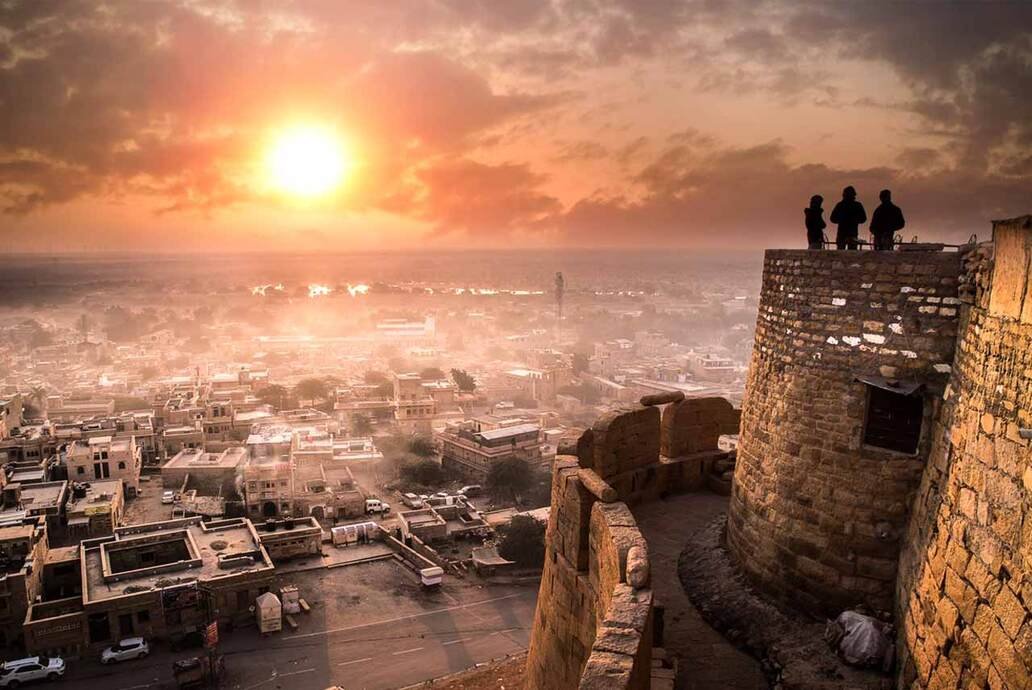
<p>Jaisalmer is built almost entirely from local yellow sandstone, which turns gold in the evening light and earns it the name Golden City. The old town is compact and walkable, the history is layered, and the crowds are smaller than in Jaipur or Udaipur. If you give it two days, you see far more than the dunes.</p>
<!-- /wp:paragraph -->
<!-- wp:heading {"anchor":"h-top-things-to-do-in-jaisalmer"} -->
<h2 id="h-top-things-to-do-in-jaisalmer" class="wp-block-heading"><strong>Top Things to Do in Jaisalmer</strong></h2>
<!-- /wp:heading -->
<!-- wp:heading {"level":3,"anchor":"h-1-walk-through-jaisalmer-fort"} -->
<h3 id="h-1-walk-through-jaisalmer-fort" class="wp-block-heading"><strong>1. Walk Through Jaisalmer Fort</strong></h3>
<!-- /wp:heading -->
<!-- wp:paragraph -->
<p>Jaisalmer Fort, also known as Sonar Qila, is one of the few living forts in India. Thousands of people still live inside its walls, and the lanes are full of guesthouses, shops, cafes and small temples. Do not miss the group of Jain temples inside, known for fine stone carving. Walk the ramparts for views over the city and the desert beyond.</p>
<!-- /wp:paragraph -->
<!-- wp:heading {"level":3,"anchor":"h-2-visit-the-havelis"} -->
<h3 id="h-2-visit-the-havelis" class="wp-block-heading"><strong>2. Visit the Havelis</strong></h3>
<!-- /wp:heading -->
<!-- wp:paragraph -->
<p>The havelis of Jaisalmer were built by wealthy merchants and show exceptional skill in sandstone carving. Patwon Ki Haveli is the largest and most famous, with a cluster of mansions and a museum inside. Nathmal Ki Haveli and Salim Singh Ki Haveli are also worth a visit for their balconies and detailed facades.</p>
<!-- /wp:paragraph -->
<!-- wp:heading {"level":3,"anchor":"h-3-spend-an-evening-at-gadisar-lake"} -->
<h3 id="h-3-spend-an-evening-at-gadisar-lake" class="wp-block-heading"><strong>3. Spend an Evening at Gadisar Lake</strong></h3>
<!-- /wp:heading -->
<!-- wp:paragraph -->
<p>Gadisar Lake was once the city's main water source and is lined with small temples and ghats. It is calm in the early morning and pleasant around sunset. You can take a short boat ride when conditions allow.</p>
<!-- /wp:paragraph -->
<!-- wp:heading {"level":3,"anchor":"h-4-watch-sunset-at-bada-bagh"} -->
<h3 id="h-4-watch-sunset-at-bada-bagh" class="wp-block-heading"><strong>4. Watch Sunset at Bada Bagh</strong></h3>
<!-- /wp:heading -->
<!-- wp:paragraph -->
<p>Bada Bagh is a garden complex with the royal cenotaphs of the Jaisalmer rulers, built in the same golden sandstone. The domed chhatris look dramatic in the late afternoon, and it is one of the best places in the city for photographs and a quieter sunset.</p>
<!-- /wp:paragraph -->
<!-- wp:heading {"level":3,"anchor":"h-5-explore-the-abandoned-village-of-kuldhara"} -->
<h3 id="h-5-explore-the-abandoned-village-of-kuldhara" class="wp-block-heading"><strong>5. Explore the Abandoned Village of Kuldhara</strong></h3>
<!-- /wp:heading -->
<!-- wp:paragraph -->
<p>Kuldhara is a village that was left empty centuries ago, and its stone houses and lanes still stand. Local legends say the residents left overnight, though historians point to water shortages and other pressures. Either way, it is an atmospheric stop roughly 20 km from the city.</p>
<!-- /wp:paragraph -->
<!-- wp:heading {"level":3,"anchor":"h-6-visit-khaba-fort-and-nearby-heritage-sites"} -->
<h3 id="h-6-visit-khaba-fort-and-nearby-heritage-sites" class="wp-block-heading"><strong>6. Visit Khaba Fort and Nearby Heritage Sites</strong></h3>
<!-- /wp:heading -->
<!-- wp:paragraph -->
<p>Khaba Fort and the old village around it make an easy add-on to Kuldhara. The area is far less visited and gives you a sense of the desert settlements that once lined this trade route.</p>
<!-- /wp:paragraph -->
<!-- wp:heading {"level":3,"anchor":"h-7-discover-lodurva-and-other-temples"} -->
<h3 id="h-7-discover-lodurva-and-other-temples" class="wp-block-heading"><strong>7. Discover Lodurva and Other Temples</strong></h3>
<!-- /wp:heading -->
<!-- wp:paragraph -->
<p>The Lodurva Jain Temples, about 15 km from Jaisalmer, are the former capital's surviving monuments and feature intricate carving and a famous kalpavriksha, or wish-fulfilling tree, at the entrance. They are a quiet stop for travellers who enjoy architecture.</p>
<!-- /wp:paragraph -->
<!-- wp:heading {"level":3,"anchor":"h-8-go-to-the-desert-national-park"} -->
<h3 id="h-8-go-to-the-desert-national-park" class="wp-block-heading"><strong>8. Go to the Desert National Park</strong></h3>
<!-- /wp:heading -->
<!-- wp:paragraph -->
<p>The Desert National Park protects a large area of the Thar ecosystem and is known for birdlife, including the Great Indian Bustard, one of India's rarest birds. Sightings are never guaranteed, but the landscape itself is worth the drive.</p>
<!-- /wp:paragraph -->
<!-- wp:heading {"level":3,"anchor":"h-9-shop-and-eat-in-the-old-city"} -->
<h3 id="h-9-shop-and-eat-in-the-old-city" class="wp-block-heading"><strong>9. Shop and Eat in the Old City</strong></h3>
<!-- /wp:heading -->
<!-- wp:paragraph -->
<p>The bazaars near the fort sell mirror-work textiles, leather goods, silver jewellery and camel-leather items. For food, try dal baati churma, ker sangri, gatte ki sabzi and lassi. Many rooftop restaurants face the fort and are best at sunset.</p>
<!-- /wp:paragraph -->
<!-- wp:heading {"level":3,"anchor":"h-10-plan-a-border-side-day-trip"} -->
<h3 id="h-10-plan-a-border-side-day-trip" class="wp-block-heading"><strong>10. Plan a Border-Side Day Trip</strong></h3>
<!-- /wp:heading -->
<!-- wp:paragraph -->
<p>Tanot Mata Temple and the Longewala battle site, both west of Jaisalmer near the border, are popular with history and military enthusiasts. These areas may require permits or ID checks, so confirm the current rules before you go.</p>
<!-- /wp:paragraph -->
<!-- wp:heading {"anchor":"h-how-many-days-do-you-need"} -->
<h2 id="h-how-many-days-do-you-need" class="wp-block-heading"><strong>How Many Days Do You Need?</strong></h2>
<!-- /wp:heading -->
<!-- wp:list -->
<ul class="wp-block-list"><!-- wp:list-item -->
<li><strong>One day:</strong> Jaisalmer Fort, one haveli, and Bada Bagh at sunset.</li>
<!-- /wp:list-item -->
<!-- wp:list-item -->
<li><strong>Two days:</strong> add Gadisar Lake, Kuldhara and an evening in the desert.</li>
<!-- /wp:list-item -->
<!-- wp:list-item -->
<li><strong>Three days:</strong> add Lodurva, Khaba, Desert National Park and a slower pace.</li>
<!-- /wp:list-item --></ul>
<!-- /wp:list -->
<!-- wp:heading {"anchor":"h-best-time-to-visit-jaisalmer"} -->
<h2 id="h-best-time-to-visit-jaisalmer" class="wp-block-heading"><strong>Best Time to Visit Jaisalmer</strong></h2>
<!-- /wp:heading -->
<!-- wp:paragraph -->
<p>October to March is the best season, with warm days and cool nights. February brings the Desert Festival, with folk music, turban-tying contests and cultural events. Summers are extremely hot and best avoided for sightseeing.</p>
<!-- /wp:paragraph -->
<!-- wp:heading {"anchor":"h-plan-jaisalmer-with-hello-india-tour"} -->
<h2 id="h-plan-jaisalmer-with-hello-india-tour" class="wp-block-heading"><strong>Plan Jaisalmer with Hello India Tour</strong></h2>
<!-- /wp:heading -->
<!-- wp:paragraph -->
<p>Jaisalmer fits naturally into a wider <a href="https://helloindiatour.com/rajasthan-tour-packages-discover-indias-royal-heritage-with-hello-india-tour/">Rajasthan journey</a> with Jodhpur, Pushkar, Jaipur and Udaipur. Hello India Tour can arrange transport, stays and guides so you spend your time in the city rather than on logistics.</p>
<!-- /wp:paragraph -->
<!-- wp:heading {"anchor":"h-things-to-do-in-jaisalmer-faq"} -->
<h2 id="h-things-to-do-in-jaisalmer-faq" class="wp-block-heading"><strong>Things to Do in Jaisalmer FAQ</strong></h2>
<!-- /wp:heading -->
<!-- wp:paragraph -->
<p><strong>How many days are enough for Jaisalmer?</strong></p>
<!-- /wp:paragraph -->
<!-- wp:paragraph -->
<p>Two days cover the fort, havelis, lake, Bada Bagh and Kuldhara, plus one desert evening. Three days allow a slower pace and more day trips.</p>
<!-- /wp:paragraph -->
<!-- wp:paragraph -->
<p><strong>What is Jaisalmer famous for?</strong></p>
<!-- /wp:paragraph -->
<!-- wp:paragraph -->
<p>Jaisalmer is famous for its golden sandstone fort, carved havelis and the Thar Desert.</p>
<!-- /wp:paragraph -->
<!-- wp:paragraph -->
<p><strong>Is Jaisalmer worth visiting without a safari?</strong></p>
<!-- /wp:paragraph -->
<!-- wp:paragraph -->
<p>Yes. The fort, havelis, Gadisar Lake and Kuldhara are enough to make the city worthwhile on their own.</p>
<!-- /wp:paragraph -->
<!-- wp:paragraph -->
<p><strong>What is the best time to visit Jaisalmer?</strong></p>
<!-- /wp:paragraph -->
<!-- wp:paragraph -->
<p>October to March has the best weather. February is especially lively because of the Desert Festival.</p>
<!-- /wp:paragraph -->
<!-- wp:paragraph -->
<p><strong>Is Kuldhara worth visiting?</strong></p>
<!-- /wp:paragraph -->
<!-- wp:paragraph -->
<p>Yes, particularly for its atmosphere and photographs. Go in the late afternoon when the light is softer.</p>
<!-- /wp:paragraph -->
<!-- wp:paragraph -->
<p><strong>Is Jaisalmer Fort a living fort?</strong></p>
<!-- /wp:paragraph -->
<!-- wp:paragraph -->
<p>Yes. Many families still live and work inside the fort, along with shops, guesthouses and temples.</p>
<!-- /wp:paragraph -->
<!-- wp:paragraph -->
<p><em>Jaisalmer's best moments often happen away from the dunes.</em></p>
<!-- /wp:paragraph -->
<!-- wp:paragraph -->
<p></p>
<!-- /wp:paragraph -->
Most travellers come to Jaisalmer for a camel ride and a night under the stars in the Thar Desert. The safari is worth doing, but it is only one part of the city. Jaisalmer has a living fort, richly carved havelis, a lake with temples, an abandoned village and royal cenotaphs that glow at sunset.
This guide covers the best things to do in Jaisalmer beyond desert safaris, so a stay of two days feels full instead of rushed.
Why Jaisalmer Deserves More Than a Safari
Jaisalmer is built almost entirely from local yellow sandstone, which turns gold in the evening light and earns it the name Golden City. The old town is compact and walkable, the history is layered, and the crowds are smaller than in Jaipur or Udaipur. If you give it two days, you see far more than the dunes.
Top Things to Do in Jaisalmer
1. Walk Through Jaisalmer Fort
Jaisalmer Fort, also known as Sonar Qila, is one of the few living forts in India. Thousands of people still live inside its walls, and the lanes are full of guesthouses, shops, cafes and small temples. Do not miss the group of Jain temples inside, known for fine stone carving. Walk the ramparts for views over the city and the desert beyond.
2. Visit the Havelis
The havelis of Jaisalmer were built by wealthy merchants and show exceptional skill in sandstone carving. Patwon Ki Haveli is the largest and most famous, with a cluster of mansions and a museum inside. Nathmal Ki Haveli and Salim Singh Ki Haveli are also worth a visit for their balconies and detailed facades.
3. Spend an Evening at Gadisar Lake
Gadisar Lake was once the city’s main water source and is lined with small temples and ghats. It is calm in the early morning and pleasant around sunset. You can take a short boat ride when conditions allow.
4. Watch Sunset at Bada Bagh
Bada Bagh is a garden complex with the royal cenotaphs of the Jaisalmer rulers, built in the same golden sandstone. The domed chhatris look dramatic in the late afternoon, and it is one of the best places in the city for photographs and a quieter sunset.
5. Explore the Abandoned Village of Kuldhara
Kuldhara is a village that was left empty centuries ago, and its stone houses and lanes still stand. Local legends say the residents left overnight, though historians point to water shortages and other pressures. Either way, it is an atmospheric stop roughly 20 km from the city.
6. Visit Khaba Fort and Nearby Heritage Sites
Khaba Fort and the old village around it make an easy add-on to Kuldhara. The area is far less visited and gives you a sense of the desert settlements that once lined this trade route.
7. Discover Lodurva and Other Temples
The Lodurva Jain Temples, about 15 km from Jaisalmer, are the former capital’s surviving monuments and feature intricate carving and a famous kalpavriksha, or wish-fulfilling tree, at the entrance. They are a quiet stop for travellers who enjoy architecture.
8. Go to the Desert National Park
The Desert National Park protects a large area of the Thar ecosystem and is known for birdlife, including the Great Indian Bustard, one of India’s rarest birds. Sightings are never guaranteed, but the landscape itself is worth the drive.
9. Shop and Eat in the Old City
The bazaars near the fort sell mirror-work textiles, leather goods, silver jewellery and camel-leather items. For food, try dal baati churma, ker sangri, gatte ki sabzi and lassi. Many rooftop restaurants face the fort and are best at sunset.
10. Plan a Border-Side Day Trip
Tanot Mata Temple and the Longewala battle site, both west of Jaisalmer near the border, are popular with history and military enthusiasts. These areas may require permits or ID checks, so confirm the current rules before you go.
How Many Days Do You Need?
One day: Jaisalmer Fort, one haveli, and Bada Bagh at sunset.
Two days: add Gadisar Lake, Kuldhara and an evening in the desert.
Three days: add Lodurva, Khaba, Desert National Park and a slower pace.
Best Time to Visit Jaisalmer
October to March is the best season, with warm days and cool nights. February brings the Desert Festival, with folk music, turban-tying contests and cultural events. Summers are extremely hot and best avoided for sightseeing.
Plan Jaisalmer with Hello India Tour
Jaisalmer fits naturally into a wider Rajasthan journey with Jodhpur, Pushkar, Jaipur and Udaipur. Hello India Tour can arrange transport, stays and guides so you spend your time in the city rather than on logistics.
Things to Do in Jaisalmer FAQ
How many days are enough for Jaisalmer?
Two days cover the fort, havelis, lake, Bada Bagh and Kuldhara, plus one desert evening. Three days allow a slower pace and more day trips.
What is Jaisalmer famous for?
Jaisalmer is famous for its golden sandstone fort, carved havelis and the Thar Desert.
Is Jaisalmer worth visiting without a safari?
Yes. The fort, havelis, Gadisar Lake and Kuldhara are enough to make the city worthwhile on their own.
What is the best time to visit Jaisalmer?
October to March has the best weather. February is especially lively because of the Desert Festival.
Is Kuldhara worth visiting?
Yes, particularly for its atmosphere and photographs. Go in the late afternoon when the light is softer.
Is Jaisalmer Fort a living fort?
Yes. Many families still live and work inside the fort, along with shops, guesthouses and temples.
Jaisalmer’s best moments often happen away from the dunes.
<!-- wp:paragraph -->
<p>Delhi does not have one shopping district. It has dozens of markets, and each one has its own character. Some sell silk, silver and spices in lanes that are centuries old. Others sell street fashion, handicrafts from every state, or books and coffee in a quiet, upscale setting. For most travellers, an hour in the right market teaches more about the city than a day of monuments.</p>
<!-- /wp:paragraph -->
<!-- wp:paragraph -->
<p>This guide covers the famous markets in Delhi, what each one is best for, what to eat there, and how to shop without overpaying or burning out.</p>
<!-- /wp:paragraph -->
<!-- wp:heading {"anchor":"h-why-delhi-s-markets-are-worth-your-time"} -->
<h2 id="h-why-delhi-s-markets-are-worth-your-time" class="wp-block-heading"><strong>Why Delhi's Markets Are Worth Your Time</strong></h2>
<!-- /wp:heading -->
<!-- wp:paragraph -->
<p>Delhi's markets mirror the city's layers. Old Delhi's bazaars date back to the Mughal era and still trade by lane and speciality. Central Delhi's emporiums and government-backed craft shops were built for visitors. South and West Delhi's markets grew around residential colonies and now set the tone for local fashion. Visiting a mix of them gives you shopping, food and a real sense of how Delhi lives.</p>
<!-- /wp:paragraph -->
<!-- wp:heading {"anchor":"h-the-best-markets-in-delhi-one-by-one"} -->
<h2 id="h-the-best-markets-in-delhi-one-by-one" class="wp-block-heading"><strong>The Best Markets in Delhi, One by One</strong></h2>
<!-- /wp:heading -->
<!-- wp:heading {"level":3,"anchor":"h-chandni-chowk-and-old-delhi-bazaars"} -->
<h3 id="h-chandni-chowk-and-old-delhi-bazaars" class="wp-block-heading"><strong>Chandni Chowk and Old Delhi Bazaars</strong></h3>
<!-- /wp:heading -->
<!-- wp:paragraph -->
<p>Chandni Chowk is the heart of Old Delhi and the most atmospheric market in the city. The main road is lined with wholesale and retail shops, and the lanes branching off it each specialise in something: Dariba Kalan for silver jewellery and attar, Chawri Bazar for paper and brass, Kinari Bazaar for wedding trimmings, and Khari Baoli, one of Asia's largest wholesale spice markets. It is crowded and loud, and that is the point.</p>
<!-- /wp:paragraph -->
<!-- wp:paragraph -->
<p>This is also Delhi's food capital. Paranthe Wali Gali is known for stuffed parathas, and the area around Jama Masjid is famous for kebabs and Mughlai dishes. Add jalebi, kachori and chaat, and you can eat your way through the morning.</p>
<!-- /wp:paragraph -->
<!-- wp:heading {"level":3,"anchor":"h-janpath-and-connaught-place"} -->
<h3 id="h-janpath-and-connaught-place" class="wp-block-heading"><strong>Janpath and Connaught Place</strong></h3>
<!-- /wp:heading -->
<!-- wp:paragraph -->
<p>Janpath is the easiest market for first-time visitors. Street stalls sell handicrafts, textiles, silver jewellery, bags and souvenirs, and the government emporiums nearby offer fixed-price crafts from across India. Connaught Place, just next to it, has its colonnaded arcades, bookshops and cafes, so you can shop and rest in the same area.</p>
<!-- /wp:paragraph -->
<!-- wp:heading {"level":3,"anchor":"h-dilli-haat-ina"} -->
<h3 id="h-dilli-haat-ina" class="wp-block-heading"><strong>Dilli Haat, INA</strong></h3>
<!-- /wp:heading -->
<!-- wp:paragraph -->
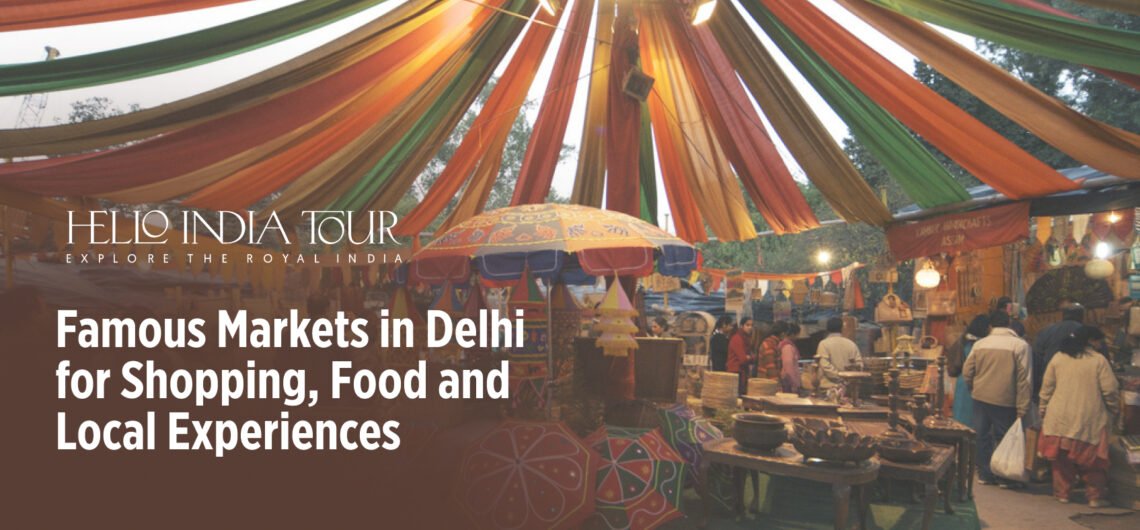
<p>Dilli Haat is an open-air craft bazaar where artisans from different states rent stalls on rotation. You will find block-printed fabrics, Kashmiri shawls, Rajasthani puppets, pottery and leather goods in one place. There is an entry ticket, which keeps the crowd manageable, and a food court serving regional dishes from across the country. It is the best choice if you want quality crafts in a comfortable setting.</p>
<!-- /wp:paragraph -->
<!-- wp:heading {"level":3,"anchor":"h-sarojini-nagar"} -->
<h3 id="h-sarojini-nagar" class="wp-block-heading"><strong>Sarojini Nagar</strong></h3>
<!-- /wp:heading -->
<!-- wp:paragraph -->
<p>Sarojini Nagar is Delhi's best-known market for affordable fashion. Stalls sell trendy clothing, export surplus pieces, footwear and accessories at low prices. It is busy and bargaining is expected, so go with patience and check each piece for defects before paying.</p>
<!-- /wp:paragraph -->
<!-- wp:heading {"level":3,"anchor":"h-lajpat-nagar"} -->
<h3 id="h-lajpat-nagar" class="wp-block-heading"><strong>Lajpat Nagar</strong></h3>
<!-- /wp:heading -->
<!-- wp:paragraph -->
<p>Lajpat Nagar is the go-to market for ethnic wear: salwar suits, sarees, lehengas, dress fabrics and wedding shopping. It also has good street food and sweet shops, which makes it a popular family market.</p>
<!-- /wp:paragraph -->
<!-- wp:heading {"level":3,"anchor":"h-khan-market-and-hauz-khas-village"} -->
<h3 id="h-khan-market-and-hauz-khas-village" class="wp-block-heading"><strong>Khan Market and Hauz Khas Village</strong></h3>
<!-- /wp:heading -->
<!-- wp:paragraph -->
<p>Khan Market is compact, upscale and relaxed, with bookshops, boutiques and well-known cafes. Hauz Khas Village has designer studios, art galleries and cafes with views of the old reservoir and the ruined monuments around it. Neither is a bargain market, but both are good for a slow, comfortable afternoon.</p>
<!-- /wp:paragraph -->
<!-- wp:heading {"anchor":"h-delhi-markets-at-a-glance"} -->
<h2 id="h-delhi-markets-at-a-glance" class="wp-block-heading"><strong>Delhi Markets at a Glance</strong></h2>
<!-- /wp:heading -->
<!-- wp:table -->
<figure class="wp-block-table"><table class="has-fixed-layout"><thead><tr><td><strong>Market</strong></td><td><strong>Best For</strong></td><td><strong>Nearest Metro Station</strong></td></tr></thead><tbody><tr><td><strong>Chandni Chowk</strong></td><td>Street food, spices, silver, fabrics</td><td>Chandni Chowk</td></tr><tr><td><strong>Janpath</strong></td><td>Souvenirs, handicrafts, silver jewellery</td><td>Janpath</td></tr><tr><td><strong>Dilli Haat</strong></td><td>Regional crafts, textiles, food court</td><td>INA</td></tr><tr><td><strong>Sarojini Nagar</strong></td><td>Budget fashion and accessories</td><td>Sarojini Nagar</td></tr><tr><td><strong>Lajpat Nagar</strong></td><td>Ethnic wear, fabrics, wedding shopping</td><td>Lajpat Nagar</td></tr><tr><td><strong>Khan Market</strong></td><td>Books, boutiques, cafes</td><td>Khan Market</td></tr><tr><td><strong>Hauz Khas Village</strong></td><td>Design studios, galleries, cafes</td><td>Hauz Khas</td></tr></tbody></table></figure>
<!-- /wp:table -->
<!-- wp:heading {"anchor":"h-what-to-eat-while-you-shop"} -->
<h2 id="h-what-to-eat-while-you-shop" class="wp-block-heading"><strong>What to Eat While You Shop</strong></h2>
<!-- /wp:heading -->
<!-- wp:list -->
<ul class="wp-block-list"><!-- wp:list-item -->
<li><strong>Stuffed parathas:</strong> a Chandni Chowk breakfast tradition, served with pickles and chutneys.</li>
<!-- /wp:list-item -->
<!-- wp:list-item -->
<li><strong>Jalebi and rabri:</strong> hot, syrupy jalebis in Old Delhi are best eaten fresh.</li>
<!-- /wp:list-item -->
<!-- wp:list-item -->
<li><strong>Chaat:</strong> tangy, crunchy street snacks found in nearly every market.</li>
<!-- /wp:list-item -->
<!-- wp:list-item -->
<li><strong>Kebabs and biryani:</strong> try them near Jama Masjid for a proper Mughlai meal.</li>
<!-- /wp:list-item -->
<!-- wp:list-item -->
<li><strong>Regional thalis:</strong> the Dilli Haat food court is the easiest way to sample dishes from different states.</li>
<!-- /wp:list-item --></ul>
<!-- /wp:list -->
<!-- wp:heading {"anchor":"h-smart-shopping-tips"} -->
<h2 id="h-smart-shopping-tips" class="wp-block-heading"><strong>Smart Shopping Tips</strong></h2>
<!-- /wp:heading -->
<!-- wp:list {"ordered":true} -->
<ol class="wp-block-list"><!-- wp:list-item -->
<li>Bargain politely in street markets. Start at roughly half the first quoted price and settle somewhere in between. Do not bargain in fixed-price emporiums.</li>
<!-- /wp:list-item -->
<!-- wp:list-item -->
<li>Carry small notes and some cash. Many stalls prefer UPI or cash, and change can be hard to find.</li>
<!-- /wp:list-item -->
<!-- wp:list-item -->
<li>Keep bags zipped and valuables in front pockets in crowded lanes.</li>
<!-- /wp:list-item -->
<!-- wp:list-item -->
<li>Check the weekly closing day before you go. Many Delhi markets close on one day a week, usually Sunday or Monday.</li>
<!-- /wp:list-item -->
<!-- wp:list-item -->
<li>Use the metro. Parking near most markets is difficult and the traffic is heavy.</li>
<!-- /wp:list-item --></ol>
<!-- /wp:list -->
<!-- wp:heading {"anchor":"h-best-time-to-visit-delhi-markets"} -->
<h2 id="h-best-time-to-visit-delhi-markets" class="wp-block-heading"><strong>Best Time to Visit Delhi Markets</strong></h2>
<!-- /wp:heading -->
<!-- wp:paragraph -->
<p>October to March is the most comfortable season for walking through outdoor markets. Summer afternoons are hot, so shop in the early morning or after sunset. Expect larger crowds in the weeks before Diwali and during wedding season, when the markets are at their liveliest.</p>
<!-- /wp:paragraph -->
<!-- wp:heading {"anchor":"h-explore-delhi-s-markets-with-hello-india-tour"} -->
<h2 id="h-explore-delhi-s-markets-with-hello-india-tour" class="wp-block-heading"><strong>Explore Delhi's Markets with Hello India Tour</strong></h2>
<!-- /wp:heading -->
<!-- wp:paragraph -->
<p>If you would rather not navigate the lanes alone, a guided Delhi city experience can cover the markets alongside the major monuments, with a driver and a local guide who knows where to eat and what is worth buying. You can also add Delhi to a wider <a href="https://helloindiatour.com/golden-triangle-tours-by-hello-india-tours-agency/">Golden Triangle itinerary</a> with Agra and Jaipur.</p>
<!-- /wp:paragraph -->
<!-- wp:heading {"anchor":"h-famous-markets-in-delhi-faq"} -->
<h2 id="h-famous-markets-in-delhi-faq" class="wp-block-heading"><strong>Famous Markets in Delhi FAQ</strong></h2>
<!-- /wp:heading -->
<!-- wp:paragraph -->
<p><strong>Which is the most famous market in Delhi?</strong></p>
<!-- /wp:paragraph -->
<!-- wp:paragraph -->
<p>Chandni Chowk in Old Delhi is the most famous. It combines wholesale bazaars, spice markets and some of the city's best street food.</p>
<!-- /wp:paragraph -->
<!-- wp:paragraph -->
<p><strong>Which Delhi market is best for souvenirs?</strong></p>
<!-- /wp:paragraph -->
<!-- wp:paragraph -->
<p>Janpath and Dilli Haat are the best for souvenirs. Janpath has street stalls and emporiums, while Dilli Haat has handicrafts from many Indian states in one place.</p>
<!-- /wp:paragraph -->
<!-- wp:paragraph -->
<p><strong>Where can I buy cheap clothes in Delhi?</strong></p>
<!-- /wp:paragraph -->
<!-- wp:paragraph -->
<p>Sarojini Nagar is the most popular market for affordable fashion, and bargaining is expected.</p>
<!-- /wp:paragraph -->
<!-- wp:paragraph -->
<p><strong>Is bargaining allowed in Delhi markets?</strong></p>
<!-- /wp:paragraph -->
<!-- wp:paragraph -->
<p>Yes, in street markets such as Sarojini Nagar and Janpath. Do not bargain in fixed-price government emporiums.</p>
<!-- /wp:paragraph -->
<!-- wp:paragraph -->
<p><strong>Which Delhi market is best for food?</strong></p>
<!-- /wp:paragraph -->
<!-- wp:paragraph -->
<p>Chandni Chowk is the best for traditional street food, especially parathas, jalebi, chaat and kebabs.</p>
<!-- /wp:paragraph -->
<!-- wp:paragraph -->
<p><strong>What is the best time to visit Delhi markets?</strong></p>
<!-- /wp:paragraph -->
<!-- wp:paragraph -->
<p>October to March has the most pleasant weather. In summer, go early in the morning or after sunset.</p>
<!-- /wp:paragraph -->
<!-- wp:paragraph -->
<p><em>Delhi's markets reward the traveller who arrives hungry and leaves with a full bag.</em></p>
<!-- /wp:paragraph -->
Delhi does not have one shopping district. It has dozens of markets, and each one has its own character. Some sell silk, silver and spices in lanes that are centuries old. Others sell street fashion, handicrafts from every state, or books and coffee in a quiet, upscale setting. For most travellers, an hour in the right market teaches more about the city than a day of monuments.
This guide covers the famous markets in Delhi, what each one is best for, what to eat there, and how to shop without overpaying or burning out.
Why Delhi’s Markets Are Worth Your Time
Delhi’s markets mirror the city’s layers. Old Delhi’s bazaars date back to the Mughal era and still trade by lane and speciality. Central Delhi’s emporiums and government-backed craft shops were built for visitors. South and West Delhi’s markets grew around residential colonies and now set the tone for local fashion. Visiting a mix of them gives you shopping, food and a real sense of how Delhi lives.
The Best Markets in Delhi, One by One
Chandni Chowk and Old Delhi Bazaars
Chandni Chowk is the heart of Old Delhi and the most atmospheric market in the city. The main road is lined with wholesale and retail shops, and the lanes branching off it each specialise in something: Dariba Kalan for silver jewellery and attar, Chawri Bazar for paper and brass, Kinari Bazaar for wedding trimmings, and Khari Baoli, one of Asia’s largest wholesale spice markets. It is crowded and loud, and that is the point.
This is also Delhi’s food capital. Paranthe Wali Gali is known for stuffed parathas, and the area around Jama Masjid is famous for kebabs and Mughlai dishes. Add jalebi, kachori and chaat, and you can eat your way through the morning.
Janpath and Connaught Place
Janpath is the easiest market for first-time visitors. Street stalls sell handicrafts, textiles, silver jewellery, bags and souvenirs, and the government emporiums nearby offer fixed-price crafts from across India. Connaught Place, just next to it, has its colonnaded arcades, bookshops and cafes, so you can shop and rest in the same area.
Dilli Haat, INA
Dilli Haat is an open-air craft bazaar where artisans from different states rent stalls on rotation. You will find block-printed fabrics, Kashmiri shawls, Rajasthani puppets, pottery and leather goods in one place. There is an entry ticket, which keeps the crowd manageable, and a food court serving regional dishes from across the country. It is the best choice if you want quality crafts in a comfortable setting.
Sarojini Nagar
Sarojini Nagar is Delhi’s best-known market for affordable fashion. Stalls sell trendy clothing, export surplus pieces, footwear and accessories at low prices. It is busy and bargaining is expected, so go with patience and check each piece for defects before paying.
Lajpat Nagar
Lajpat Nagar is the go-to market for ethnic wear: salwar suits, sarees, lehengas, dress fabrics and wedding shopping. It also has good street food and sweet shops, which makes it a popular family market.
Khan Market and Hauz Khas Village
Khan Market is compact, upscale and relaxed, with bookshops, boutiques and well-known cafes. Hauz Khas Village has designer studios, art galleries and cafes with views of the old reservoir and the ruined monuments around it. Neither is a bargain market, but both are good for a slow, comfortable afternoon.
Delhi Markets at a Glance
Market
Best For
Nearest Metro Station
Chandni Chowk
Street food, spices, silver, fabrics
Chandni Chowk
Janpath
Souvenirs, handicrafts, silver jewellery
Janpath
Dilli Haat
Regional crafts, textiles, food court
INA
Sarojini Nagar
Budget fashion and accessories
Sarojini Nagar
Lajpat Nagar
Ethnic wear, fabrics, wedding shopping
Lajpat Nagar
Khan Market
Books, boutiques, cafes
Khan Market
Hauz Khas Village
Design studios, galleries, cafes
Hauz Khas
What to Eat While You Shop
Stuffed parathas: a Chandni Chowk breakfast tradition, served with pickles and chutneys.
Jalebi and rabri: hot, syrupy jalebis in Old Delhi are best eaten fresh.
Chaat: tangy, crunchy street snacks found in nearly every market.
Kebabs and biryani: try them near Jama Masjid for a proper Mughlai meal.
Regional thalis: the Dilli Haat food court is the easiest way to sample dishes from different states.
Smart Shopping Tips
Bargain politely in street markets. Start at roughly half the first quoted price and settle somewhere in between. Do not bargain in fixed-price emporiums.
Carry small notes and some cash. Many stalls prefer UPI or cash, and change can be hard to find.
Keep bags zipped and valuables in front pockets in crowded lanes.
Check the weekly closing day before you go. Many Delhi markets close on one day a week, usually Sunday or Monday.
Use the metro. Parking near most markets is difficult and the traffic is heavy.
Best Time to Visit Delhi Markets
October to March is the most comfortable season for walking through outdoor markets. Summer afternoons are hot, so shop in the early morning or after sunset. Expect larger crowds in the weeks before Diwali and during wedding season, when the markets are at their liveliest.
Explore Delhi’s Markets with Hello India Tour
If you would rather not navigate the lanes alone, a guided Delhi city experience can cover the markets alongside the major monuments, with a driver and a local guide who knows where to eat and what is worth buying. You can also add Delhi to a wider Golden Triangle itinerary with Agra and Jaipur.
Famous Markets in Delhi FAQ
Which is the most famous market in Delhi?
Chandni Chowk in Old Delhi is the most famous. It combines wholesale bazaars, spice markets and some of the city’s best street food.
Which Delhi market is best for souvenirs?
Janpath and Dilli Haat are the best for souvenirs. Janpath has street stalls and emporiums, while Dilli Haat has handicrafts from many Indian states in one place.
Where can I buy cheap clothes in Delhi?
Sarojini Nagar is the most popular market for affordable fashion, and bargaining is expected.
Is bargaining allowed in Delhi markets?
Yes, in street markets such as Sarojini Nagar and Janpath. Do not bargain in fixed-price government emporiums.
Which Delhi market is best for food?
Chandni Chowk is the best for traditional street food, especially parathas, jalebi, chaat and kebabs.
What is the best time to visit Delhi markets?
October to March has the most pleasant weather. In summer, go early in the morning or after sunset.
Delhi’s markets reward the traveller who arrives hungry and leaves with a full bag.
<!-- wp:list -->
<ul class="wp-block-list"><!-- wp:list-item -->
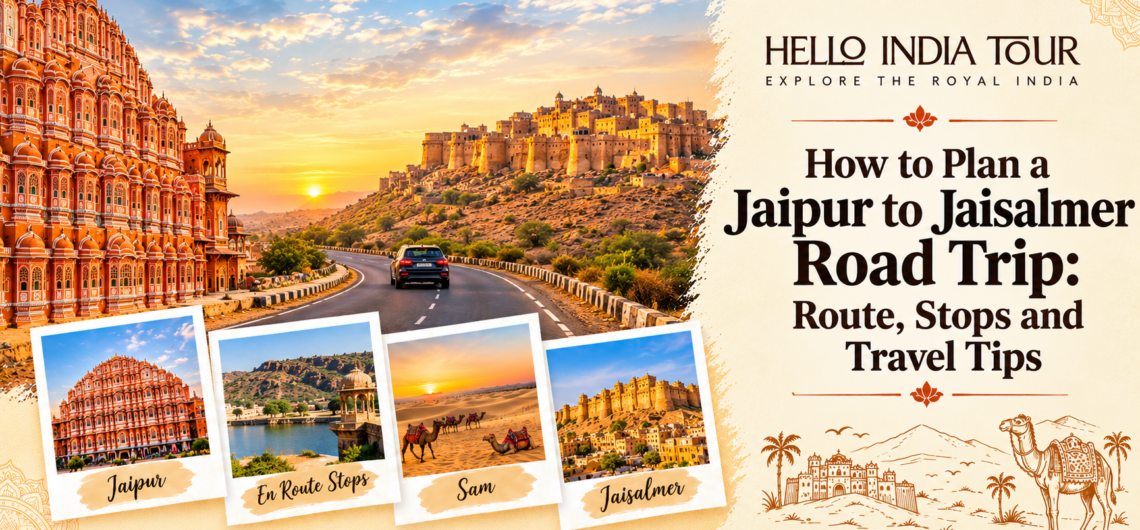
<li>The drive from Jaipur to Jaisalmer takes you from the Pink City's palaces to the Golden City's sandstone fort, with the Thar Desert opening up in between. It is one of Rajasthan's best road trips: wide highways, forts, desert temples and campsites under a huge night sky. This guide covers the route, the best stops, timing, budget and practical tips so you can plan it with confidence.</li>
<!-- /wp:list-item -->
<!-- wp:list-item -->
<li>Jaipur to Jaisalmer at a Glance</li>
<!-- /wp:list-item -->
<!-- wp:list-item -->
<li><strong>Distance:</strong> roughly 560-600 km by the main route (about 650 km via Bikaner)</li>
<!-- /wp:list-item -->
<!-- wp:list-item -->
<li><strong>Driving time:</strong> about 10-11 hours non-stop; plan 2-3 days to enjoy it</li>
<!-- /wp:list-item -->
<!-- wp:list-item -->
<li><strong>Best season:</strong> October to March</li>
<!-- /wp:list-item -->
<!-- wp:list-item -->
<li><strong>Main route:</strong> Jaipur → Ajmer → Jodhpur → Pokhran → Jaisalmer</li>
<!-- /wp:list-item -->
<!-- wp:list-item -->
<li><strong>Ideal trip length:</strong> 3 days one way, 5-6 days with sightseeing in Jaisalmer</li>
<!-- /wp:list-item --></ul>
<!-- /wp:list -->
<!-- wp:paragraph -->
<p><em>Distances and timings are approximate and vary with traffic and road conditions, so check live navigation before you leave.</em></p>
<!-- /wp:paragraph -->
<!-- wp:heading {"anchor":"h-route-options"} -->
<h2 id="h-route-options" class="wp-block-heading">Route Options</h2>
<!-- /wp:heading -->
<!-- wp:heading {"level":3,"anchor":"h-route-1-via-ajmer-and-jodhpur-recommended"} -->
<h3 id="h-route-1-via-ajmer-and-jodhpur-recommended" class="wp-block-heading">Route 1: Via Ajmer and Jodhpur (Recommended)</h3>
<!-- /wp:heading -->
<!-- wp:paragraph -->
<p>This is the most popular route. Highways are good, fuel stations and restaurants are frequent, and you pass two major heritage cities.</p>
<!-- /wp:paragraph -->
<!-- wp:list {"ordered":true} -->
<ol class="wp-block-list"><!-- wp:list-item -->
<li><strong>Jaipur to Ajmer/Pushkar:</strong> about 135 km, 2.5 hours</li>
<!-- /wp:list-item -->
<!-- wp:list-item -->
<li><strong>Ajmer to Jodhpur:</strong> about 200 km, 3.5-4 hours</li>
<!-- /wp:list-item -->
<!-- wp:list-item -->
<li><strong>Jodhpur to Pokhran:</strong> about 110 km</li>
<!-- /wp:list-item -->
<!-- wp:list-item -->
<li><strong>Pokhran to Jaisalmer:</strong> about 110 km</li>
<!-- /wp:list-item --></ol>
<!-- /wp:list -->
<!-- wp:heading {"level":3,"anchor":"h-route-2-via-bikaner"} -->
<h3 id="h-route-2-via-bikaner" class="wp-block-heading">Route 2: Via Bikaner</h3>
<!-- /wp:heading -->
<!-- wp:paragraph -->
<p>This longer route goes Jaipur → Sikar → Bikaner → Jaisalmer. It suits travellers who want to see Bikaner's Junagarh Fort and the Karni Mata Temple at Deshnoke, and who don't mind a quieter, more desert-heavy drive with fewer services.</p>
<!-- /wp:paragraph -->
<!-- wp:heading {"anchor":"h-suggested-3-day-itinerary"} -->
<h2 id="h-suggested-3-day-itinerary" class="wp-block-heading">Suggested 3-Day Itinerary</h2>
<!-- /wp:heading -->
<!-- wp:heading {"level":3,"anchor":"h-day-1-jaipur-to-jodhpur-about-340-km"} -->
<h3 id="h-day-1-jaipur-to-jodhpur-about-340-km" class="wp-block-heading">Day 1: Jaipur to Jodhpur (about 340 km)</h3>
<!-- /wp:heading -->
<!-- wp:paragraph -->
<p>Leave early. Stop at <strong>Pushkar</strong> for the lake and its sacred temples, or spend an hour in <strong>Ajmer</strong> at the Dargah Sharif. Reach Jodhpur by evening and visit <strong><a href="https://helloindiatour.com/jodhpur-day-tour-guide/" data-type="post" data-id="17734">Mehrangarh Fort</a></strong> if time allows. Stay in the old Blue City for the best views and street food (mirchi bada and makhaniya lassi are local favourites).</p>
<!-- /wp:paragraph -->
<!-- wp:heading {"level":3,"anchor":"h-day-2-jodhpur-to-jaisalmer-via-osian-about-285-km-plus-detours"} -->
<h3 id="h-day-2-jodhpur-to-jaisalmer-via-osian-about-285-km-plus-detours" class="wp-block-heading">Day 2: Jodhpur to Jaisalmer via Osian (about 285 km plus detours)</h3>
<!-- /wp:heading -->
<!-- wp:paragraph -->
<p>See <strong>Mehrangarh</strong> in the morning if you skipped it, then head out on the Jaisalmer highway. A good detour is <strong>Osian</strong>, about 65 km north of Jodhpur, known for its group of ancient temples and its sand dunes. Continue through <strong>Pokhran</strong>, famous for its fort and the 1998 nuclear tests, and reach Jaisalmer by evening. Catch sunset from the fort walls or Gadisar Lake.</p>
<!-- /wp:paragraph -->
<!-- wp:heading {"level":3,"anchor":"h-day-3-jaisalmer-sightseeing-and-desert-camp"} -->
<h3 id="h-day-3-jaisalmer-sightseeing-and-desert-camp" class="wp-block-heading">Day 3: Jaisalmer Sightseeing and Desert Camp</h3>
<!-- /wp:heading -->
<!-- wp:list -->
<ul class="wp-block-list"><!-- wp:list-item -->
<li><strong>Jaisalmer Fort:</strong> a living fort where people still reside, with shops, cafes and Jain temples</li>
<!-- /wp:list-item -->
<!-- wp:list-item -->
<li><strong>Patwon Ki Haveli:</strong> intricately carved merchant mansions</li>
<!-- /wp:list-item -->
<!-- wp:list-item -->
<li><strong>Gadisar Lake:</strong> a peaceful early-morning spot</li>
<!-- /wp:list-item -->
<!-- wp:list-item -->
<li><strong>Bada Bagh:</strong> royal cenotaphs that glow at sunset</li>
<!-- /wp:list-item -->
<!-- wp:list-item -->
<li><strong>Sam or Khuri Sand Dunes:</strong> camel safari, folk music and a night in a desert camp</li>
<!-- /wp:list-item --></ul>
<!-- /wp:list -->
<!-- wp:heading {"anchor":"h-must-visit-stops-along-the-way"} -->
<h2 id="h-must-visit-stops-along-the-way" class="wp-block-heading">Must-Visit Stops Along the Way</h2>
<!-- /wp:heading -->
<!-- wp:list {"ordered":true} -->
<ol class="wp-block-list"><!-- wp:list-item -->
<li><strong>Pushkar:</strong> one of the few Brahma temples in the world, plus a lakeside town with a relaxed vibe</li>
<!-- /wp:list-item -->
<!-- wp:list-item -->
<li><strong>Ajmer:</strong> Ajmer Sharif Dargah and Ana Sagar Lake</li>
<!-- /wp:list-item -->
<!-- wp:list-item -->
<li><strong>Jodhpur:</strong> Mehrangarh Fort, Jaswant Thada, Clock Tower market</li>
<!-- /wp:list-item -->
<!-- wp:list-item -->
<li><strong>Osian:</strong> temple complex and dunes, a quieter alternative to Sam</li>
<!-- /wp:list-item -->
<!-- wp:list-item -->
<li><strong>Pokhran:</strong> fort and historic significance</li>
<!-- /wp:list-item -->
<!-- wp:list-item -->
<li><strong>Kuldhara:</strong> the abandoned Paliwal village near Jaisalmer</li>
<!-- /wp:list-item -->
<!-- wp:list-item -->
<li><strong>Lodurva:</strong> an old Jain temple site close to the city</li>
<!-- /wp:list-item --></ol>
<!-- /wp:list -->
<!-- wp:heading {"anchor":"h-best-time-for-a-jaipur-jaisalmer-road-trip"} -->
<h2 id="h-best-time-for-a-jaipur-jaisalmer-road-trip" class="wp-block-heading">Best Time for a Jaipur-Jaisalmer Road Trip</h2>
<!-- /wp:heading -->
<!-- wp:list -->
<ul class="wp-block-list"><!-- wp:list-item -->
<li><strong>October to March:</strong> pleasant days, cool nights and the best season for desert camping. The <strong>Desert Festival</strong> at Jaisalmer, usually held around February, is a highlight.</li>
<!-- /wp:list-item -->
<!-- wp:list-item -->
<li><strong>April to June:</strong> extremely hot, with daytime temperatures often crossing 40°C. Not recommended.</li>
<!-- /wp:list-item -->
<!-- wp:list-item -->
<li><strong>July to September:</strong> monsoon brings greenery to parts of Rajasthan, but the desert stays mostly dry and humid. Travel is possible with fewer crowds.</li>
<!-- /wp:list-item --></ul>
<!-- /wp:list -->
<!-- wp:heading {"anchor":"h-budget-planning"} -->
<h2 id="h-budget-planning" class="wp-block-heading">Budget Planning</h2>
<!-- /wp:heading -->
<!-- wp:paragraph -->
<p>A rough per-person guide for a 3-day trip (costs vary widely by season and choices):</p>
<!-- /wp:paragraph -->
<!-- wp:list -->
<ul class="wp-block-list"><!-- wp:list-item -->
<li><strong>Fuel and tolls:</strong> the biggest variable, depending on your vehicle and whether you drive or hire a car</li>
<!-- /wp:list-item -->
<!-- wp:list-item -->
<li><strong>Stays:</strong> budget guesthouses and hostels, mid-range heritage hotels, or luxury palace properties</li>
<!-- /wp:list-item -->
<!-- wp:list-item -->
<li><strong>Desert camp:</strong> basic tents to premium camps with dinner, folk performance and breakfast included</li>
<!-- /wp:list-item -->
<!-- wp:list-item -->
<li><strong>Food:</strong> local thalis and street food are cheap and excellent</li>
<!-- /wp:list-item -->
<!-- wp:list-item -->
<li><strong>Entry tickets:</strong> forts and museums charge separate fees, with extra for cameras at some sites</li>
<!-- /wp:list-item --></ul>
<!-- /wp:list -->
<!-- wp:paragraph -->
<p>Book camps and hotels in advance during winter peak season and around festivals, as prices rise sharply.</p>
<!-- /wp:paragraph -->
<!-- wp:heading {"anchor":"h-drive-yourself-or-hire-a-car"} -->
<h2 id="h-drive-yourself-or-hire-a-car" class="wp-block-heading">Drive Yourself or Hire a Car?</h2>
<!-- /wp:heading -->
<!-- wp:paragraph -->
<p><strong>Self-drive</strong></p>
<!-- /wp:paragraph -->
<!-- wp:list -->
<ul class="wp-block-list"><!-- wp:list-item -->
<li>Total flexibility and freedom to stop anywhere</li>
<!-- /wp:list-item -->
<!-- wp:list-item -->
<li>Rental cars from Jaipur are widely available; confirm the one-way drop policy if you plan to leave the car in Jaisalmer</li>
<!-- /wp:list-item --></ul>
<!-- /wp:list -->
<!-- wp:paragraph -->
<p><strong>Hire a car with driver</strong></p>
<!-- /wp:paragraph -->
<!-- wp:list -->
<ul class="wp-block-list"><!-- wp:list-item -->
<li>Useful if you aren't comfortable with long highway hours or night driving</li>
<!-- /wp:list-item -->
<!-- wp:list-item -->
<li>Drivers know local roads, good food stops and photo points</li>
<!-- /wp:list-item --></ul>
<!-- /wp:list -->
<!-- wp:paragraph -->
<p><strong>Public transport</strong></p>
<!-- /wp:paragraph -->
<!-- wp:list -->
<ul class="wp-block-list"><!-- wp:list-item -->
<li>Trains and buses run between these cities, but they limit your stops. A road trip is better for exploring the desert side roads.</li>
<!-- /wp:list-item --></ul>
<!-- /wp:list -->
<!-- wp:heading {"anchor":"h-practical-travel-tips"} -->
<h2 id="h-practical-travel-tips" class="wp-block-heading">Practical Travel Tips</h2>
<!-- /wp:heading -->
<!-- wp:list {"ordered":true} -->
<ol class="wp-block-list"><!-- wp:list-item -->
<li><strong>Start early.</strong> Aim to leave by 6-7 AM to beat traffic and heat, and to reach each stop with daylight to spare.</li>
<!-- /wp:list-item -->
<!-- wp:list-item -->
<li><strong>Avoid driving at night in desert stretches.</strong> Stray cattle, camels and unlit trucks are common hazards.</li>
<!-- /wp:list-item -->
<!-- wp:list-item -->
<li><strong>Fill up regularly.</strong> Fuel stations get sparser beyond Pokhran, so refuel in Jodhpur or Pokhran and don't let the tank fall low.</li>
<!-- /wp:list-item -->
<!-- wp:list-item -->
<li><strong>Carry water, snacks and a basic first-aid kit.</strong> Mobile networks can be patchy in remote sections, so download offline maps.</li>
<!-- /wp:list-item -->
<!-- wp:list-item -->
<li><strong>Keep cash handy.</strong> Small dhabas, camel safari operators and some camps prefer cash, though UPI works in most towns.</li>
<!-- /wp:list-item -->
<!-- wp:list-item -->
<li><strong>Dress for the climate.</strong> Light cotton by day, but pack a jacket for desert nights in winter, which can drop sharply.</li>
<!-- /wp:list-item -->
<!-- wp:list-item -->
<li><strong>Carry ID.</strong> Border districts have security checks, and some areas near the international border need permits. Check current rules locally before heading to places like Tanot or Longewala.</li>
<!-- /wp:list-item -->
<!-- wp:list-item -->
<li><strong>Respect local culture.</strong> Dress modestly at temples and dargahs, ask before photographing people, and bargain politely.</li>
<!-- /wp:list-item -->
<!-- wp:list-item -->
<li><strong>Bargain smart on camel safaris and camps.</strong> Compare a few options and confirm inclusions before paying.</li>
<!-- /wp:list-item -->
<!-- wp:list-item -->
<li><strong>Check road and weather updates.</strong> Highway construction and sandstorms can affect timings.</li>
<!-- /wp:list-item --></ol>
<!-- /wp:list -->
<!-- wp:heading {"anchor":"h-what-to-pack"} -->
<h2 id="h-what-to-pack" class="wp-block-heading">What to Pack</h2>
<!-- /wp:heading -->
<!-- wp:list -->
<ul class="wp-block-list"><!-- wp:list-item -->
<li>Sunglasses, hat and sunscreen</li>
<!-- /wp:list-item -->
<!-- wp:list-item -->
<li>Power bank and car charger</li>
<!-- /wp:list-item -->
<!-- wp:list-item -->
<li>Scarf or dupatta to cover your face from dust</li>
<!-- /wp:list-item -->
<!-- wp:list-item -->
<li>Comfortable walking shoes for forts</li>
<!-- /wp:list-item -->
<!-- wp:list-item -->
<li>Reusable water bottle</li>
<!-- /wp:list-item -->
<!-- wp:list-item -->
<li>Valid driving licence, vehicle papers and ID</li>
<!-- /wp:list-item --></ul>
<!-- /wp:list -->
<!-- wp:heading {"anchor":"h-food-to-try-along-the-route"} -->
<h2 id="h-food-to-try-along-the-route" class="wp-block-heading">Food to Try Along the Route</h2>
<!-- /wp:heading -->
<!-- wp:list -->
<ul class="wp-block-list"><!-- wp:list-item -->
<li><strong>Pyaaz kachori and mirchi bada</strong> in Jodhpur</li>
<!-- /wp:list-item -->
<!-- wp:list-item -->
<li><strong>Dal baati churma</strong> across Rajasthan</li>
<!-- /wp:list-item -->
<!-- wp:list-item -->
<li><strong>Ker sangri</strong> and <strong>gatte ki sabzi</strong> in Jaisalmer</li>
<!-- /wp:list-item -->
<!-- wp:list-item -->
<li><strong>Ghotua laddoo</strong> and <strong>Jaisalmeri sweets</strong> at old-town shops</li>
<!-- /wp:list-item -->
<!-- wp:list-item -->
<li><strong>Masala chai</strong> at highway dhabas</li>
<!-- /wp:list-item --></ul>
<!-- /wp:list -->
<!-- wp:heading {"anchor":"h-frequently-asked-questions"} -->
<h2 id="h-frequently-asked-questions" class="wp-block-heading">Frequently Asked Questions</h2>
<!-- /wp:heading -->
<!-- wp:paragraph -->
<p><strong>How many days do I need for a Jaipur to Jaisalmer road trip?</strong> Three days is comfortable one way if you stop in Jodhpur and spend a night in Jaisalmer. Add more days if you want Pushkar, Osian, Bikaner or a longer desert stay.</p>
<!-- /wp:paragraph -->
<!-- wp:paragraph -->
<p><strong>Is it safe to drive from Jaipur to Jaisalmer?</strong> Yes, the main highways are well maintained. Avoid night driving, watch for animals on the road, and keep your fuel topped up.</p>
<!-- /wp:paragraph -->
<!-- wp:paragraph -->
<p><strong>What is the best route?</strong> Via Ajmer and Jodhpur, because of better roads, more facilities and more sightseeing options.</p>
<!-- /wp:paragraph -->
<!-- wp:paragraph -->
<p><strong>Can I do the trip in one day?</strong> It is possible but exhausting at 10+ hours of driving. A one-night stop in Jodhpur makes the journey far more enjoyable.</p>
<!-- /wp:paragraph -->
<!-- wp:paragraph -->
<p><strong>Is Jaisalmer worth visiting?</strong> Absolutely. The living fort, havelis, dunes and desert sunsets make it one of India's most memorable destinations.</p>
<!-- /wp:paragraph -->
<!-- wp:heading {"anchor":"h-final-thoughts"} -->
<h2 id="h-final-thoughts" class="wp-block-heading">Final Thoughts</h2>
<!-- /wp:heading -->
<!-- wp:paragraph -->
<p>A Jaipur to Jaisalmer road trip is about the journey as much as the destination. With a flexible plan, an early start and a couple of well-chosen stops, you get forts, temples, desert landscapes and local food in a single route. Plan your stays in advance, travel in the cooler months, and leave room for spontaneous detours. The Thar Desert rewards unhurried travellers.</p>
<!-- /wp:paragraph -->
The drive from Jaipur to Jaisalmer takes you from the Pink City’s palaces to the Golden City’s sandstone fort, with the Thar Desert opening up in between. It is one of Rajasthan’s best road trips: wide highways, forts, desert temples and campsites under a huge night sky. This guide covers the route, the best stops, timing, budget and practical tips so you can plan it with confidence.
Jaipur to Jaisalmer at a Glance
Distance: roughly 560-600 km by the main route (about 650 km via Bikaner)
Driving time: about 10-11 hours non-stop; plan 2-3 days to enjoy it
Ideal trip length: 3 days one way, 5-6 days with sightseeing in Jaisalmer
Distances and timings are approximate and vary with traffic and road conditions, so check live navigation before you leave.
Route Options
Route 1: Via Ajmer and Jodhpur (Recommended)
This is the most popular route. Highways are good, fuel stations and restaurants are frequent, and you pass two major heritage cities.
Jaipur to Ajmer/Pushkar: about 135 km, 2.5 hours
Ajmer to Jodhpur: about 200 km, 3.5-4 hours
Jodhpur to Pokhran: about 110 km
Pokhran to Jaisalmer: about 110 km
Route 2: Via Bikaner
This longer route goes Jaipur → Sikar → Bikaner → Jaisalmer. It suits travellers who want to see Bikaner’s Junagarh Fort and the Karni Mata Temple at Deshnoke, and who don’t mind a quieter, more desert-heavy drive with fewer services.
Suggested 3-Day Itinerary
Day 1: Jaipur to Jodhpur (about 340 km)
Leave early. Stop at Pushkar for the lake and its sacred temples, or spend an hour in Ajmer at the Dargah Sharif. Reach Jodhpur by evening and visit Mehrangarh Fort if time allows. Stay in the old Blue City for the best views and street food (mirchi bada and makhaniya lassi are local favourites).
Day 2: Jodhpur to Jaisalmer via Osian (about 285 km plus detours)
See Mehrangarh in the morning if you skipped it, then head out on the Jaisalmer highway. A good detour is Osian, about 65 km north of Jodhpur, known for its group of ancient temples and its sand dunes. Continue through Pokhran, famous for its fort and the 1998 nuclear tests, and reach Jaisalmer by evening. Catch sunset from the fort walls or Gadisar Lake.
Day 3: Jaisalmer Sightseeing and Desert Camp
Jaisalmer Fort: a living fort where people still reside, with shops, cafes and Jain temples
Patwon Ki Haveli: intricately carved merchant mansions
Gadisar Lake: a peaceful early-morning spot
Bada Bagh: royal cenotaphs that glow at sunset
Sam or Khuri Sand Dunes: camel safari, folk music and a night in a desert camp
Must-Visit Stops Along the Way
Pushkar: one of the few Brahma temples in the world, plus a lakeside town with a relaxed vibe
Osian: temple complex and dunes, a quieter alternative to Sam
Pokhran: fort and historic significance
Kuldhara: the abandoned Paliwal village near Jaisalmer
Lodurva: an old Jain temple site close to the city
Best Time for a Jaipur-Jaisalmer Road Trip
October to March: pleasant days, cool nights and the best season for desert camping. The Desert Festival at Jaisalmer, usually held around February, is a highlight.
April to June: extremely hot, with daytime temperatures often crossing 40°C. Not recommended.
July to September: monsoon brings greenery to parts of Rajasthan, but the desert stays mostly dry and humid. Travel is possible with fewer crowds.
Budget Planning
A rough per-person guide for a 3-day trip (costs vary widely by season and choices):
Fuel and tolls: the biggest variable, depending on your vehicle and whether you drive or hire a car
Stays: budget guesthouses and hostels, mid-range heritage hotels, or luxury palace properties
Desert camp: basic tents to premium camps with dinner, folk performance and breakfast included
Food: local thalis and street food are cheap and excellent
Entry tickets: forts and museums charge separate fees, with extra for cameras at some sites
Book camps and hotels in advance during winter peak season and around festivals, as prices rise sharply.
Drive Yourself or Hire a Car?
Self-drive
Total flexibility and freedom to stop anywhere
Rental cars from Jaipur are widely available; confirm the one-way drop policy if you plan to leave the car in Jaisalmer
Hire a car with driver
Useful if you aren’t comfortable with long highway hours or night driving
Drivers know local roads, good food stops and photo points
Public transport
Trains and buses run between these cities, but they limit your stops. A road trip is better for exploring the desert side roads.
Practical Travel Tips
Start early. Aim to leave by 6-7 AM to beat traffic and heat, and to reach each stop with daylight to spare.
Avoid driving at night in desert stretches. Stray cattle, camels and unlit trucks are common hazards.
Fill up regularly. Fuel stations get sparser beyond Pokhran, so refuel in Jodhpur or Pokhran and don’t let the tank fall low.
Carry water, snacks and a basic first-aid kit. Mobile networks can be patchy in remote sections, so download offline maps.
Keep cash handy. Small dhabas, camel safari operators and some camps prefer cash, though UPI works in most towns.
Dress for the climate. Light cotton by day, but pack a jacket for desert nights in winter, which can drop sharply.
Carry ID. Border districts have security checks, and some areas near the international border need permits. Check current rules locally before heading to places like Tanot or Longewala.
Respect local culture. Dress modestly at temples and dargahs, ask before photographing people, and bargain politely.
Bargain smart on camel safaris and camps. Compare a few options and confirm inclusions before paying.
Check road and weather updates. Highway construction and sandstorms can affect timings.
What to Pack
Sunglasses, hat and sunscreen
Power bank and car charger
Scarf or dupatta to cover your face from dust
Comfortable walking shoes for forts
Reusable water bottle
Valid driving licence, vehicle papers and ID
Food to Try Along the Route
Pyaaz kachori and mirchi bada in Jodhpur
Dal baati churma across Rajasthan
Ker sangri and gatte ki sabzi in Jaisalmer
Ghotua laddoo and Jaisalmeri sweets at old-town shops
Masala chai at highway dhabas
Frequently Asked Questions
How many days do I need for a Jaipur to Jaisalmer road trip? Three days is comfortable one way if you stop in Jodhpur and spend a night in Jaisalmer. Add more days if you want Pushkar, Osian, Bikaner or a longer desert stay.
Is it safe to drive from Jaipur to Jaisalmer? Yes, the main highways are well maintained. Avoid night driving, watch for animals on the road, and keep your fuel topped up.
What is the best route? Via Ajmer and Jodhpur, because of better roads, more facilities and more sightseeing options.
Can I do the trip in one day? It is possible but exhausting at 10+ hours of driving. A one-night stop in Jodhpur makes the journey far more enjoyable.
Is Jaisalmer worth visiting? Absolutely. The living fort, havelis, dunes and desert sunsets make it one of India’s most memorable destinations.
Final Thoughts
A Jaipur to Jaisalmer road trip is about the journey as much as the destination. With a flexible plan, an early start and a couple of well-chosen stops, you get forts, temples, desert landscapes and local food in a single route. Plan your stays in advance, travel in the cooler months, and leave room for spontaneous detours. The Thar Desert rewards unhurried travellers.
<!-- wp:paragraph -->
<p>If there is one month when Rajasthan truly shows its royal side, it is December. The scorching heat is gone, the skies are clear, and the forts, palaces and deserts are comfortable to explore from morning till night. Days are pleasantly sunny, evenings are cool, and the desert nights are cold enough for bonfires and folk music.</p>
<!-- /wp:paragraph -->
<!-- wp:paragraph -->
<p>Whether you are planning a family vacation, a honeymoon or a cultural trip with friends, this guide covers the <strong>best places to visit in Rajasthan in December</strong>, what to do at each one, and how to plan your winter holiday smoothly.</p>
<!-- /wp:paragraph -->
<!-- wp:heading {"anchor":"h-why-december-is-the-best-time-to-visit-rajasthan"} -->
<h2 id="h-why-december-is-the-best-time-to-visit-rajasthan" class="wp-block-heading">Why December Is the Best Time to Visit Rajasthan</h2>
<!-- /wp:heading -->
<!-- wp:paragraph -->
<p>Rajasthan is a state of extremes, and December is its sweet spot.</p>
<!-- /wp:paragraph -->
<!-- wp:list {"ordered":true} -->
<ol class="wp-block-list"><!-- wp:list-item -->
<li><strong>Comfortable weather:</strong> Daytime temperatures are generally around 20 to 25°C in most cities, while nights can drop to single digits, especially in the desert and Mount Abu.</li>
<!-- /wp:list-item -->
<!-- wp:list-item -->
<li><strong>Clear skies:</strong> Great for photography, fort visits, sunset points and stargazing.</li>
<!-- /wp:list-item -->
<!-- wp:list-item -->
<li><strong>Festive atmosphere:</strong> Winter is wedding and festival season, and the state feels lively and colourful.</li>
<!-- /wp:list-item -->
<!-- wp:list-item -->
<li><strong>All activities open:</strong> Camel safaris, jeep safaris, lake boat rides, heritage walks and desert camping all run at full swing.</li>
<!-- /wp:list-item --></ol>
<!-- /wp:list -->
<!-- wp:paragraph -->
<p>One thing to remember: December is peak tourist season, especially around Christmas and New Year. Book hotels, desert camps and safaris well in advance.</p>
<!-- /wp:paragraph -->
<!-- wp:heading {"anchor":"h-1-jaipur-the-pink-city"} -->
<h2 id="h-1-jaipur-the-pink-city" class="wp-block-heading">1. Jaipur: The Pink City</h2>
<!-- /wp:heading -->
<!-- wp:paragraph -->
<p>Jaipur is the natural starting point for most Rajasthan itineraries, and December is ideal for its sightseeing-heavy schedule.</p>
<!-- /wp:paragraph -->
<!-- wp:paragraph -->
<p><strong>Top things to do:</strong></p>
<!-- /wp:paragraph -->
<!-- wp:list {"ordered":true} -->
<ol class="wp-block-list"><!-- wp:list-item -->
<li>Climb up Amer Fort and enjoy the views over Maota Lake.</li>
<!-- /wp:list-item -->
<!-- wp:list-item -->
<li>Visit the City Palace, Jantar Mantar and Hawa Mahal.</li>
<!-- /wp:list-item -->
<!-- wp:list-item -->
<li>Shop for jewellery, block-print textiles and blue pottery at Johari Bazaar and Bapu Bazaar.</li>
<!-- /wp:list-item -->
<!-- wp:list-item -->
<li>Watch the sunset from Nahargarh Fort.</li>
<!-- /wp:list-item -->
<!-- wp:list-item -->
<li>Try local food such as dal baati churma, pyaaz kachori and ghewar.</li>
<!-- /wp:list-item --></ol>
<!-- /wp:list -->
<!-- wp:paragraph -->
<p><strong>Suggested stay:</strong> 2 nights</p>
<!-- /wp:paragraph -->
<!-- wp:heading {"anchor":"h-2-udaipur-the-city-of-lakes"} -->
<h2 id="h-2-udaipur-the-city-of-lakes" class="wp-block-heading">2. Udaipur: The City of Lakes</h2>
<!-- /wp:heading -->
<!-- wp:paragraph -->
<p>Udaipur is easily the most romantic destination in Rajasthan, and winter mornings by Lake Pichola feel straight out of a postcard.</p>
<!-- /wp:paragraph -->
<!-- wp:paragraph -->
<p><strong>Top things to do:</strong></p>
<!-- /wp:paragraph -->
<!-- wp:list {"ordered":true} -->
<ol class="wp-block-list"><!-- wp:list-item -->
<li>Explore the City Palace complex.</li>
<!-- /wp:list-item -->
<!-- wp:list-item -->
<li>Take a sunset boat ride on Lake Pichola.</li>
<!-- /wp:list-item -->
<!-- wp:list-item -->
<li>Walk around the old town, Jagdish Temple and Gangaur Ghat.</li>
<!-- /wp:list-item -->
<!-- wp:list-item -->
<li>Visit Saheliyon ki Bari and Fateh Sagar Lake.</li>
<!-- /wp:list-item -->
<!-- wp:list-item -->
<li>Enjoy a rooftop dinner with a view of the lake and palace.</li>
<!-- /wp:list-item --></ol>
<!-- /wp:list -->
<!-- wp:paragraph -->
<p><strong>Suggested stay:</strong> 2 to 3 nights</p>
<!-- /wp:paragraph -->
<!-- wp:paragraph -->
<p>It is also a popular choice for honeymooners and couples, so lakefront hotels fill up fast in December.</p>
<!-- /wp:paragraph -->
<!-- wp:heading {"anchor":"h-3-jaisalmer-the-golden-city"} -->
<h2 id="h-3-jaisalmer-the-golden-city" class="wp-block-heading">3. Jaisalmer: The Golden City</h2>
<!-- /wp:heading -->
<!-- wp:paragraph -->
<p>A winter holiday in Rajasthan feels incomplete without a night in the Thar Desert, and December is the best time for it.</p>
<!-- /wp:paragraph -->
<!-- wp:paragraph -->
<p><strong>Top things to do:</strong></p>
<!-- /wp:paragraph -->
<!-- wp:list {"ordered":true} -->
<ol class="wp-block-list"><!-- wp:list-item -->
<li><a href="https://helloindiatour.com/wp-content/uploads/2023/12/Best-time-to-visit-Jaisalmer.jpg" data-type="attachment" data-id="9559">Visit Jaisalmer Fort</a>, a living fort where people still reside.</li>
<!-- /wp:list-item -->
<!-- wp:list-item -->
<li>Explore the havelis such as Patwon ki Haveli and Nathmal ki Haveli.</li>
<!-- /wp:list-item -->
<!-- wp:list-item -->
<li>Ride a camel across the Sam Sand Dunes at sunset.</li>
<!-- /wp:list-item -->
<!-- wp:list-item -->
<li>Stay in a desert camp with folk music, dance and a bonfire dinner.</li>
<!-- /wp:list-item -->
<!-- wp:list-item -->
<li>Stargaze under the clear desert sky.</li>
<!-- /wp:list-item --></ol>
<!-- /wp:list -->
<!-- wp:paragraph -->
<p><strong>Suggested stay:</strong> 2 nights</p>
<!-- /wp:paragraph -->
<!-- wp:paragraph -->
<p><strong>Tip:</strong> Desert nights are cold. Carry warm jackets, a cap and socks even if the day feels sunny.</p>
<!-- /wp:paragraph -->
<!-- wp:heading {"anchor":"h-4-jodhpur-the-blue-city"} -->
<h2 id="h-4-jodhpur-the-blue-city" class="wp-block-heading">4. Jodhpur: The Blue City</h2>
<!-- /wp:heading -->
<!-- wp:paragraph -->
<p>Jodhpur is dominated by the mighty Mehrangarh Fort and a maze of blue-painted houses that look especially beautiful in the soft winter light.</p>
<!-- /wp:paragraph -->
<!-- wp:paragraph -->
<p><strong>Top things to do:</strong></p>
<!-- /wp:paragraph -->
<!-- wp:list {"ordered":true} -->
<ol class="wp-block-list"><!-- wp:list-item -->
<li>Tour Mehrangarh Fort and its excellent museum.</li>
<!-- /wp:list-item -->
<!-- wp:list-item -->
<li>Visit Jaswant Thada and Umaid Bhawan Palace.</li>
<!-- /wp:list-item -->
<!-- wp:list-item -->
<li>Wander through the old city and Clock Tower market.</li>
<!-- /wp:list-item -->
<!-- wp:list-item -->
<li>Try mirchi vada, makhaniya lassi and mawa kachori.</li>
<!-- /wp:list-item --></ol>
<!-- /wp:list -->
<!-- wp:paragraph -->
<p><strong>Suggested stay:</strong> 1 to 2 nights</p>
<!-- /wp:paragraph -->
<!-- wp:heading {"anchor":"h-5-pushkar-a-spiritual-winter-stop"} -->
<h2 id="h-5-pushkar-a-spiritual-winter-stop" class="wp-block-heading">5. Pushkar: A Spiritual Winter Stop</h2>
<!-- /wp:heading -->
<!-- wp:paragraph -->
<p>Pushkar is a small, relaxed town built around a sacred lake and one of the few temples dedicated to Lord Brahma. December is quieter than the famous fair season, which makes it great for a peaceful stop.</p>
<!-- /wp:paragraph -->
<!-- wp:paragraph -->
<p><strong>Top things to do:</strong></p>
<!-- /wp:paragraph -->
<!-- wp:list {"ordered":true} -->
<ol class="wp-block-list"><!-- wp:list-item -->
<li>Visit the Brahma Temple and walk along the ghats.</li>
<!-- /wp:list-item -->
<!-- wp:list-item -->
<li>Watch the evening aarti at the lake.</li>
<!-- /wp:list-item -->
<!-- wp:list-item -->
<li>Climb to Savitri Mata Temple for sunrise or sunset views.</li>
<!-- /wp:list-item -->
<!-- wp:list-item -->
<li>Browse the colourful bazaar and try cafés with rooftop seating.</li>
<!-- /wp:list-item --></ol>
<!-- /wp:list -->
<!-- wp:paragraph -->
<p><strong>Suggested stay:</strong> 1 night</p>
<!-- /wp:paragraph -->
<!-- wp:heading {"anchor":"h-6-ranthambore-tiger-safari-in-winter"} -->
<h2 id="h-6-ranthambore-tiger-safari-in-winter" class="wp-block-heading">6. Ranthambore: Tiger Safari in Winter</h2>
<!-- /wp:heading -->
<!-- wp:paragraph -->
<p>For wildlife lovers, Ranthambore National Park is a must. Winter mornings are chilly, but sightings are often good because the vegetation is thinner and the animals are active.</p>
<!-- /wp:paragraph -->
<!-- wp:paragraph -->
<p><strong>Top things to do:</strong></p>
<!-- /wp:paragraph -->
<!-- wp:list {"ordered":true} -->
<ol class="wp-block-list"><!-- wp:list-item -->
<li>Book morning and afternoon safaris (zones are allotted, so book early).</li>
<!-- /wp:list-item -->
<!-- wp:list-item -->
<li>Visit Ranthambore Fort within the park.</li>
<!-- /wp:list-item -->
<!-- wp:list-item -->
<li>Look out for tigers, leopards, sambar deer, crocodiles and a wide variety of birds.</li>
<!-- /wp:list-item --></ol>
<!-- /wp:list -->
<!-- wp:paragraph -->
<p><strong>Suggested stay:</strong> 1 to 2 nights</p>
<!-- /wp:paragraph -->
<!-- wp:paragraph -->
<p><strong>Tip:</strong> Carry layers, a muffler and gloves for early-morning open jeep safaris.</p>
<!-- /wp:paragraph -->
<!-- wp:heading {"anchor":"h-7-mount-abu-rajasthan-s-only-hill-station"} -->
<h2 id="h-7-mount-abu-rajasthan-s-only-hill-station" class="wp-block-heading">7. Mount Abu: Rajasthan's Only Hill Station</h2>
<!-- /wp:heading -->
<!-- wp:paragraph -->
<p>If you want a cooler, calmer break from fort-hopping, Mount Abu is perfect. It is the only hill station in the state, and December nights can be very cold.</p>
<!-- /wp:paragraph -->
<!-- wp:paragraph -->
<p><strong>Top things to do:</strong></p>
<!-- /wp:paragraph -->
<!-- wp:list {"ordered":true} -->
<ol class="wp-block-list"><!-- wp:list-item -->
<li>Visit the Dilwara Jain Temples, known for their intricate marble carvings.</li>
<!-- /wp:list-item -->
<!-- wp:list-item -->
<li>Enjoy the sunset at Sunset Point.</li>
<!-- /wp:list-item -->
<!-- wp:list-item -->
<li>Go boating at Nakki Lake.</li>
<!-- /wp:list-item -->
<!-- wp:list-item -->
<li>Check if the local Winter Festival is being held around the New Year period, as it usually features music, cultural programmes and local food.</li>
<!-- /wp:list-item --></ol>
<!-- /wp:list -->
<!-- wp:paragraph -->
<p><strong>Suggested stay:</strong> 1 to 2 nights</p>
<!-- /wp:paragraph -->
<!-- wp:heading {"anchor":"h-8-bikaner-bundi-and-chittorgarh-offbeat-heritage-picks"} -->
<h2 id="h-8-bikaner-bundi-and-chittorgarh-offbeat-heritage-picks" class="wp-block-heading">8. Bikaner, Bundi and Chittorgarh: Offbeat Heritage Picks</h2>
<!-- /wp:heading -->
<!-- wp:paragraph -->
<p>If you have extra time or have already seen the popular circuit, add these:</p>
<!-- /wp:paragraph -->
<!-- wp:list {"ordered":true} -->
<ol class="wp-block-list"><!-- wp:list-item -->
<li><strong>Bikaner:</strong> Junagarh Fort, the Karni Mata Temple and famous bhujia and sweets.</li>
<!-- /wp:list-item -->
<!-- wp:list-item -->
<li><strong>Bundi:</strong> Quiet lanes, stepwells, painted palace walls and far fewer crowds.</li>
<!-- /wp:list-item -->
<!-- wp:list-item -->
<li><strong>Chittorgarh:</strong> One of the largest forts in India, rich in history and legends of Rajput valour.</li>
<!-- /wp:list-item --></ol>
<!-- /wp:list -->
<!-- wp:heading {"anchor":"h-sample-7-day-rajasthan-itinerary-for-december"} -->
<h2 id="h-sample-7-day-rajasthan-itinerary-for-december" class="wp-block-heading">Sample 7-Day Rajasthan Itinerary for December</h2>
<!-- /wp:heading -->
<!-- wp:list {"ordered":true} -->
<ol class="wp-block-list"><!-- wp:list-item -->
<li><strong>Day 1:</strong> Arrive in Jaipur, evening at the bazaars.</li>
<!-- /wp:list-item -->
<!-- wp:list-item -->
<li><strong>Day 2:</strong> Amer Fort, City Palace, Hawa Mahal, Nahargarh sunset.</li>
<!-- /wp:list-item -->
<!-- wp:list-item -->
<li><strong>Day 3:</strong> Drive to Pushkar, explore the lake and temples, continue to Jodhpur.</li>
<!-- /wp:list-item -->
<!-- wp:list-item -->
<li><strong>Day 4:</strong> Mehrangarh Fort, Jaswant Thada, old city, then travel to Jaisalmer.</li>
<!-- /wp:list-item -->
<!-- wp:list-item -->
<li><strong>Day 5:</strong> Jaisalmer Fort and havelis, evening camel safari and desert camp.</li>
<!-- /wp:list-item -->
<!-- wp:list-item -->
<li><strong>Day 6:</strong> Travel to Udaipur, sunset boat ride on Lake Pichola.</li>
<!-- /wp:list-item -->
<!-- wp:list-item -->
<li><strong>Day 7:</strong> City Palace and local markets, then departure.</li>
<!-- /wp:list-item --></ol>
<!-- /wp:list -->
<!-- wp:paragraph -->
<p>This route can be extended with Ranthambore or Mount Abu if you have 9 to 10 days.</p>
<!-- /wp:paragraph -->
<!-- wp:heading {"anchor":"h-travel-tips-for-a-winter-trip-to-rajasthan"} -->
<h2 id="h-travel-tips-for-a-winter-trip-to-rajasthan" class="wp-block-heading">Travel Tips for a Winter Trip to Rajasthan</h2>
<!-- /wp:heading -->
<!-- wp:list {"ordered":true} -->
<ol class="wp-block-list"><!-- wp:list-item -->
<li><strong>Book early:</strong> Hotels, desert camps and train tickets sell out quickly around Christmas and New Year.</li>
<!-- /wp:list-item -->
<!-- wp:list-item -->
<li><strong>Pack in layers:</strong> Light cottons for daytime, plus jackets, sweaters and socks for evenings and mornings.</li>
<!-- /wp:list-item -->
<!-- wp:list-item -->
<li><strong>Plan for long drives:</strong> Distances between cities are significant, so hire a reliable driver or choose a well-planned tour package.</li>
<!-- /wp:list-item -->
<!-- wp:list-item -->
<li><strong>Start early:</strong> Forts are less crowded in the morning, and the light is better for photos.</li>
<!-- /wp:list-item -->
<!-- wp:list-item -->
<li><strong>Carry sunscreen and sunglasses:</strong> The winter sun can still be strong in the afternoon.</li>
<!-- /wp:list-item -->
<!-- wp:list-item -->
<li><strong>Respect local customs:</strong> Dress modestly at temples and ask before photographing people.</li>
<!-- /wp:list-item --></ol>
<!-- /wp:list -->
<!-- wp:heading {"anchor":"h-frequently-asked-questions"} -->
<h2 id="h-frequently-asked-questions" class="wp-block-heading">Frequently Asked Questions</h2>
<!-- /wp:heading -->
<!-- wp:paragraph -->
<p><strong>Is December a good month to visit Rajasthan?</strong> Yes. December is one of the best months, with pleasant days, cool nights and clear skies that suit sightseeing, safaris and desert camping.</p>
<!-- /wp:paragraph -->
<!-- wp:paragraph -->
<p><strong>How cold does Rajasthan get in December?</strong> Days are generally mild and sunny, while nights can be cold, especially in Jaisalmer, Bikaner and Mount Abu, where temperatures can fall sharply after sunset.</p>
<!-- /wp:paragraph -->
<!-- wp:paragraph -->
<p><strong>How many days are enough for Rajasthan in winter?</strong> A week is enough to cover Jaipur, Jodhpur, Jaisalmer and Udaipur. For a more relaxed trip with Pushkar and Ranthambore, plan 9 to 10 days.</p>
<!-- /wp:paragraph -->
<!-- wp:paragraph -->
<p><strong>Is Rajasthan good for a honeymoon in December?</strong> Absolutely. Udaipur's lakes, Jaisalmer's desert camps and heritage palace stays make it a very popular winter honeymoon destination.</p>
<!-- /wp:paragraph -->
<!-- wp:paragraph -->
<p><strong>Do I need to book in advance?</strong> Yes. December is peak season, so book flights, trains, hotels and safaris as early as you can.</p>
<!-- /wp:paragraph -->
<!-- wp:heading {"anchor":"h-final-thoughts"} -->
<h2 id="h-final-thoughts" class="wp-block-heading">Final Thoughts</h2>
<!-- /wp:heading -->
<!-- wp:paragraph -->
<p>From the pink lanes of Jaipur and the shimmering lakes of Udaipur to the golden dunes of Jaisalmer, Rajasthan in December is a perfect blend of royal history, culture and comfortable weather. Plan your route, pack warm, and book early, and you will have a winter holiday full of unforgettable memories.</p>
<!-- /wp:paragraph -->
If there is one month when Rajasthan truly shows its royal side, it is December. The scorching heat is gone, the skies are clear, and the forts, palaces and deserts are comfortable to explore from morning till night. Days are pleasantly sunny, evenings are cool, and the desert nights are cold enough for bonfires and folk music.
Whether you are planning a family vacation, a honeymoon or a cultural trip with friends, this guide covers the best places to visit in Rajasthan in December, what to do at each one, and how to plan your winter holiday smoothly.
Why December Is the Best Time to Visit Rajasthan
Rajasthan is a state of extremes, and December is its sweet spot.
Comfortable weather: Daytime temperatures are generally around 20 to 25°C in most cities, while nights can drop to single digits, especially in the desert and Mount Abu.
Clear skies: Great for photography, fort visits, sunset points and stargazing.
Festive atmosphere: Winter is wedding and festival season, and the state feels lively and colourful.
All activities open: Camel safaris, jeep safaris, lake boat rides, heritage walks and desert camping all run at full swing.
One thing to remember: December is peak tourist season, especially around Christmas and New Year. Book hotels, desert camps and safaris well in advance.
1. Jaipur: The Pink City
Jaipur is the natural starting point for most Rajasthan itineraries, and December is ideal for its sightseeing-heavy schedule.
Top things to do:
Climb up Amer Fort and enjoy the views over Maota Lake.
Visit the City Palace, Jantar Mantar and Hawa Mahal.
Shop for jewellery, block-print textiles and blue pottery at Johari Bazaar and Bapu Bazaar.
Watch the sunset from Nahargarh Fort.
Try local food such as dal baati churma, pyaaz kachori and ghewar.
Suggested stay: 2 nights
2. Udaipur: The City of Lakes
Udaipur is easily the most romantic destination in Rajasthan, and winter mornings by Lake Pichola feel straight out of a postcard.
Top things to do:
Explore the City Palace complex.
Take a sunset boat ride on Lake Pichola.
Walk around the old town, Jagdish Temple and Gangaur Ghat.
Visit Saheliyon ki Bari and Fateh Sagar Lake.
Enjoy a rooftop dinner with a view of the lake and palace.
Suggested stay: 2 to 3 nights
It is also a popular choice for honeymooners and couples, so lakefront hotels fill up fast in December.
3. Jaisalmer: The Golden City
A winter holiday in Rajasthan feels incomplete without a night in the Thar Desert, and December is the best time for it.
Explore the havelis such as Patwon ki Haveli and Nathmal ki Haveli.
Ride a camel across the Sam Sand Dunes at sunset.
Stay in a desert camp with folk music, dance and a bonfire dinner.
Stargaze under the clear desert sky.
Suggested stay: 2 nights
Tip: Desert nights are cold. Carry warm jackets, a cap and socks even if the day feels sunny.
4. Jodhpur: The Blue City
Jodhpur is dominated by the mighty Mehrangarh Fort and a maze of blue-painted houses that look especially beautiful in the soft winter light.
Top things to do:
Tour Mehrangarh Fort and its excellent museum.
Visit Jaswant Thada and Umaid Bhawan Palace.
Wander through the old city and Clock Tower market.
Try mirchi vada, makhaniya lassi and mawa kachori.
Suggested stay: 1 to 2 nights
5. Pushkar: A Spiritual Winter Stop
Pushkar is a small, relaxed town built around a sacred lake and one of the few temples dedicated to Lord Brahma. December is quieter than the famous fair season, which makes it great for a peaceful stop.
Top things to do:
Visit the Brahma Temple and walk along the ghats.
Watch the evening aarti at the lake.
Climb to Savitri Mata Temple for sunrise or sunset views.
Browse the colourful bazaar and try cafés with rooftop seating.
Suggested stay: 1 night
6. Ranthambore: Tiger Safari in Winter
For wildlife lovers, Ranthambore National Park is a must. Winter mornings are chilly, but sightings are often good because the vegetation is thinner and the animals are active.
Top things to do:
Book morning and afternoon safaris (zones are allotted, so book early).
Visit Ranthambore Fort within the park.
Look out for tigers, leopards, sambar deer, crocodiles and a wide variety of birds.
Suggested stay: 1 to 2 nights
Tip: Carry layers, a muffler and gloves for early-morning open jeep safaris.
7. Mount Abu: Rajasthan’s Only Hill Station
If you want a cooler, calmer break from fort-hopping, Mount Abu is perfect. It is the only hill station in the state, and December nights can be very cold.
Top things to do:
Visit the Dilwara Jain Temples, known for their intricate marble carvings.
Enjoy the sunset at Sunset Point.
Go boating at Nakki Lake.
Check if the local Winter Festival is being held around the New Year period, as it usually features music, cultural programmes and local food.
Suggested stay: 1 to 2 nights
8. Bikaner, Bundi and Chittorgarh: Offbeat Heritage Picks
If you have extra time or have already seen the popular circuit, add these:
Bikaner: Junagarh Fort, the Karni Mata Temple and famous bhujia and sweets.
Bundi: Quiet lanes, stepwells, painted palace walls and far fewer crowds.
Chittorgarh: One of the largest forts in India, rich in history and legends of Rajput valour.
Sample 7-Day Rajasthan Itinerary for December
Day 1: Arrive in Jaipur, evening at the bazaars.
Day 2: Amer Fort, City Palace, Hawa Mahal, Nahargarh sunset.
Day 3: Drive to Pushkar, explore the lake and temples, continue to Jodhpur.
Day 4: Mehrangarh Fort, Jaswant Thada, old city, then travel to Jaisalmer.
Day 5: Jaisalmer Fort and havelis, evening camel safari and desert camp.
Day 6: Travel to Udaipur, sunset boat ride on Lake Pichola.
Day 7: City Palace and local markets, then departure.
This route can be extended with Ranthambore or Mount Abu if you have 9 to 10 days.
Travel Tips for a Winter Trip to Rajasthan
Book early: Hotels, desert camps and train tickets sell out quickly around Christmas and New Year.
Pack in layers: Light cottons for daytime, plus jackets, sweaters and socks for evenings and mornings.
Plan for long drives: Distances between cities are significant, so hire a reliable driver or choose a well-planned tour package.
Start early: Forts are less crowded in the morning, and the light is better for photos.
Carry sunscreen and sunglasses: The winter sun can still be strong in the afternoon.
Respect local customs: Dress modestly at temples and ask before photographing people.
Frequently Asked Questions
Is December a good month to visit Rajasthan? Yes. December is one of the best months, with pleasant days, cool nights and clear skies that suit sightseeing, safaris and desert camping.
How cold does Rajasthan get in December? Days are generally mild and sunny, while nights can be cold, especially in Jaisalmer, Bikaner and Mount Abu, where temperatures can fall sharply after sunset.
How many days are enough for Rajasthan in winter? A week is enough to cover Jaipur, Jodhpur, Jaisalmer and Udaipur. For a more relaxed trip with Pushkar and Ranthambore, plan 9 to 10 days.
Is Rajasthan good for a honeymoon in December? Absolutely. Udaipur’s lakes, Jaisalmer’s desert camps and heritage palace stays make it a very popular winter honeymoon destination.
Do I need to book in advance? Yes. December is peak season, so book flights, trains, hotels and safaris as early as you can.
Final Thoughts
From the pink lanes of Jaipur and the shimmering lakes of Udaipur to the golden dunes of Jaisalmer, Rajasthan in December is a perfect blend of royal history, culture and comfortable weather. Plan your route, pack warm, and book early, and you will have a winter holiday full of unforgettable memories.
<!-- wp:paragraph -->
<p>Jodhpur was founded in 1459 by Rao Jodha, the chief of the Rathore clan, and served as the capital of the Marwar kingdom. Today it is Rajasthan's second-largest city and one of its most photogenic. Mehrangarh Fort rises from a rocky hill above the old city, and below it spreads the maze of blue-painted houses that earned Jodhpur the name "Blue City."</p>
<!-- /wp:paragraph -->
<!-- wp:paragraph -->
<p>The short answer: <strong>two full days is ideal for most travellers</strong>. One day covers the fort and the old city at a rush, while three days lets you add Mandore, a village safari and a slower pace. This guide breaks down what to see, how long each place takes, and how to plan one-, two- and three-day itineraries.</p>
<!-- /wp:paragraph -->
<!-- wp:heading {"level":3,"anchor":"h-quick-answer-days-needed-in-jodhpur"} -->
<h3 id="h-quick-answer-days-needed-in-jodhpur" class="wp-block-heading">Quick Answer: Days Needed in Jodhpur</h3>
<!-- /wp:heading -->
<!-- wp:table -->
<figure class="wp-block-table"><table class="has-fixed-layout"><thead><tr><th>Time Available</th><th>What You Can Cover</th><th>Best For</th></tr></thead><tbody><tr><td>1 day</td><td>Mehrangarh Fort, Jaswant Thada, old city and clock tower</td><td>Stopovers between Jaipur, Jaisalmer or Udaipur</td></tr><tr><td>2 days</td><td>Add Umaid Bhawan Palace, stepwells, Mandore and food stops</td><td>First-time visitors</td></tr><tr><td>3 days</td><td>Add Bishnoi village safari, Osian or a slow, photography-focused pace</td><td>History lovers, photographers, families</td></tr></tbody></table></figure>
<!-- /wp:table -->
<!-- wp:heading {"level":3,"anchor":"h-top-places-to-see-in-jodhpur-and-time-needed"} -->
<h3 id="h-top-places-to-see-in-jodhpur-and-time-needed" class="wp-block-heading">Top Places to See in Jodhpur and Time Needed</h3>
<!-- /wp:heading -->
<!-- wp:table -->
<figure class="wp-block-table"><table class="has-fixed-layout"><thead><tr><th>Attraction</th><th>What It Is</th><th>Time Needed</th></tr></thead><tbody><tr><td>Mehrangarh Fort</td><td>Massive hilltop fort and museum with palaces, galleries and city views</td><td>3–4 hours</td></tr><tr><td>Jaswant Thada</td><td>White marble cenotaph built in 1899 in memory of Maharaja Jaswant Singh II</td><td>45–60 minutes</td></tr><tr><td>Rao Jodha Desert Rock Park</td><td>Restored rocky landscape beside the fort with walking trails</td><td>1 hour</td></tr><tr><td>Umaid Bhawan Palace</td><td>Early 20th-century palace, part royal residence, part hotel, part museum</td><td>1–1.5 hours</td></tr><tr><td>Clock Tower and Sardar Market</td><td>Busy old-city market for spices, textiles and handicrafts</td><td>1.5–2 hours</td></tr><tr><td>Toorji Ka Jhalra</td><td>Restored stepwell near the clock tower, now surrounded by cafés</td><td>30–45 minutes</td></tr><tr><td>Mandore Gardens</td><td>Ancient capital of Marwar, with temples, cenotaphs and gardens</td><td>1.5–2 hours</td></tr><tr><td>Blue City lanes</td><td>Walking through the old Brahmin quarter below the fort</td><td>1–2 hours</td></tr></tbody></table></figure>
<!-- /wp:table -->
<!-- wp:heading {"level":3,"anchor":"h-what-decides-how-many-days-you-need"} -->
<h3 id="h-what-decides-how-many-days-you-need" class="wp-block-heading">What Decides How Many Days You Need?</h3>
<!-- /wp:heading -->
<!-- wp:list {"ordered":true} -->
<ol class="wp-block-list"><!-- wp:list-item -->
<li><strong>Your interests:</strong> Fort and palace lovers need less time than people who want crafts, food walks and village experiences.</li>
<!-- /wp:list-item -->
<!-- wp:list-item -->
<li><strong>Your pace:</strong> Mehrangarh alone can fill half a day if you take the audio tour and visit the museum galleries.</li>
<!-- /wp:list-item -->
<!-- wp:list-item -->
<li><strong>Season:</strong> In summer, midday sightseeing is tiring, so you need to split days into early mornings and evenings.</li>
<!-- /wp:list-item -->
<!-- wp:list-item -->
<li><strong>Your route:</strong> Jodhpur is a hub between Jaipur, Pushkar, Jaisalmer, Udaipur and Ranakpur, so arrival and departure times affect your usable days.</li>
<!-- /wp:list-item --></ol>
<!-- /wp:list -->
<!-- wp:heading {"level":3,"anchor":"h-sample-itineraries"} -->
<h3 id="h-sample-itineraries" class="wp-block-heading">Sample Itineraries</h3>
<!-- /wp:heading -->
<!-- wp:heading {"level":4,"anchor":"h-1-day-jodhpur-itinerary"} -->
<h4 id="h-1-day-jodhpur-itinerary" class="wp-block-heading">1-Day Jodhpur Itinerary</h4>
<!-- /wp:heading -->
<!-- wp:list {"ordered":true} -->
<ol class="wp-block-list"><!-- wp:list-item -->
<li><strong>Morning:</strong> Mehrangarh Fort (start early to beat heat and crowds)</li>
<!-- /wp:list-item -->
<!-- wp:list-item -->
<li><strong>Late morning:</strong> Jaswant Thada</li>
<!-- /wp:list-item -->
<!-- wp:list-item -->
<li><strong>Afternoon:</strong> Clock Tower, Sardar Market and lunch in the old city</li>
<!-- /wp:list-item -->
<!-- wp:list-item -->
<li><strong>Evening:</strong> Walk through the blue lanes and sunset views of the fort</li>
<!-- /wp:list-item --></ol>
<!-- /wp:list -->
<!-- wp:paragraph -->
<p><em>Works as a stopover, but you'll need to move quickly.</em></p>
<!-- /wp:paragraph -->
<!-- wp:heading {"level":4,"anchor":"h-2-day-jodhpur-itinerary"} -->
<h4 id="h-2-day-jodhpur-itinerary" class="wp-block-heading">2-Day Jodhpur Itinerary</h4>
<!-- /wp:heading -->
<!-- wp:paragraph -->
<p><strong>Day 1: Fort and Old City</strong></p>
<!-- /wp:paragraph -->
<!-- wp:list {"ordered":true} -->
<ol class="wp-block-list"><!-- wp:list-item -->
<li>Mehrangarh Fort and museum</li>
<!-- /wp:list-item -->
<!-- wp:list-item -->
<li>Jaswant Thada</li>
<!-- /wp:list-item -->
<!-- wp:list-item -->
<li>Rao Jodha Desert Rock Park</li>
<!-- /wp:list-item -->
<!-- wp:list-item -->
<li>Evening at the clock tower, Sardar Market and Toorji Ka Jhalra</li>
<!-- /wp:list-item --></ol>
<!-- /wp:list -->
<!-- wp:paragraph -->
<p><strong>Day 2: Palaces and Mandore</strong></p>
<!-- /wp:paragraph -->
<!-- wp:list {"ordered":true} -->
<ol class="wp-block-list"><!-- wp:list-item -->
<li>Mandore Gardens in the morning</li>
<!-- /wp:list-item -->
<!-- wp:list-item -->
<li>Umaid Bhawan Palace museum</li>
<!-- /wp:list-item -->
<!-- wp:list-item -->
<li>Afternoon break or local shopping</li>
<!-- /wp:list-item -->
<!-- wp:list-item -->
<li>Sunset in the Blue City, with a rooftop dinner facing the fort</li>
<!-- /wp:list-item --></ol>
<!-- /wp:list -->
<!-- wp:heading {"level":4,"anchor":"h-3-day-jodhpur-itinerary"} -->
<h4 id="h-3-day-jodhpur-itinerary" class="wp-block-heading">3-Day Jodhpur Itinerary</h4>
<!-- /wp:heading -->
<!-- wp:paragraph -->
<p><strong>Day 1 and 2:</strong> Follow the 2-day plan above.</p>
<!-- /wp:paragraph -->
<!-- wp:paragraph -->
<p><strong>Day 3: Villages and Desert Culture</strong></p>
<!-- /wp:paragraph -->
<!-- wp:list {"ordered":true} -->
<ol class="wp-block-list"><!-- wp:list-item -->
<li>Bishnoi village safari: visit rural homes, watch weaving and pottery, and see blackbuck and chinkara in the surrounding landscape</li>
<!-- /wp:list-item -->
<!-- wp:list-item -->
<li>Return for a relaxed afternoon or optional cooking class</li>
<!-- /wp:list-item -->
<!-- wp:list-item -->
<li>Evening in the old town for photography and street food</li>
<!-- /wp:list-item --></ol>
<!-- /wp:list -->
<!-- wp:paragraph -->
<p><em>Alternative for Day 3:</em> Day trip to <strong>Osian</strong>, about 65 km away, known for its medieval Hindu and Jain temples and desert dunes.</p>
<!-- /wp:paragraph -->
<!-- wp:heading {"level":3,"anchor":"h-what-to-eat-in-jodhpur"} -->
<h3 id="h-what-to-eat-in-jodhpur" class="wp-block-heading">What to Eat in Jodhpur</h3>
<!-- /wp:heading -->
<!-- wp:list {"ordered":true} -->
<ol class="wp-block-list"><!-- wp:list-item -->
<li><strong>Mirchi bada:</strong> Large green chilli fritters stuffed with potato and fried in gram flour batter</li>
<!-- /wp:list-item -->
<!-- wp:list-item -->
<li><strong>Mawa kachori:</strong> Sweet, crisp pastry filled with khoya and dry fruits</li>
<!-- /wp:list-item -->
<!-- wp:list-item -->
<li><strong>Makhaniya lassi:</strong> Thick, creamy saffron-flavoured lassi, a local favourite</li>
<!-- /wp:list-item -->
<!-- wp:list-item -->
<li><strong>Pyaaz kachori:</strong> Savoury, spiced onion-filled snack</li>
<!-- /wp:list-item -->
<!-- wp:list-item -->
<li><strong>Laal maas and Rajasthani thali:</strong> Traditional dishes served in heritage restaurants and rooftop cafés</li>
<!-- /wp:list-item --></ol>
<!-- /wp:list -->
<!-- wp:heading {"level":3,"anchor":"h-best-time-to-visit-jodhpur"} -->
<h3 id="h-best-time-to-visit-jodhpur" class="wp-block-heading">Best Time to Visit Jodhpur</h3>
<!-- /wp:heading -->
<!-- wp:list {"ordered":true} -->
<ol class="wp-block-list"><!-- wp:list-item -->
<li><strong>October to March:</strong> Comfortable weather, ideal for sightseeing and the best season overall</li>
<!-- /wp:list-item -->
<!-- wp:list-item -->
<li><strong>April to June:</strong> Very hot. Plan sightseeing early morning or after sunset</li>
<!-- /wp:list-item -->
<!-- wp:list-item -->
<li><strong>July to September:</strong> Monsoon is short and relatively light in this region, so the city is quieter</li>
<!-- /wp:list-item --></ol>
<!-- /wp:list -->
<!-- wp:heading {"level":3,"anchor":"h-day-trips-from-jodhpur"} -->
<h3 id="h-day-trips-from-jodhpur" class="wp-block-heading">Day Trips from Jodhpur</h3>
<!-- /wp:heading -->
<!-- wp:table -->
<figure class="wp-block-table"><table class="has-fixed-layout"><thead><tr><th>Destination</th><th>Approx. Distance</th><th>Best For</th></tr></thead><tbody><tr><td>Osian</td><td>65 km</td><td>Ancient temples and desert landscape</td></tr><tr><td>Bishnoi villages</td><td>25–30 km</td><td>Rural culture, wildlife, crafts</td></tr><tr><td>Ranakpur</td><td>160–170 km</td><td>Jain temples (usually combined with a trip to Udaipur)</td></tr><tr><td>Pushkar</td><td>190 km</td><td>Sacred lake and temples (en route to Jaipur)</td></tr><tr><td>Jaisalmer</td><td>285 km</td><td>Golden fort and dunes (usually a separate overnight trip)</td></tr></tbody></table></figure>
<!-- /wp:table -->
<!-- wp:heading {"level":3,"anchor":"h-travel-tips"} -->
<h3 id="h-travel-tips" class="wp-block-heading">Travel Tips</h3>
<!-- /wp:heading -->
<!-- wp:list {"ordered":true} -->
<ol class="wp-block-list"><!-- wp:list-item -->
<li><strong>Visit Mehrangarh early.</strong> The light is better, and it's cooler and less crowded.</li>
<!-- /wp:list-item -->
<!-- wp:list-item -->
<li><strong>Wear comfortable shoes.</strong> The fort involves a lot of walking and uphill ramps.</li>
<!-- /wp:list-item -->
<!-- wp:list-item -->
<li><strong>Photography:</strong> The best views of the blue lanes are from Mehrangarh's ramparts and from rooftop cafés.</li>
<!-- /wp:list-item -->
<!-- wp:list-item -->
<li><strong>Bargain gently</strong> in Sardar Market and compare shops before buying.</li>
<!-- /wp:list-item -->
<!-- wp:list-item -->
<li><strong>Carry water, sunscreen and a hat</strong> for outdoor sightseeing in warmer months.</li>
<!-- /wp:list-item -->
<!-- wp:list-item -->
<li><strong>Respect local customs</strong> when visiting temples and village homes.</li>
<!-- /wp:list-item --></ol>
<!-- /wp:list -->
<!-- wp:heading {"level":3,"anchor":"h-frequently-asked-questions"} -->
<h3 id="h-frequently-asked-questions" class="wp-block-heading">Frequently Asked Questions</h3>
<!-- /wp:heading -->
<!-- wp:paragraph -->
<p><strong>Is one day enough for Jodhpur?</strong><br>One day covers the main highlights, but it is rushed. Two days gives a much better experience.</p>
<!-- /wp:paragraph -->
<!-- wp:paragraph -->
<p><strong>What is the best number of days for a first visit?</strong><br>Two days works well for most travellers. Add a third day if you want village experiences or day trips.</p>
<!-- /wp:paragraph -->
<!-- wp:paragraph -->
<p><strong>How much time do I need at Mehrangarh Fort?</strong><br>Allow three to four hours, longer if you want to see all the museum galleries.</p>
<!-- /wp:paragraph -->
<!-- wp:paragraph -->
<p><strong>Why is Jodhpur called the Blue City?</strong><br>Houses in the old city, especially around Mehrangarh, are painted in shades of blue. Traditionally linked to the Brahmin community, the colour is also said to help keep homes cool.</p>
<!-- /wp:paragraph -->
<!-- wp:paragraph -->
<p><strong>Can I visit Jodhpur and Jaisalmer together?</strong><br>Yes. They are about 285 km apart, so most travellers combine them over several days. See our guide on how many days you need for a Rajasthan tour.</p>
<!-- /wp:paragraph -->
<!-- wp:paragraph -->
<p><strong>Is Jodhpur good for families?</strong><br>Yes. The fort, village visits and food stops suit all ages, though ramps and stairs can be tiring for very young children and older travellers.</p>
<!-- /wp:paragraph -->
<!-- wp:heading {"level":3,"anchor":"h-plan-your-jodhpur-trip-with-hello-india-tour"} -->
<h3 id="h-plan-your-jodhpur-trip-with-hello-india-tour" class="wp-block-heading">Plan Your Jodhpur Trip with Hello India Tour</h3>
<!-- /wp:heading -->
<!-- wp:paragraph -->
<p>A well-paced Jodhpur stay balances sightseeing with time to soak in the old city. Hello India Tour can arrange transfers, local guides and stays to match your travel style and route.</p>
<!-- /wp:paragraph -->
Jodhpur was founded in 1459 by Rao Jodha, the chief of the Rathore clan, and served as the capital of the Marwar kingdom. Today it is Rajasthan’s second-largest city and one of its most photogenic. Mehrangarh Fort rises from a rocky hill above the old city, and below it spreads the maze of blue-painted houses that earned Jodhpur the name “Blue City.”
The short answer: two full days is ideal for most travellers. One day covers the fort and the old city at a rush, while three days lets you add Mandore, a village safari and a slower pace. This guide breaks down what to see, how long each place takes, and how to plan one-, two- and three-day itineraries.
Quick Answer: Days Needed in Jodhpur
Time Available
What You Can Cover
Best For
1 day
Mehrangarh Fort, Jaswant Thada, old city and clock tower
Stopovers between Jaipur, Jaisalmer or Udaipur
2 days
Add Umaid Bhawan Palace, stepwells, Mandore and food stops
First-time visitors
3 days
Add Bishnoi village safari, Osian or a slow, photography-focused pace
History lovers, photographers, families
Top Places to See in Jodhpur and Time Needed
Attraction
What It Is
Time Needed
Mehrangarh Fort
Massive hilltop fort and museum with palaces, galleries and city views
3–4 hours
Jaswant Thada
White marble cenotaph built in 1899 in memory of Maharaja Jaswant Singh II
45–60 minutes
Rao Jodha Desert Rock Park
Restored rocky landscape beside the fort with walking trails
1 hour
Umaid Bhawan Palace
Early 20th-century palace, part royal residence, part hotel, part museum
1–1.5 hours
Clock Tower and Sardar Market
Busy old-city market for spices, textiles and handicrafts
1.5–2 hours
Toorji Ka Jhalra
Restored stepwell near the clock tower, now surrounded by cafés
30–45 minutes
Mandore Gardens
Ancient capital of Marwar, with temples, cenotaphs and gardens
1.5–2 hours
Blue City lanes
Walking through the old Brahmin quarter below the fort
1–2 hours
What Decides How Many Days You Need?
Your interests: Fort and palace lovers need less time than people who want crafts, food walks and village experiences.
Your pace: Mehrangarh alone can fill half a day if you take the audio tour and visit the museum galleries.
Season: In summer, midday sightseeing is tiring, so you need to split days into early mornings and evenings.
Your route: Jodhpur is a hub between Jaipur, Pushkar, Jaisalmer, Udaipur and Ranakpur, so arrival and departure times affect your usable days.
Sample Itineraries
1-Day Jodhpur Itinerary
Morning: Mehrangarh Fort (start early to beat heat and crowds)
Late morning: Jaswant Thada
Afternoon: Clock Tower, Sardar Market and lunch in the old city
Evening: Walk through the blue lanes and sunset views of the fort
Works as a stopover, but you’ll need to move quickly.
2-Day Jodhpur Itinerary
Day 1: Fort and Old City
Mehrangarh Fort and museum
Jaswant Thada
Rao Jodha Desert Rock Park
Evening at the clock tower, Sardar Market and Toorji Ka Jhalra
Day 2: Palaces and Mandore
Mandore Gardens in the morning
Umaid Bhawan Palace museum
Afternoon break or local shopping
Sunset in the Blue City, with a rooftop dinner facing the fort
3-Day Jodhpur Itinerary
Day 1 and 2: Follow the 2-day plan above.
Day 3: Villages and Desert Culture
Bishnoi village safari: visit rural homes, watch weaving and pottery, and see blackbuck and chinkara in the surrounding landscape
Return for a relaxed afternoon or optional cooking class
Evening in the old town for photography and street food
Alternative for Day 3: Day trip to Osian, about 65 km away, known for its medieval Hindu and Jain temples and desert dunes.
What to Eat in Jodhpur
Mirchi bada: Large green chilli fritters stuffed with potato and fried in gram flour batter
Mawa kachori: Sweet, crisp pastry filled with khoya and dry fruits
Makhaniya lassi: Thick, creamy saffron-flavoured lassi, a local favourite
Pyaaz kachori: Savoury, spiced onion-filled snack
Laal maas and Rajasthani thali: Traditional dishes served in heritage restaurants and rooftop cafés
Best Time to Visit Jodhpur
October to March: Comfortable weather, ideal for sightseeing and the best season overall
April to June: Very hot. Plan sightseeing early morning or after sunset
July to September: Monsoon is short and relatively light in this region, so the city is quieter
Day Trips from Jodhpur
Destination
Approx. Distance
Best For
Osian
65 km
Ancient temples and desert landscape
Bishnoi villages
25–30 km
Rural culture, wildlife, crafts
Ranakpur
160–170 km
Jain temples (usually combined with a trip to Udaipur)
Pushkar
190 km
Sacred lake and temples (en route to Jaipur)
Jaisalmer
285 km
Golden fort and dunes (usually a separate overnight trip)
Travel Tips
Visit Mehrangarh early. The light is better, and it’s cooler and less crowded.
Wear comfortable shoes. The fort involves a lot of walking and uphill ramps.
Photography: The best views of the blue lanes are from Mehrangarh’s ramparts and from rooftop cafés.
Bargain gently in Sardar Market and compare shops before buying.
Carry water, sunscreen and a hat for outdoor sightseeing in warmer months.
Respect local customs when visiting temples and village homes.
Frequently Asked Questions
Is one day enough for Jodhpur? One day covers the main highlights, but it is rushed. Two days gives a much better experience.
What is the best number of days for a first visit? Two days works well for most travellers. Add a third day if you want village experiences or day trips.
How much time do I need at Mehrangarh Fort? Allow three to four hours, longer if you want to see all the museum galleries.
Why is Jodhpur called the Blue City? Houses in the old city, especially around Mehrangarh, are painted in shades of blue. Traditionally linked to the Brahmin community, the colour is also said to help keep homes cool.
Can I visit Jodhpur and Jaisalmer together? Yes. They are about 285 km apart, so most travellers combine them over several days. See our guide on how many days you need for a Rajasthan tour.
Is Jodhpur good for families? Yes. The fort, village visits and food stops suit all ages, though ramps and stairs can be tiring for very young children and older travellers.
Plan Your Jodhpur Trip with Hello India Tour
A well-paced Jodhpur stay balances sightseeing with time to soak in the old city. Hello India Tour can arrange transfers, local guides and stays to match your travel style and route.
<!-- wp:paragraph -->
<p>Jim Corbett National Park is India's oldest national park. It was established in 1936 as Hailey National Park and later renamed after the hunter-turned-conservationist Jim Corbett. Spread across the Nainital and Pauri Garhwal districts of Uttarakhand, it sits in the foothills of the Himalayas along the Ramganga River. In 1973, it became the first reserve to launch Project Tiger, India's national tiger conservation programme.</p>
<!-- /wp:paragraph -->
<!-- wp:paragraph -->
<p>The landscape mixes sal forests, open grasslands (chaurs), hills and riverbeds, which supports rich wildlife. Besides the Bengal tiger, Corbett is home to Asian elephants, leopards, sloth bears, deer, gharials and over 600 bird species. It is about 240–260 km from Delhi, a 5–6 hour drive, so a 2–3 day trip is easy to plan. This guide covers how to reach Corbett, which safari zones are open and when, the best time to visit, costs and practical tips..</p>
<!-- /wp:paragraph -->
<!-- wp:paragraph -->
<p>This guide covers how to reach Corbett, the best time to go, safari zones, a 2-day itinerary, costs and practical tips.</p>
<!-- /wp:paragraph -->
<!-- wp:heading {"level":3,"anchor":"h-delhi-to-jim-corbett-at-a-glance"} -->
<h3 id="h-delhi-to-jim-corbett-at-a-glance" class="wp-block-heading">Delhi to Jim Corbett at a Glance</h3>
<!-- /wp:heading -->
<!-- wp:table -->
<figure class="wp-block-table"><table class="has-fixed-layout"><thead><tr><th>Detail</th><th>Info</th></tr></thead><tbody><tr><td>Distance</td><td>Approx. 240–260 km to Ramnagar (main gateway)</td></tr><tr><td>Travel time</td><td>5–6 hours by road, 6–7 hours by train</td></tr><tr><td>Ideal duration</td><td>2 nights / 3 days</td></tr><tr><td>Best time</td><td>November to June (core zones)</td></tr><tr><td>Highlights</td><td>Tiger safari, Ramganga river, birdwatching, Corbett Falls</td></tr><tr><td>Best for</td><td>Wildlife lovers, families, photographers, weekend travellers</td></tr></tbody></table></figure>
<!-- /wp:table -->
<!-- wp:heading {"level":3,"anchor":"h-how-to-reach-jim-corbett-from-delhi"} -->
<h3 id="h-how-to-reach-jim-corbett-from-delhi" class="wp-block-heading">How to Reach Jim Corbett from Delhi</h3>
<!-- /wp:heading -->
<!-- wp:heading {"level":4,"anchor":"h-1-by-road-most-flexible"} -->
<h4 id="h-1-by-road-most-flexible" class="wp-block-heading">1. By Road (Most Flexible)</h4>
<!-- /wp:heading -->
<!-- wp:paragraph -->
<p>Drive via NH9 through Hapur, Moradabad and Kashipur to Ramnagar. A private car with driver suits groups and families, and lets you stop for breakfast on the way.</p>
<!-- /wp:paragraph -->
<!-- wp:heading {"level":4,"anchor":"h-2-by-train"} -->
<h4 id="h-2-by-train" class="wp-block-heading">2. By Train</h4>
<!-- /wp:heading -->
<!-- wp:paragraph -->
<p>Overnight and morning trains run from Delhi to Ramnagar railway station, which is the closest railhead. Book early, as seats fill quickly in peak season.</p>
<!-- /wp:paragraph -->
<!-- wp:heading {"level":4,"anchor":"h-3-by-air"} -->
<h4 id="h-3-by-air" class="wp-block-heading">3. By Air</h4>
<!-- /wp:heading -->
<!-- wp:paragraph -->
<p>The nearest airport is Pantnagar, around 60–70 km from Ramnagar. Flight availability changes, so check current schedules. Most travellers still prefer road or rail from Delhi.</p>
<!-- /wp:paragraph -->
<!-- wp:heading {"level":3,"anchor":"h-jim-corbett-safari-zones"} -->
<h3 id="h-jim-corbett-safari-zones" class="wp-block-heading">Jim Corbett Safari Zones</h3>
<!-- /wp:heading -->
<!-- wp:table -->
<figure class="wp-block-table"><table class="has-fixed-layout"><thead><tr><th>Zone</th><th>Entry Gate</th><th>Best For</th><th>Open</th></tr></thead><tbody><tr><td>Bijrani</td><td>Amdanda</td><td>Tiger sightings, easy access</td><td>15 Oct – 30 Jun</td></tr><tr><td>Dhikala</td><td>Dhangarhi</td><td>Grasslands, Ramganga views, overnight stays</td><td>15 Nov – 15 Jun</td></tr><tr><td>Jhirna</td><td>Dhela</td><td>Year-round access, less crowded</td><td>Year-round (weather permitting)</td></tr><tr><td>Dhela</td><td>Dhela</td><td>Quiet, newer zone</td><td>Year-round (weather permitting)</td></tr><tr><td>Durga Devi</td><td>Durga Devi</td><td>Birdlife, hill terrain</td><td>Mid-Nov onwards</td></tr></tbody></table></figure>
<!-- /wp:table -->
<!-- wp:heading {"level":3,"anchor":"h-sample-3-day-itinerary-delhi-to-jim-corbett"} -->
<h3 id="h-sample-3-day-itinerary-delhi-to-jim-corbett" class="wp-block-heading">Sample 3-Day Itinerary: Delhi to Jim Corbett</h3>
<!-- /wp:heading -->
<!-- wp:heading {"level":4,"anchor":"h-day-1-delhi-to-ramnagar"} -->
<h4 id="h-day-1-delhi-to-ramnagar" class="wp-block-heading">Day 1: Delhi to Ramnagar</h4>
<!-- /wp:heading -->
<!-- wp:paragraph -->
<p>Leave early and reach Corbett by afternoon. Check in, rest, and take a relaxed evening walk or visit the <strong>Corbett Museum</strong> in Kaladhungi.</p>
<!-- /wp:paragraph -->
<!-- wp:heading {"level":4,"anchor":"h-day-2-safari-and-corbett-falls"} -->
<h4 id="h-day-2-safari-and-corbett-falls" class="wp-block-heading">Day 2: Safari and Corbett Falls</h4>
<!-- /wp:heading -->
<!-- wp:list -->
<ul class="wp-block-list"><!-- wp:list-item -->
<li><strong>Morning jeep safari</strong> (6:00–6:30 AM entry): animals are most active early</li>
<!-- /wp:list-item -->
<!-- wp:list-item -->
<li>Breakfast and rest at your resort</li>
<!-- /wp:list-item -->
<!-- wp:list-item -->
<li><strong>Corbett Falls</strong> and <strong>Garjia Devi Temple</strong> in the afternoon</li>
<!-- /wp:list-item -->
<!-- wp:list-item -->
<li>Optional evening safari or riverside walk</li>
<!-- /wp:list-item --></ul>
<!-- /wp:list -->
<!-- wp:heading {"level":4,"anchor":"h-day-3-return-to-delhi"} -->
<h4 id="h-day-3-return-to-delhi" class="wp-block-heading">Day 3: Return to Delhi</h4>
<!-- /wp:heading -->
<!-- wp:paragraph -->
<p>Do a second safari if you have time, then drive back. Plan on a 5–6 hour journey, so leave by late morning.</p>
<!-- /wp:paragraph -->
<!-- wp:heading {"level":3,"anchor":"h-best-time-to-visit-jim-corbett"} -->
<h3 id="h-best-time-to-visit-jim-corbett" class="wp-block-heading">Best Time to Visit Jim Corbett</h3>
<!-- /wp:heading -->
<!-- wp:list {"ordered":true} -->
<ol class="wp-block-list"><!-- wp:list-item -->
<li><strong>November to February:</strong> Cool, pleasant weather and good for safaris. Mornings are chilly, so pack warm layers.</li>
<!-- /wp:list-item -->
<!-- wp:list-item -->
<li><strong>March to June:</strong> Hotter, but this is the best time for tiger sightings as animals come to water sources.</li>
<!-- /wp:list-item -->
<!-- wp:list-item -->
<li><strong>July to September:</strong> Monsoon. Most core zones are closed, and only Jhirna and Dhela remain open.</li>
<!-- /wp:list-item -->
<!-- wp:list-item -->
<li><strong>October:</strong> Transition month. Bijrani opens mid-October, with Dhikala following in mid-November.</li>
<!-- /wp:list-item --></ol>
<!-- /wp:list -->
<!-- wp:heading {"level":3,"anchor":"h-jim-corbett-safari-cost-indicative"} -->
<h3 id="h-jim-corbett-safari-cost-indicative" class="wp-block-heading">Jim Corbett Safari Cost (Indicative)</h3>
<!-- /wp:heading -->
<!-- wp:table -->
<figure class="wp-block-table"><table class="has-fixed-layout"><thead><tr><th>Item</th><th>Approx. Cost</th></tr></thead><tbody><tr><td>Jeep safari, Indian nationals</td><td>₹7,000 – ₹7,600 per jeep</td></tr><tr><td>Day safari permit, foreign nationals</td><td>₹6,680 + vehicle (₹2,700–₹3,000) + guide (₹900)</td></tr><tr><td>Dhikala canter safari</td><td>₹3,000 + GST per foreign visitor</td></tr><tr><td>Forest rest house night stay</td><td>Varies by zone and nationality</td></tr></tbody></table></figure>
<!-- /wp:table -->
<!-- wp:paragraph -->
<p><em>Fees change, so confirm on the official booking site before you travel. <a href="https://helloindiatour.com/plan-my-tour/">Contact Hello India Tour</a> to arrange permits, stays and transfers.</em></p>
<!-- /wp:paragraph -->
<!-- wp:heading {"level":3,"anchor":"h-travel-tips-for-corbett"} -->
<h3 id="h-travel-tips-for-corbett" class="wp-block-heading">Travel Tips for Corbett</h3>
<!-- /wp:heading -->
<!-- wp:list {"ordered":true} -->
<ol class="wp-block-list"><!-- wp:list-item -->
<li><strong>Book safari permits early.</strong> Popular zones sell out, especially on weekends and holidays.</li>
<!-- /wp:list-item -->
<!-- wp:list-item -->
<li><strong>Carry the same photo ID</strong> you used for booking. It is checked at the gate.</li>
<!-- /wp:list-item -->
<!-- wp:list-item -->
<li><strong>Dress in earthy colours</strong> (green, brown, khaki) and avoid bright shades.</li>
<!-- /wp:list-item -->
<!-- wp:list-item -->
<li><strong>Keep silent in the park.</strong> Loud noise reduces your chance of seeing wildlife.</li>
<!-- /wp:list-item -->
<!-- wp:list-item -->
<li><strong>Pack layers.</strong> Winter mornings are cold in open jeeps.</li>
<!-- /wp:list-item -->
<!-- wp:list-item -->
<li><strong>Don't expect a guaranteed tiger.</strong> It's a wild reserve, so treat every sighting as a bonus.</li>
<!-- /wp:list-item -->
<!-- wp:list-item -->
<li><strong>Add a second safari.</strong> It improves your chances noticeably.</li>
<!-- /wp:list-item --></ol>
<!-- /wp:list -->
<!-- wp:heading {"level":3,"anchor":"h-frequently-asked-questions"} -->
<h3 id="h-frequently-asked-questions" class="wp-block-heading">Frequently Asked Questions</h3>
<!-- /wp:heading -->
<!-- wp:paragraph -->
<p><strong>How far is Jim Corbett from Delhi?</strong><br>Roughly 240–260 km, which takes about 5–6 hours by road to Ramnagar.</p>
<!-- /wp:paragraph -->
<!-- wp:paragraph -->
<p><strong>How many days are enough for Corbett?</strong><br>Two nights and three days is ideal, with two or three safaris.</p>
<!-- /wp:paragraph -->
<!-- wp:paragraph -->
<p><strong>Which zone is best for tigers?</strong><br>Bijrani is popular for sightings and Dhikala is scenic and atmospheric. Both are worth considering when open.</p>
<!-- /wp:paragraph -->
<!-- wp:paragraph -->
<p><strong>Can I visit Corbett during monsoon?</strong><br>Only a few zones, such as Jhirna and Dhela, stay open, and the weather can disrupt plans.</p>
<!-- /wp:paragraph -->
<!-- wp:paragraph -->
<p><strong>Can I combine Corbett with the Golden Triangle?</strong><br>Yes. Many travellers pair it with Delhi, Agra and Jaipur or the Ranthambore tiger safari.</p>
<!-- /wp:paragraph -->
<!-- wp:paragraph -->
<p><strong>Do I need to book safaris in advance?</strong><br>Yes, especially for Dhikala and peak-season weekends.</p>
<!-- /wp:paragraph -->
Jim Corbett National Park is India’s oldest national park. It was established in 1936 as Hailey National Park and later renamed after the hunter-turned-conservationist Jim Corbett. Spread across the Nainital and Pauri Garhwal districts of Uttarakhand, it sits in the foothills of the Himalayas along the Ramganga River. In 1973, it became the first reserve to launch Project Tiger, India’s national tiger conservation programme.
The landscape mixes sal forests, open grasslands (chaurs), hills and riverbeds, which supports rich wildlife. Besides the Bengal tiger, Corbett is home to Asian elephants, leopards, sloth bears, deer, gharials and over 600 bird species. It is about 240–260 km from Delhi, a 5–6 hour drive, so a 2–3 day trip is easy to plan. This guide covers how to reach Corbett, which safari zones are open and when, the best time to visit, costs and practical tips..
This guide covers how to reach Corbett, the best time to go, safari zones, a 2-day itinerary, costs and practical tips.
Delhi to Jim Corbett at a Glance
Detail
Info
Distance
Approx. 240–260 km to Ramnagar (main gateway)
Travel time
5–6 hours by road, 6–7 hours by train
Ideal duration
2 nights / 3 days
Best time
November to June (core zones)
Highlights
Tiger safari, Ramganga river, birdwatching, Corbett Falls
Drive via NH9 through Hapur, Moradabad and Kashipur to Ramnagar. A private car with driver suits groups and families, and lets you stop for breakfast on the way.
2. By Train
Overnight and morning trains run from Delhi to Ramnagar railway station, which is the closest railhead. Book early, as seats fill quickly in peak season.
3. By Air
The nearest airport is Pantnagar, around 60–70 km from Ramnagar. Flight availability changes, so check current schedules. Most travellers still prefer road or rail from Delhi.
Jim Corbett Safari Zones
Zone
Entry Gate
Best For
Open
Bijrani
Amdanda
Tiger sightings, easy access
15 Oct – 30 Jun
Dhikala
Dhangarhi
Grasslands, Ramganga views, overnight stays
15 Nov – 15 Jun
Jhirna
Dhela
Year-round access, less crowded
Year-round (weather permitting)
Dhela
Dhela
Quiet, newer zone
Year-round (weather permitting)
Durga Devi
Durga Devi
Birdlife, hill terrain
Mid-Nov onwards
Sample 3-Day Itinerary: Delhi to Jim Corbett
Day 1: Delhi to Ramnagar
Leave early and reach Corbett by afternoon. Check in, rest, and take a relaxed evening walk or visit the Corbett Museum in Kaladhungi.
Day 2: Safari and Corbett Falls
Morning jeep safari (6:00–6:30 AM entry): animals are most active early
Breakfast and rest at your resort
Corbett Falls and Garjia Devi Temple in the afternoon
Optional evening safari or riverside walk
Day 3: Return to Delhi
Do a second safari if you have time, then drive back. Plan on a 5–6 hour journey, so leave by late morning.
Best Time to Visit Jim Corbett
November to February: Cool, pleasant weather and good for safaris. Mornings are chilly, so pack warm layers.
March to June: Hotter, but this is the best time for tiger sightings as animals come to water sources.
July to September: Monsoon. Most core zones are closed, and only Jhirna and Dhela remain open.
October: Transition month. Bijrani opens mid-October, with Dhikala following in mid-November.
Jim Corbett Safari Cost (Indicative)
Item
Approx. Cost
Jeep safari, Indian nationals
₹7,000 – ₹7,600 per jeep
Day safari permit, foreign nationals
₹6,680 + vehicle (₹2,700–₹3,000) + guide (₹900)
Dhikala canter safari
₹3,000 + GST per foreign visitor
Forest rest house night stay
Varies by zone and nationality
Fees change, so confirm on the official booking site before you travel. Contact Hello India Tour to arrange permits, stays and transfers.
Travel Tips for Corbett
Book safari permits early. Popular zones sell out, especially on weekends and holidays.
Carry the same photo ID you used for booking. It is checked at the gate.
Dress in earthy colours (green, brown, khaki) and avoid bright shades.
Keep silent in the park. Loud noise reduces your chance of seeing wildlife.
Pack layers. Winter mornings are cold in open jeeps.
Don’t expect a guaranteed tiger. It’s a wild reserve, so treat every sighting as a bonus.
Add a second safari. It improves your chances noticeably.
Frequently Asked Questions
How far is Jim Corbett from Delhi? Roughly 240–260 km, which takes about 5–6 hours by road to Ramnagar.
How many days are enough for Corbett? Two nights and three days is ideal, with two or three safaris.
Which zone is best for tigers? Bijrani is popular for sightings and Dhikala is scenic and atmospheric. Both are worth considering when open.
Can I visit Corbett during monsoon? Only a few zones, such as Jhirna and Dhela, stay open, and the weather can disrupt plans.
Can I combine Corbett with the Golden Triangle? Yes. Many travellers pair it with Delhi, Agra and Jaipur or the Ranthambore tiger safari.
Do I need to book safaris in advance? Yes, especially for Dhikala and peak-season weekends.
<!-- wp:paragraph -->
<p>The classic Golden Triangle — Delhi, Agra, and Jaipur — covers India's most iconic monuments in one compact loop. Add Ranthambore National Park to the route, and you get history, architecture, and a real shot at spotting a wild tiger, all within a single, well-paced trip. Here's everything you need to plan it.</p>
<!-- /wp:paragraph -->
<!-- wp:heading {"anchor":"h-what-is-the-golden-triangle"} -->
<h2 id="h-what-is-the-golden-triangle" class="wp-block-heading">What Is the Golden Triangle?</h2>
<!-- /wp:heading -->
<!-- wp:paragraph -->
<p>The <a href="https://helloindiatour.com/golden-triangle-tours-packages/" data-type="page" data-id="17209">Golden Triangle </a>refers to the triangular travel route connecting <strong>Delhi</strong>, <strong>Agra</strong>, and <strong>Jaipur</strong> — three cities that, together, hold some of India's most famous sights: the Taj Mahal, Red Fort, Amber Fort, and more. The cities are close enough to cover by road, making it the most popular first-time India itinerary for international visitors.</p>
<!-- /wp:paragraph -->
<!-- wp:heading {"anchor":"h-why-add-ranthambore-to-the-golden-triangle"} -->
<h2 id="h-why-add-ranthambore-to-the-golden-triangle" class="wp-block-heading">Why Add Ranthambore to the Golden Triangle?</h2>
<!-- /wp:heading -->
<!-- wp:paragraph -->
<p>Ranthambore National Park sits conveniently between Jaipur and the rest of the Golden Triangle route, making it an easy add-on rather than a detour. It's one of India's best places to see wild Bengal tigers in their natural habitat, alongside leopards, sloth bears, and over 300 bird species — a strong contrast to the monument-heavy pace of Delhi, Agra, and Jaipur.</p>
<!-- /wp:paragraph -->
<!-- wp:heading {"anchor":"h-suggested-golden-triangle-with-ranthambore-itinerary-6-7-days"} -->
<h2 id="h-suggested-golden-triangle-with-ranthambore-itinerary-6-7-days" class="wp-block-heading">Suggested Golden Triangle with Ranthambore Itinerary (6–7 Days)</h2>
<!-- /wp:heading -->
<!-- wp:table -->
<figure class="wp-block-table"><table class="has-fixed-layout"><thead><tr><th>Day</th><th>City</th><th>Highlights</th></tr></thead><tbody><tr><td>Day 1</td><td>Delhi</td><td>Red Fort, Jama Masjid, Chandni Chowk, Raj Ghat</td></tr><tr><td>Day 2</td><td>Delhi → Agra</td><td>Qutub Minar (morning), drive to Agra</td></tr><tr><td>Day 3</td><td>Agra</td><td>Taj Mahal (sunrise), Agra Fort, drive to Ranthambore</td></tr><tr><td>Day 4</td><td>Ranthambore</td><td>Morning and evening jungle safaris</td></tr><tr><td>Day 5</td><td>Ranthambore → Jaipur</td><td>Optional third safari, drive to Jaipur</td></tr><tr><td>Day 6</td><td>Jaipur</td><td>Amber Fort, City Palace, Jantar Mantar, Hawa Mahal</td></tr><tr><td>Day 7</td><td>Jaipur → Delhi</td><td>Local shopping, drive/train back to Delhi for departure</td></tr></tbody></table></figure>
<!-- /wp:table -->
<!-- wp:paragraph -->
<p>This can be shortened to 6 days by combining Day 2 and Day 3, or extended with an extra night in Jaipur or an additional safari in Ranthambore.</p>
<!-- /wp:paragraph -->
<!-- wp:heading {"anchor":"h-city-by-city-highlights"} -->
<h2 id="h-city-by-city-highlights" class="wp-block-heading">City-by-City Highlights</h2>
<!-- /wp:heading -->
<!-- wp:heading {"level":3,"anchor":"h-delhi"} -->
<h3 id="h-delhi" class="wp-block-heading">Delhi</h3>
<!-- /wp:heading -->
<!-- wp:paragraph -->
<p>Split between Old Delhi's Mughal-era monuments and New Delhi's colonial-era landmarks. Don't miss the Red Fort, Jama Masjid, and a walk through Chandni Chowk for street food and market life, alongside India Gate and Humayun's Tomb if time allows.</p>
<!-- /wp:paragraph -->
<!-- wp:heading {"level":3,"anchor":"h-agra"} -->
<h3 id="h-agra" class="wp-block-heading">Agra</h3>
<!-- /wp:heading -->
<!-- wp:paragraph -->
<p>Home to the Taj Mahal — best visited at sunrise to avoid crowds and catch the marble changing colour in the early light. Agra Fort, a red sandstone fortress overlooking the Yamuna River, is a worthwhile second stop.</p>
<!-- /wp:paragraph -->
<!-- wp:heading {"level":3,"anchor":"h-ranthambore-national-park"} -->
<h3 id="h-ranthambore-national-park" class="wp-block-heading">Ranthambore National Park</h3>
<!-- /wp:heading -->
<!-- wp:paragraph -->
<p>One of India's premier tiger reserves, spread across former royal hunting grounds. Morning and evening safaris (by open-top jeep or canter) are the best way to spot wildlife, with tiger sightings most likely in the park's core zones.</p>
<!-- /wp:paragraph -->
<!-- wp:heading {"level":3,"anchor":"h-jaipur"} -->
<h3 id="h-jaipur" class="wp-block-heading">Jaipur</h3>
<!-- /wp:heading -->
<!-- wp:paragraph -->
<p>The Pink City combines royal architecture with a lively bazaar culture. Amber Fort, City Palace, Jantar Mantar (a UNESCO-listed astronomical observatory), and Hawa Mahal are the must-see stops, alongside Jaipur's markets for textiles, jewellery, and handicrafts.</p>
<!-- /wp:paragraph -->
<!-- wp:heading {"anchor":"h-best-time-to-visit"} -->
<h2 id="h-best-time-to-visit" class="wp-block-heading">Best Time to Visit</h2>
<!-- /wp:heading -->
<!-- wp:paragraph -->
<p><strong>October to March</strong> is the ideal window for this route — cooler weather makes sightseeing more comfortable, and it also aligns with the best safari season at Ranthambore. Note that the park closes for the monsoon season (roughly <strong>July to September</strong>), so this trip isn't possible year-round if Ranthambore is included.</p>
<!-- /wp:paragraph -->
<!-- wp:heading {"anchor":"h-ranthambore-safari-tips"} -->
<h2 id="h-ranthambore-safari-tips" class="wp-block-heading">Ranthambore Safari Tips</h2>
<!-- /wp:heading -->
<!-- wp:list -->
<ul class="wp-block-list"><!-- wp:list-item -->
<li>Book safaris in advance — permits are limited and fill up quickly, especially in peak season (November to February)</li>
<!-- /wp:list-item -->
<!-- wp:list-item -->
<li>Choose Zones 1–5 for the highest chance of tiger sightings, based on recent activity</li>
<!-- /wp:list-item -->
<!-- wp:list-item -->
<li>Morning safaris tend to offer cooler temperatures and more active wildlife</li>
<!-- /wp:list-item -->
<!-- wp:list-item -->
<li>Carry binoculars and a camera with zoom — sightings can happen at a distance</li>
<!-- /wp:list-item -->
<!-- wp:list-item -->
<li>Dress in neutral, muted colours and avoid bright clothing</li>
<!-- /wp:list-item --></ul>
<!-- /wp:list -->
<!-- wp:heading {"anchor":"h-estimated-cost-breakdown"} -->
<h2 id="h-estimated-cost-breakdown" class="wp-block-heading">Estimated Cost Breakdown</h2>
<!-- /wp:heading -->
<!-- wp:table -->
<figure class="wp-block-table"><table class="has-fixed-layout"><thead><tr><th>Expense</th><th>Approximate Range (per person)</th></tr></thead><tbody><tr><td>Private car with driver (6–7 days)</td><td>Varies by vehicle type and season</td></tr><tr><td>Hotels (mid-range, per night)</td><td>Varies by city and season</td></tr><tr><td>Ranthambore safari (per safari)</td><td>Fixed park + jeep/canter fees, higher for private jeep</td></tr><tr><td>Monument entry fees (Taj Mahal, forts)</td><td>Fixed government rates, higher for foreign nationals</td></tr><tr><td>Guide services (optional, per day)</td><td>Varies by city and language</td></tr></tbody></table></figure>
<!-- /wp:table -->
<!-- wp:paragraph -->
<p>Exact costs depend on season, hotel category, and whether you choose shared or private safaris — worth confirming current rates when booking.</p>
<!-- /wp:paragraph -->
<!-- wp:heading {"anchor":"h-how-to-get-between-cities"} -->
<h2 id="h-how-to-get-between-cities" class="wp-block-heading">How to Get Between Cities</h2>
<!-- /wp:heading -->
<!-- wp:list -->
<ul class="wp-block-list"><!-- wp:list-item -->
<li><strong>Delhi to Agra</strong>: 3–4 hours by road, or under 2 hours by high-speed train (Gatimaan Express)</li>
<!-- /wp:list-item -->
<!-- wp:list-item -->
<li><strong>Agra to Ranthambore</strong>: Approximately 5–6 hours by road</li>
<!-- /wp:list-item -->
<!-- wp:list-item -->
<li><strong>Ranthambore to Jaipur</strong>: Approximately 3–4 hours by road</li>
<!-- /wp:list-item -->
<!-- wp:list-item -->
<li><strong>Jaipur to Delhi</strong>: 5–6 hours by road, or around 4.5 hours by train</li>
<!-- /wp:list-item --></ul>
<!-- /wp:list -->
<!-- wp:paragraph -->
<p>Private car transfers are the most flexible option for this route, since they allow stops along the way and accommodate the detour to Ranthambore.</p>
<!-- /wp:paragraph -->
<!-- wp:heading {"anchor":"h-who-should-take-this-trip"} -->
<h2 id="h-who-should-take-this-trip" class="wp-block-heading">Who Should Take This Trip</h2>
<!-- /wp:heading -->
<!-- wp:paragraph -->
<p>This itinerary suits first-time visitors to India who want a complete introduction — Mughal architecture, royal heritage, bustling markets, and wildlife — without needing a longer, multi-region trip. It's also a strong choice for travellers who want the Golden Triangle's cultural highlights but don't want to skip wildlife entirely.</p>
<!-- /wp:paragraph -->
<!-- wp:heading {"anchor":"h-faqs"} -->
<h2 id="h-faqs" class="wp-block-heading">FAQs</h2>
<!-- /wp:heading -->
<!-- wp:paragraph -->
<p><strong>Q: Is 6–7 days enough for Golden Triangle with Ranthambore?</strong> A: Yes, 6–7 days allows a comfortable pace covering Delhi, Agra, Ranthambore, and Jaipur without excessive rushing, though an extra day in Jaipur or a second Ranthambore safari day is a good addition if time allows.</p>
<!-- /wp:paragraph -->
<!-- wp:paragraph -->
<p><strong>Q: How many tiger sightings can I expect at Ranthambore?</strong> A: Sightings aren't guaranteed since it's a wild forest, not a zoo, but Ranthambore has a strong tiger population and multiple safaris significantly increase your chances, especially in the core zones during peak season.</p>
<!-- /wp:paragraph -->
<!-- wp:paragraph -->
<p><strong>Q: Can this itinerary be done without a private car?</strong> A: It's possible using trains and local taxis between cities, but a private car with driver is far more convenient given Ranthambore's location off the main Delhi-Agra-Jaipur road route.</p>
<!-- /wp:paragraph -->
<!-- wp:paragraph -->
<p><strong>Q: What's the best month to combine tiger safaris with Golden Triangle sightseeing?</strong> A: November to February offers the best combination of cool weather for sightseeing and strong wildlife activity at Ranthambore.</p>
<!-- /wp:paragraph -->
<!-- wp:paragraph -->
<p><strong>Q: Is the Golden Triangle with Ranthambore suitable for families with kids?</strong> A: Yes, it's a popular family itinerary — the mix of historical sites and wildlife safaris tends to keep both adults and children engaged throughout the trip.</p>
<!-- /wp:paragraph -->
<!-- wp:paragraph -->
<p><strong>Ready to plan your Golden Triangle and Ranthambore trip?</strong> Hello India Tour can arrange private transport, safari bookings, and a full day-by-day itinerary tailored to your travel dates.</p>
<!-- /wp:paragraph -->
The classic Golden Triangle — Delhi, Agra, and Jaipur — covers India’s most iconic monuments in one compact loop. Add Ranthambore National Park to the route, and you get history, architecture, and a real shot at spotting a wild tiger, all within a single, well-paced trip. Here’s everything you need to plan it.
What Is the Golden Triangle?
The Golden Triangle refers to the triangular travel route connecting Delhi, Agra, and Jaipur — three cities that, together, hold some of India’s most famous sights: the Taj Mahal, Red Fort, Amber Fort, and more. The cities are close enough to cover by road, making it the most popular first-time India itinerary for international visitors.
Why Add Ranthambore to the Golden Triangle?
Ranthambore National Park sits conveniently between Jaipur and the rest of the Golden Triangle route, making it an easy add-on rather than a detour. It’s one of India’s best places to see wild Bengal tigers in their natural habitat, alongside leopards, sloth bears, and over 300 bird species — a strong contrast to the monument-heavy pace of Delhi, Agra, and Jaipur.
Suggested Golden Triangle with Ranthambore Itinerary (6–7 Days)
Day
City
Highlights
Day 1
Delhi
Red Fort, Jama Masjid, Chandni Chowk, Raj Ghat
Day 2
Delhi → Agra
Qutub Minar (morning), drive to Agra
Day 3
Agra
Taj Mahal (sunrise), Agra Fort, drive to Ranthambore
Day 4
Ranthambore
Morning and evening jungle safaris
Day 5
Ranthambore → Jaipur
Optional third safari, drive to Jaipur
Day 6
Jaipur
Amber Fort, City Palace, Jantar Mantar, Hawa Mahal
Day 7
Jaipur → Delhi
Local shopping, drive/train back to Delhi for departure
This can be shortened to 6 days by combining Day 2 and Day 3, or extended with an extra night in Jaipur or an additional safari in Ranthambore.
City-by-City Highlights
Delhi
Split between Old Delhi’s Mughal-era monuments and New Delhi’s colonial-era landmarks. Don’t miss the Red Fort, Jama Masjid, and a walk through Chandni Chowk for street food and market life, alongside India Gate and Humayun’s Tomb if time allows.
Agra
Home to the Taj Mahal — best visited at sunrise to avoid crowds and catch the marble changing colour in the early light. Agra Fort, a red sandstone fortress overlooking the Yamuna River, is a worthwhile second stop.
Ranthambore National Park
One of India’s premier tiger reserves, spread across former royal hunting grounds. Morning and evening safaris (by open-top jeep or canter) are the best way to spot wildlife, with tiger sightings most likely in the park’s core zones.
Jaipur
The Pink City combines royal architecture with a lively bazaar culture. Amber Fort, City Palace, Jantar Mantar (a UNESCO-listed astronomical observatory), and Hawa Mahal are the must-see stops, alongside Jaipur’s markets for textiles, jewellery, and handicrafts.
Best Time to Visit
October to March is the ideal window for this route — cooler weather makes sightseeing more comfortable, and it also aligns with the best safari season at Ranthambore. Note that the park closes for the monsoon season (roughly July to September), so this trip isn’t possible year-round if Ranthambore is included.
Ranthambore Safari Tips
Book safaris in advance — permits are limited and fill up quickly, especially in peak season (November to February)
Choose Zones 1–5 for the highest chance of tiger sightings, based on recent activity
Morning safaris tend to offer cooler temperatures and more active wildlife
Carry binoculars and a camera with zoom — sightings can happen at a distance
Dress in neutral, muted colours and avoid bright clothing
Estimated Cost Breakdown
Expense
Approximate Range (per person)
Private car with driver (6–7 days)
Varies by vehicle type and season
Hotels (mid-range, per night)
Varies by city and season
Ranthambore safari (per safari)
Fixed park + jeep/canter fees, higher for private jeep
Monument entry fees (Taj Mahal, forts)
Fixed government rates, higher for foreign nationals
Guide services (optional, per day)
Varies by city and language
Exact costs depend on season, hotel category, and whether you choose shared or private safaris — worth confirming current rates when booking.
How to Get Between Cities
Delhi to Agra: 3–4 hours by road, or under 2 hours by high-speed train (Gatimaan Express)
Agra to Ranthambore: Approximately 5–6 hours by road
Ranthambore to Jaipur: Approximately 3–4 hours by road
Jaipur to Delhi: 5–6 hours by road, or around 4.5 hours by train
Private car transfers are the most flexible option for this route, since they allow stops along the way and accommodate the detour to Ranthambore.
Who Should Take This Trip
This itinerary suits first-time visitors to India who want a complete introduction — Mughal architecture, royal heritage, bustling markets, and wildlife — without needing a longer, multi-region trip. It’s also a strong choice for travellers who want the Golden Triangle’s cultural highlights but don’t want to skip wildlife entirely.
FAQs
Q: Is 6–7 days enough for Golden Triangle with Ranthambore? A: Yes, 6–7 days allows a comfortable pace covering Delhi, Agra, Ranthambore, and Jaipur without excessive rushing, though an extra day in Jaipur or a second Ranthambore safari day is a good addition if time allows.
Q: How many tiger sightings can I expect at Ranthambore? A: Sightings aren’t guaranteed since it’s a wild forest, not a zoo, but Ranthambore has a strong tiger population and multiple safaris significantly increase your chances, especially in the core zones during peak season.
Q: Can this itinerary be done without a private car? A: It’s possible using trains and local taxis between cities, but a private car with driver is far more convenient given Ranthambore’s location off the main Delhi-Agra-Jaipur road route.
Q: What’s the best month to combine tiger safaris with Golden Triangle sightseeing? A: November to February offers the best combination of cool weather for sightseeing and strong wildlife activity at Ranthambore.
Q: Is the Golden Triangle with Ranthambore suitable for families with kids? A: Yes, it’s a popular family itinerary — the mix of historical sites and wildlife safaris tends to keep both adults and children engaged throughout the trip.
Ready to plan your Golden Triangle and Ranthambore trip? Hello India Tour can arrange private transport, safari bookings, and a full day-by-day itinerary tailored to your travel dates.
<!-- wp:paragraph -->
<p>Delhi is a city of two halves — the narrow lanes and Mughal-era monuments of Old Delhi, and the wide boulevards and colonial architecture of New Delhi. Seeing both in a single day is ambitious but absolutely doable with the right plan. Here's how to make the most of a Delhi day tour, covering the top places to visit in both parts of the city.</p>
<!-- /wp:paragraph -->
<!-- wp:heading {"anchor":"h-why-visit-delhi-on-a-day-tour"} -->
<h2 id="h-why-visit-delhi-on-a-day-tour" class="wp-block-heading">Why Visit Delhi on a Day Tour</h2>
<!-- /wp:heading -->
<!-- wp:paragraph -->
<p>As India's capital and a major gateway city, Delhi is often the starting or ending point of a larger India trip. A well-planned day tour lets you experience centuries of history — from 17th-century Mughal forts to British-era government buildings — without needing multiple days in the city.</p>
<!-- /wp:paragraph -->
<!-- wp:heading {"anchor":"h-best-time-to-visit-delhi"} -->
<h2 id="h-best-time-to-visit-delhi" class="wp-block-heading">Best Time to Visit Delhi</h2>
<!-- /wp:heading -->
<!-- wp:paragraph -->
<p>The ideal months to explore Delhi are <strong>October to March</strong>, when temperatures are cooler and more comfortable for walking. Summers (April to June) get extremely hot, and monsoon season (July to September) brings humidity and occasional heavy rain. If your trip falls outside the cooler months, plan for an early morning start to avoid the midday heat.</p>
<!-- /wp:paragraph -->
<!-- wp:heading {"anchor":"h-old-delhi-top-places-to-visit"} -->
<h2 id="h-old-delhi-top-places-to-visit" class="wp-block-heading">Old Delhi: Top Places to Visit</h2>
<!-- /wp:heading -->
<!-- wp:heading {"level":3,"anchor":"h-red-fort-lal-qila"} -->
<h3 id="h-red-fort-lal-qila" class="wp-block-heading">Red Fort (Lal Qila)</h3>
<!-- /wp:heading -->
<!-- wp:paragraph -->
<p>The most iconic monument in Old Delhi, this massive red sandstone fort was built by Mughal Emperor Shah Jahan in the 17th century. Walk through its grand halls, including the Diwan-i-Aam and Diwan-i-Khas, and imagine the fort in its days as the seat of Mughal power.</p>
<!-- /wp:paragraph -->
<!-- wp:heading {"level":3,"anchor":"h-jama-masjid"} -->
<h3 id="h-jama-masjid" class="wp-block-heading">Jama Masjid</h3>
<!-- /wp:heading -->
<!-- wp:paragraph -->
<p>Just a short walk from the Red Fort, Jama Masjid is one of the largest mosques in India, also built under Shah Jahan. Climb the minaret for sweeping views over Old Delhi's rooftops and narrow lanes.</p>
<!-- /wp:paragraph -->
<!-- wp:heading {"level":3,"anchor":"h-chandni-chowk"} -->
<h3 id="h-chandni-chowk" class="wp-block-heading">Chandni Chowk</h3>
<!-- /wp:heading -->
<!-- wp:paragraph -->
<p>One of India's oldest and busiest markets, Chandni Chowk is best explored on foot or by cycle rickshaw. Wander through lanes packed with spice traders, jewellery shops, and some of Delhi's most famous street food stalls.</p>
<!-- /wp:paragraph -->
<!-- wp:heading {"level":3,"anchor":"h-raj-ghat"} -->
<h3 id="h-raj-ghat" class="wp-block-heading">Raj Ghat</h3>
<!-- /wp:heading -->
<!-- wp:paragraph -->
<p>A peaceful memorial marking the cremation site of Mahatma Gandhi. The simple black marble platform and surrounding gardens offer a quiet contrast to the buzz of Old Delhi's streets.</p>
<!-- /wp:paragraph -->
<!-- wp:heading {"anchor":"h-new-delhi-top-places-to-visit"} -->
<h2 id="h-new-delhi-top-places-to-visit" class="wp-block-heading">New Delhi: Top Places to Visit</h2>
<!-- /wp:heading -->
<!-- wp:heading {"level":3,"anchor":"h-india-gate"} -->
<h3 id="h-india-gate" class="wp-block-heading">India Gate</h3>
<!-- /wp:heading -->
<!-- wp:paragraph -->
<p>A war memorial arch built to honour Indian soldiers, India Gate is one of the most recognisable landmarks in the city. The surrounding lawns are a popular spot for an evening stroll.</p>
<!-- /wp:paragraph -->
<!-- wp:heading {"level":3,"anchor":"h-qutub-minar"} -->
<h3 id="h-qutub-minar" class="wp-block-heading">Qutub Minar</h3>
<!-- /wp:heading -->
<!-- wp:paragraph -->
<p>A UNESCO World Heritage Site and the tallest brick minaret in the world, Qutub Minar dates back to the 12th century. The surrounding complex includes ruins, tombs, and intricately carved archways worth exploring.</p>
<!-- /wp:paragraph -->
<!-- wp:heading {"level":3,"anchor":"h-humayun-s-tomb"} -->
<h3 id="h-humayun-s-tomb" class="wp-block-heading">Humayun's Tomb</h3>
<!-- /wp:heading -->
<!-- wp:paragraph -->
<p>Often called a precursor to the Taj Mahal, this Mughal-era tomb complex is set within landscaped gardens and showcases the same red sandstone and white marble style that later inspired Agra's most famous monument.</p>
<!-- /wp:paragraph -->
<!-- wp:heading {"level":3,"anchor":"h-lotus-temple"} -->
<h3 id="h-lotus-temple" class="wp-block-heading">Lotus Temple</h3>
<!-- /wp:heading -->
<!-- wp:paragraph -->
<p>A striking, lotus-shaped Bahá'í House of Worship open to people of all faiths. Its architecture and peaceful gardens make it a popular stop for reflection, regardless of religious background.</p>
<!-- /wp:paragraph -->
<!-- wp:heading {"level":3,"anchor":"h-akshardham-temple"} -->
<h3 id="h-akshardham-temple" class="wp-block-heading">Akshardham Temple</h3>
<!-- /wp:heading -->
<!-- wp:paragraph -->
<p>A modern architectural marvel showcasing traditional Indian craftsmanship, Akshardham features intricately carved stone, an exhibition on Indian culture, and a musical fountain show in the evening.</p>
<!-- /wp:paragraph -->
<!-- wp:heading {"anchor":"h-suggested-delhi-day-tour-itinerary"} -->
<h2 id="h-suggested-delhi-day-tour-itinerary" class="wp-block-heading">Suggested Delhi Day Tour Itinerary</h2>
<!-- /wp:heading -->
<!-- wp:table -->
<figure class="wp-block-table"><table class="has-fixed-layout"><thead><tr><th>Time</th><th>Location</th></tr></thead><tbody><tr><td>8:00 AM</td><td>Red Fort</td></tr><tr><td>9:30 AM</td><td>Jama Masjid</td></tr><tr><td>10:30 AM</td><td>Chandni Chowk (walk + street food)</td></tr><tr><td>12:00 PM</td><td>Raj Ghat</td></tr><tr><td>1:00 PM</td><td>Lunch break</td></tr><tr><td>2:00 PM</td><td>Humayun's Tomb</td></tr><tr><td>3:30 PM</td><td>Qutub Minar</td></tr><tr><td>5:00 PM</td><td>India Gate</td></tr><tr><td>6:30 PM</td><td>Akshardham (evening light and sound show, if time allows)</td></tr></tbody></table></figure>
<!-- /wp:table -->
<!-- wp:paragraph -->
<p>This itinerary balances Old and New Delhi while keeping travel time manageable — private transport is recommended to move efficiently between sites.</p>
<!-- /wp:paragraph -->
<!-- wp:heading {"anchor":"h-tips-for-a-delhi-day-tour"} -->
<h2 id="h-tips-for-a-delhi-day-tour" class="wp-block-heading">Tips for a Delhi Day Tour</h2>
<!-- /wp:heading -->
<!-- wp:list -->
<ul class="wp-block-list"><!-- wp:list-item -->
<li>Start early to beat both the crowds and the heat, especially at Red Fort and Jama Masjid</li>
<!-- /wp:list-item -->
<!-- wp:list-item -->
<li>Dress modestly when visiting Jama Masjid and other religious sites</li>
<!-- /wp:list-item -->
<!-- wp:list-item -->
<li>Carry cash for Chandni Chowk's street food stalls and smaller shops</li>
<!-- /wp:list-item -->
<!-- wp:list-item -->
<li>Book a private driver or guide to save time navigating Delhi's traffic between Old and New Delhi</li>
<!-- /wp:list-item -->
<!-- wp:list-item -->
<li>Wear comfortable walking shoes — Old Delhi's lanes are best explored on foot</li>
<!-- /wp:list-item --></ul>
<!-- /wp:list -->
<!-- wp:heading {"anchor":"h-faqs"} -->
<h2 id="h-faqs" class="wp-block-heading">FAQs</h2>
<!-- /wp:heading -->
<!-- wp:paragraph -->
<p><strong>Q: Can you cover both Old and New Delhi in one day?</strong> A: Yes, with an early start and private transport, it's possible to see the major highlights of both areas in a single, well-planned day tour.</p>
<!-- /wp:paragraph -->
<!-- wp:paragraph -->
<p><strong>Q: What is the best way to get around Delhi on a day tour?</strong> A: A private car with a driver is the most efficient option, especially for covering the distance between Old Delhi and New Delhi's more spread-out landmarks.</p>
<!-- /wp:paragraph -->
<!-- wp:paragraph -->
<p><strong>Q: Is Chandni Chowk worth visiting?</strong> A: Absolutely — it's one of the best places to experience Old Delhi's street food, markets, and everyday local life, though it can get crowded, especially in the afternoon.</p>
<!-- /wp:paragraph -->
<!-- wp:paragraph -->
<p><strong>Q: Do I need a guide to visit Delhi's monuments?</strong> A: A guide isn't mandatory, but it adds valuable historical context, especially at sites like Red Fort, Humayun's Tomb, and Qutub Minar, where the history spans several centuries.</p>
<!-- /wp:paragraph -->
<!-- wp:paragraph -->
<p><strong>Q: Is Delhi a good starting point for a larger Rajasthan trip?</strong> A: Yes, Delhi is commonly used as the gateway to the Golden Triangle and Rajasthan circuit, making it a natural first or last stop alongside cities like Jaipur, Udaipur, and Jodhpur.</p>
<!-- /wp:paragraph -->
Delhi is a city of two halves — the narrow lanes and Mughal-era monuments of Old Delhi, and the wide boulevards and colonial architecture of New Delhi. Seeing both in a single day is ambitious but absolutely doable with the right plan. Here’s how to make the most of a Delhi day tour, covering the top places to visit in both parts of the city.
Why Visit Delhi on a Day Tour
As India’s capital and a major gateway city, Delhi is often the starting or ending point of a larger India trip. A well-planned day tour lets you experience centuries of history — from 17th-century Mughal forts to British-era government buildings — without needing multiple days in the city.
Best Time to Visit Delhi
The ideal months to explore Delhi are October to March, when temperatures are cooler and more comfortable for walking. Summers (April to June) get extremely hot, and monsoon season (July to September) brings humidity and occasional heavy rain. If your trip falls outside the cooler months, plan for an early morning start to avoid the midday heat.
Old Delhi: Top Places to Visit
Red Fort (Lal Qila)
The most iconic monument in Old Delhi, this massive red sandstone fort was built by Mughal Emperor Shah Jahan in the 17th century. Walk through its grand halls, including the Diwan-i-Aam and Diwan-i-Khas, and imagine the fort in its days as the seat of Mughal power.
Jama Masjid
Just a short walk from the Red Fort, Jama Masjid is one of the largest mosques in India, also built under Shah Jahan. Climb the minaret for sweeping views over Old Delhi’s rooftops and narrow lanes.
Chandni Chowk
One of India’s oldest and busiest markets, Chandni Chowk is best explored on foot or by cycle rickshaw. Wander through lanes packed with spice traders, jewellery shops, and some of Delhi’s most famous street food stalls.
Raj Ghat
A peaceful memorial marking the cremation site of Mahatma Gandhi. The simple black marble platform and surrounding gardens offer a quiet contrast to the buzz of Old Delhi’s streets.
New Delhi: Top Places to Visit
India Gate
A war memorial arch built to honour Indian soldiers, India Gate is one of the most recognisable landmarks in the city. The surrounding lawns are a popular spot for an evening stroll.
Qutub Minar
A UNESCO World Heritage Site and the tallest brick minaret in the world, Qutub Minar dates back to the 12th century. The surrounding complex includes ruins, tombs, and intricately carved archways worth exploring.
Humayun’s Tomb
Often called a precursor to the Taj Mahal, this Mughal-era tomb complex is set within landscaped gardens and showcases the same red sandstone and white marble style that later inspired Agra’s most famous monument.
Lotus Temple
A striking, lotus-shaped Bahá’í House of Worship open to people of all faiths. Its architecture and peaceful gardens make it a popular stop for reflection, regardless of religious background.
Akshardham Temple
A modern architectural marvel showcasing traditional Indian craftsmanship, Akshardham features intricately carved stone, an exhibition on Indian culture, and a musical fountain show in the evening.
Suggested Delhi Day Tour Itinerary
Time
Location
8:00 AM
Red Fort
9:30 AM
Jama Masjid
10:30 AM
Chandni Chowk (walk + street food)
12:00 PM
Raj Ghat
1:00 PM
Lunch break
2:00 PM
Humayun’s Tomb
3:30 PM
Qutub Minar
5:00 PM
India Gate
6:30 PM
Akshardham (evening light and sound show, if time allows)
This itinerary balances Old and New Delhi while keeping travel time manageable — private transport is recommended to move efficiently between sites.
Tips for a Delhi Day Tour
Start early to beat both the crowds and the heat, especially at Red Fort and Jama Masjid
Dress modestly when visiting Jama Masjid and other religious sites
Carry cash for Chandni Chowk’s street food stalls and smaller shops
Book a private driver or guide to save time navigating Delhi’s traffic between Old and New Delhi
Wear comfortable walking shoes — Old Delhi’s lanes are best explored on foot
FAQs
Q: Can you cover both Old and New Delhi in one day? A: Yes, with an early start and private transport, it’s possible to see the major highlights of both areas in a single, well-planned day tour.
Q: What is the best way to get around Delhi on a day tour? A: A private car with a driver is the most efficient option, especially for covering the distance between Old Delhi and New Delhi’s more spread-out landmarks.
Q: Is Chandni Chowk worth visiting? A: Absolutely — it’s one of the best places to experience Old Delhi’s street food, markets, and everyday local life, though it can get crowded, especially in the afternoon.
Q: Do I need a guide to visit Delhi’s monuments? A: A guide isn’t mandatory, but it adds valuable historical context, especially at sites like Red Fort, Humayun’s Tomb, and Qutub Minar, where the history spans several centuries.
Q: Is Delhi a good starting point for a larger Rajasthan trip? A: Yes, Delhi is commonly used as the gateway to the Golden Triangle and Rajasthan circuit, making it a natural first or last stop alongside cities like Jaipur, Udaipur, and Jodhpur.